
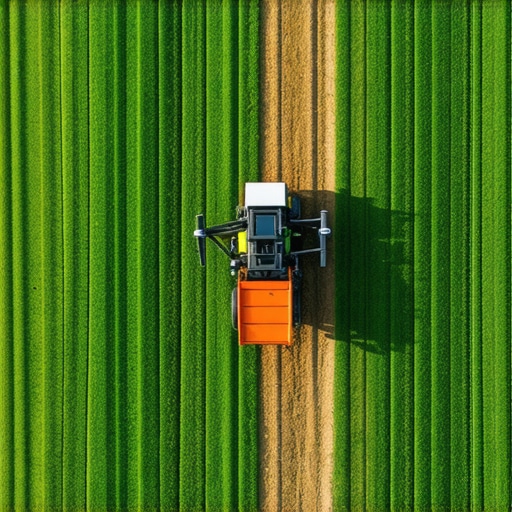
Mastering 2026 Spreader Calibration: The Science of Even Turf Growth
The smell of anhydrous ammonia and the sight of scorched, yellowing Kentucky Bluegrass hit me before I even stepped out of the truck. A homeowner called me in a panic after they completely torched their front lawn by applying a high-nitrogen ‘pro-grade’ fertilizer with a cheap, uncalibrated broadcast spreader. They thought more was better. They were wrong. What I saw wasn’t a lawn; it was a chemical graveyard. The salt index of the fertilizer had literally sucked the moisture out of the root zone, desiccating the crown of the grass beyond repair. This didn’t have to happen. It happened because they skipped the most critical ten minutes of any landscaping program: calibration. If you don’t know exactly how many pounds of product you’re dropping per thousand square feet, you aren’t a groundskeeper; you’re a gambler.
The Autopsy of a Chemical Burn
Spreader calibration is the process of adjusting your equipment to ensure it delivers a specific weight of granular material over a precisely measured area. This ensures even growth, prevents nitrogen leaching into groundwater, and avoids the ‘tiger stripe’ patterns caused by uneven distribution. Most homeowners rely on the numbers printed on the bag, but those numbers are often based on brand-new equipment and a specific walking speed of 3 miles per hour. Your spreader is old, your walking pace is inconsistent, and the granules you’re using today have a different bulk density than the ones tested in the factory. Stop guessing. The physics of the impeller and the gate opening dictate the health of your turf. If you’re managing a sod install, an over-application of pre-emergent can prune the new roots before they even find the soil. It is a death sentence for your investment.
“Accuracy in nutrient application is the cornerstone of any sustainable turfgrass management plan; misapplication leads to both economic loss and environmental degradation.” – Penn State Center for Turfgrass Science
The Physics of Granular Distribution
To calibrate correctly, you must understand ballistics. When a granule leaves the impeller of a broadcast spreader, its travel distance is dictated by its mass and shape. Heavy, spherical granules fly further. Light, irregular particles drop close to the machine. This is why you cannot use the same setting for a 10-10-10 fertilizer that you use for a fine-grain insecticide. If your irrigation system is already running at 100% capacity, adding an uneven layer of nitrogen will create localized hot spots that require even more water to flush out. It creates a cycle of waste. You need to perform a ‘catch-can’ test or a measured-track test every single season. No exceptions.
How do I calculate lawn square footage for fertilizer?
To calculate lawn square footage, divide your property into basic geometric shapes—rectangles, triangles, and circles. Measure the length and width of each, calculate the area (Length x Width for rectangles, 0.5 x Base x Height for triangles), and subtract the footprint of your house, driveway, and patios. This number is your ‘target area.’ Never buy product based on your total lot size; you’ll end up with a 30% surplus that rots in your garage. Accuracy starts with a tape measure, not a guess. In high-end landscaping, we use laser distance measurers to ensure we are within a 2% margin of error.
The 2026 Calibration Matrix
| Product Type | Granule Size (SGN) | Bulk Density (lb/cu ft) | Standard Spreader Setting | Actual Target Rate (lb/1000 sq ft) |
|---|---|---|---|---|
| *Note: These settings are benchmarks for a standard rotary spreader. Always verify with a catch-can test. | ||||
| High-N Urea | 220 | 48 | 4.5 | 3.2 |
| Organic Compost Pellets | 300 | 35 | 8.0 | 5.0 |
| Pre-Emergent/Herbicide | 150 | 52 | 3.0 | 2.1 |
| Starter Fertilizer | 200 | 45 | 5.5 | 4.0 |
Why is my spreader leaving stripes in the grass?
Striping, or ‘lion tailing,’ is almost always a result of an incorrect effective swath width or a clogged gate. If your spreader throws 10 feet wide, you should be overlapping your wheel tracks every 5 feet. This is the 50% rule. Most people walk too far apart, leaving a ‘lean’ zone in the middle where the grass turns pale and weeds take hold. Conversely, if you overlap too much without adjusting the gate, you double-dose the turf. This is where the burn happens. Check your impeller for crusty buildup. If that plastic plate isn’t smooth, the friction will slow down the granules, ruining your distribution pattern. It must be clean.
“Calibration of application equipment is essential to ensure that the desired rate of pesticide or fertilizer is applied uniformly over the target area.” – Texas A&M Agrilife Extension
Operational Lane: The Ground-Up Calibration Protocol
Before you even think about a yard cleanup or tossing seed, you need a plan. Calibration isn’t just about the machine; it’s about the math. I teach my crews the ‘100-square-foot method.’ It’s foolproof. You weigh out a specific amount of product, put it in the spreader, and run it over a tarp or a clean driveway section that is exactly 10 feet by 10 feet. Sweep up the material and weigh it again. The difference tells you exactly what was applied. Multiply by ten to get your rate per thousand. If you’re off by more than 5%, you turn that dial. Don’t trust the manufacturer’s ‘standard’ setting. They don’t know how fast you walk or how humid it is in your shed. Humidity makes granules swell and stick. It changes everything. Use a scale, not a measuring cup. Weight is the only metric that matters in turf chemistry.
- Check the Gate: Ensure the discharge hole opens and closes fully without snagging.
- Verify Tire Pressure: Low pressure in pneumatic tires changes the height of the impeller and the throw angle.
- Test the Swath: Measure the actual distance the granules fly on both sides to find your center.
- Calculate Ground Speed: Mark 100 feet and time your walk; you should hit it in 20-25 seconds consistently.
- Clean After Use: Fertilizer is corrosive. If you don’t wash and dry the spreader, the calibration will shift by next month due to rust.
Calibration is the difference between a lawn that looks like a golf course and a lawn that looks like a patchwork quilt of failure. When you invest in sod install, you are buying time. Don’t waste that time by being lazy with your spreader settings. A properly calibrated spreader ensures that every penny you spend on nutrients actually reaches the plant’s vascular system. It’s about efficiency. It’s about engineering. Most importantly, it’s about not being the guy who has to call me to fix a burnt lawn. Do it right the first time. The soil doesn’t forgive ignorance.