
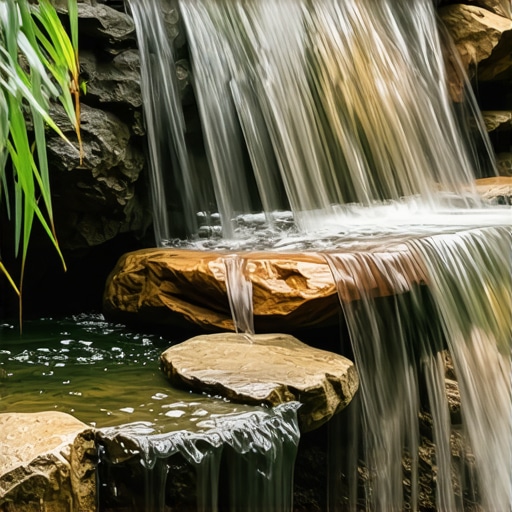
The Hydrostatic Reality: Why Most Residential Waterfalls Fail
Choosing a waterfall pump requires understanding Total Dynamic Head (TDH) and weir width to achieve a specific acoustic frequency and volume without burning out the motor. Most homeowners and ‘mow-and-blow’ outfits buy a pump based on the box’s max flow rate, ignoring the friction loss that occurs the moment water hits the pipe. This leads to a weak trickle or a pump that cavitates within eighteen months.
The Hardscape Autopsy: A Warning from the Field
I recently got called out to tear up a $30,000 patio that was sinking because the previous contractor failed to manage the hydro-dynamics of a backyard waterfall. They used a cheap, undersized pump and a liner with no structural collar. Over time, the water didn’t just flow over the falls; it wicked behind the rocks, saturating the modified gravel base of the adjacent patio. The hydrostatic pressure turned the subgrade into a slurry. By the time I arrived, the pavers were pitched at a four-degree angle toward the house. We had to excavate the entire feature, install a proper basin, and size a pump that could actually handle the vertical lift. Don’t be that guy. Fix the engineering before you lay the first stone.
Sizing the Flow: The Math of the Weir
To achieve a natural sound, you must calculate the Gallons Per Hour (GPH) relative to the weir width, ensuring the water sheet maintains a consistent thickness as it breaks the spillway. A thin sheet of water creates a high-pitched tinkling sound, while a thicker volume produces the deep, white-noise rumble associated with mountain streams. If your flow is too thin, the wind will catch it and blow it out of the basin, leading to water loss that rivals a broken irrigation line.
“A retaining wall doesn’t fail because of the stone; it fails because of the water trapped behind it.” – Hardscape Engineering Axiom
How many GPH do I need for a 2 foot waterfall?
For a standard 24-inch weir, you need a minimum of 3,000 GPH delivered at the head height to create a full, natural-looking sheet of water. If you want a more aggressive, crashing sound, you should aim for 4,500 to 5,000 GPH. This calculation assumes you have accounted for pipe friction. If you use 1.5-inch pipe instead of 2-inch pipe on a 5,000 GPH pump, you are effectively strangling the motor. It will run hot. It will die early. Use the largest pipe diameter the pump discharge allows.
Calculating Total Dynamic Head (TDH)
Total Dynamic Head is the sum of the vertical lift and the friction loss caused by pipe length, elbows, and valves. To find your TDH, measure the vertical distance from the water surface in the basin to the top of the waterfall. Add 1 foot of head for every 10 feet of horizontal pipe run. Add another 1 foot of head for every 90-degree elbow. If your vertical lift is 5 feet, but you have 30 feet of pipe and three elbows, your TDH is 11 feet. You must check the pump’s flow chart at 11 feet, not the zero-head rating on the box.
| Waterfall Effect | GPH per Inch of Weir | Recommended Sound Level |
|---|---|---|
| Trickling Brook | 50 – 100 GPH | Soft, High Pitch |
| Natural Stream | 150 – 200 GPH | Moderate, Ambient |
| Mountain Cascade | 250 – 400 GPH | Loud, Deep Rumble |
Pump Architecture: Asynchronous vs. Direct Drive
Asynchronous pumps are the workhorses of the modern residential landscape. They use a magnetic drive that is significantly more energy-efficient than traditional direct-drive motors. They are ideal for ‘pondless’ systems where the pump sits in a vault. However, if you have a massive vertical lift (over 15 feet), you might need a direct-drive pump. These are beasts that can push water higher, but they cost significantly more to operate and are prone to oil leaks if the seal fails. For most backyard projects involving sod install and yard cleanup, asynchronous is the way to go.
What size pump is best for a natural creek sound?
A natural creek sound is usually achieved by a pump delivering 1,500 to 2,500 GPH over a series of small drops rather than one large plunge. The ‘natural’ aspect comes from the water hitting varied stone surfaces. If you are integrating this into a larger landscaping overhaul that includes new irrigation or a sod install, ensure your pump vault is easily accessible. Do not bury it under two tons of river rock. You will regret it during your first winter maintenance cycle.
Installation Checklist for Maximum Longevity
- Use 2-inch Flex PVC: Rigid PVC cracks during freeze/thaw cycles. Flex PVC handles soil movement.
- Check the Check Valve: Without a check valve, the water in the pipe rushes back into the basin every time you turn the pump off, potentially stirring up debris and clogging the intake.
- Level the Weir: Use a long spirit level. If the weir is off by even 1/8th of an inch, the water will channel to one side, ruining the visual effect.
- Debris Management: Always house the pump in a skimmer or a dedicated pump vault. A pump sitting bare in a pond is a pump that will clog with leaf litter.
“Proper aeration and water movement are the primary defenses against anaerobic bacteria buildup in closed-loop aquatic systems.” – Penn State Agricultural Extension
The Final Verdict on Sound Engineering
Water features are not ‘set it and forget it’ installations. They require a holistic approach to the yard. If you have poor drainage in the rest of your landscaping, the waterfall basin will become a collection point for runoff, silt, and fertilizer salts. This ruins the water chemistry and destroys the pump’s impeller. Before you install the pump, ensure your yard grading is correct. If you are doing a sod install at the same time, keep the grass at least three feet back from the water’s edge to prevent clippings from fouling the system. Engineering the sound is about more than just the pump; it is about the environment it lives in.
Frequently Asked Questions
How often should I clean my waterfall pump?
Check the intake screen every 30 days during the growing season. If you notice a drop in flow, pull the pump and inspect the impeller for grit or calcium buildup.
Can I run my waterfall pump 24/7?
Yes, most professional-grade pumps are designed for continuous duty. In fact, turning them on and off frequently can put more stress on the motor than leaving them running.
Does the pipe size really matter?
Absolutely. Increasing pipe size reduces friction. A 2-inch pipe has significantly less resistance than a 1.5-inch pipe, allowing the pump to work less and last longer.