
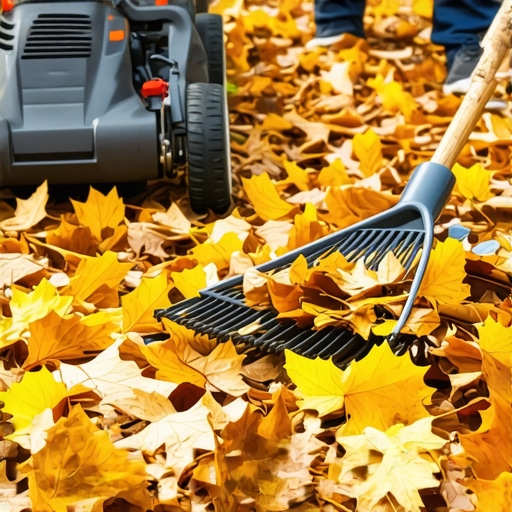
Clear 2026 Fallen Leaves Fast: Mower vs Rake
Every October, I see the same scene: homeowners out in their yards with cheap plastic rakes, laboring for hours to bag up the very nutrients their soil is starving for. As a professional with two decades in the dirt, I can tell you that most people approach fall yard cleanup with an outdated mindset. They see leaves as trash. I see them as a localized carbon source that, if handled incorrectly, becomes a biological blanket that suffocates your sod install or existing turf. In 2026, the efficiency gap between mechanical mulching and manual raking has widened, but the right choice depends entirely on the volume of biomass and the specific needs of your landscaping.
The Forensic Autopsy of a Suffocated Lawn
To clear 2026 fallen leaves fast, you must evaluate the leaf-to-grass ratio; mulching with a mower is superior for nutrient cycling in moderate volumes, while raking is mandatory only when the leaf layer exceeds two inches and threatens to create an anaerobic barrier that triggers fungal pathogens.
I recently got called out to a property where a homeowner had effectively torched three acres of premium Kentucky Bluegrass. They had a heavy oak canopy and decided to let the leaves sit until ‘they had time’ in late November. Then, they tried to ‘fix’ the lack of color by dumping high-nitrogen fertilizer directly onto a layer of wet, matted leaves. This created a chemical nightmare. The fertilizer couldn’t reach the soil; instead, it reacted with the moisture trapped under the leaves, creating a high-heat fermentation process. When we finally cleared the mess, the turf underneath wasn’t just dormant; it was dissolved. The irrigation system had been running on its summer schedule, further exacerbating the rot. We found widespread Microdochium nivale (pink snow mold) before the first snowflake even hit the ground. This is the cost of poor leaf management.
“Anaerobic decomposition occurring under matted leaf layers produces organic acids that can temporarily lower surface pH and stress root systems.” – Agronomy Journal Standards
The Science of the Mulching Mower
When you use a high-lift mulching blade, you aren’t just cutting leaves; you are performing high-speed mechanical composting. A standard mower blade spins at roughly 18,000 to 19,000 surface feet per minute. When contained within a baffled deck, leaf tissue is struck multiple times, reducing it to fragments roughly 1/10th of its original size. These fragments fall between the grass blades, landing directly on the soil surface. This is where the microbiology takes over. Earthworms and aerobic bacteria begin the process of breaking down the lignin and cellulose, returning nitrogen, phosphorus, and potassium (NPK) to the root zone. It is free fertilizer. Do not ignore the Carbon-to-Nitrogen (C:N) ratio. Dried leaves are carbon-heavy. As they decompose, microbes require nitrogen to fuel the process. In a healthy landscaping ecosystem, this cycle is self-sustaining. However, if you mulch four inches of leaves into a half-inch of turf, you will cause ‘nitrogen tie-up,’ where the microbes steal nitrogen from the grass roots to process the carbon. Balance is everything.
How many inches of leaves can I safely mulch?
You can safely mulch up to 6 inches of dry leaf cover if you do it in multiple passes. The goal is to ensure that after the final pass, at least 50% of the grass blade is still visible. If the leaf ‘dust’ is so thick it covers the grass completely, you have created a mulch volcano on your entire lawn. This will block sunlight, prevent photosynthesis, and lead to thinning. For heavy volumes, set your mower deck to its highest setting for the first pass, then drop it to 3 inches for the second perpendicular pass. This ensures the particles are small enough to settle into the thatch layer without smothering the crown of the grass plant.
What is the best mower blade for leaf cleanup?
Standard ‘2-in-1’ blades are useless for heavy fall cleanup. You need a dedicated G6 Gator blade or a high-vacuum mulching blade with aggressive teeth. These blades create the airflow necessary to pull the leaves off the ground and back into the path of the cutting edge. In 2026, we are seeing more battery-powered commercial units with high-torque motors that maintain blade speed even in thick, wet debris. If your blade speed drops, you stop mulching and start ‘slugging’—leaving clumps of wet debris that will kill the grass in 48 hours.
The Raking Reality: When Manual Labor Wins
Despite my preference for mulching, raking has a specific engineering purpose. If you are dealing with a property that has been neglected or has high-density maple leaves that mat like wet cardboard, the mower will fail. Raking is also essential if your soil pH is already critically low (below 5.5). Some leaves, like those from certain Oak species, contain high levels of tannins which can slightly acidify the top millimeter of soil. If your soil test already shows a need for lime, don’t add more carbon to the problem. Remove the leaves, compost them elsewhere, and focus on your soil amendments. Raking is also the only option when the leaves are hiding stones or debris that would shatter a mower blade or pose a safety risk to the operator.
| Method | Efficiency (Per Acre) | Nutrient Retention | Soil Impact |
|---|---|---|---|
| Mulch Mower | Low (Fast) | High (100% Retained) | Stimulates Microbes |
| Manual Raking | Very High (Slow) | Zero (Removed) | Reduces Soil Compaction |
| Leaf Vacuum | Medium | Zero (Removed) | None |
| Tractor Collection | Low (Fast) | Zero (Removed) | Risk of Compaction |
“Maintaining a leaf mulch layer of up to 2 inches does not negatively impact turf quality or soil pH when processed correctly.” – Michigan State University Extension
The 2026 Fall Cleanup Protocol Checklist
- Test Soil Moisture: Never mulch or rake when the ground is saturated to the point of squishing. You will cause deep-layer compaction.
- Sharpen Blades: A dull blade tears the leaf; a sharp blade pulverizes it. Sharpen every 10 hours of use in the fall.
- Adjust Irrigation: As temperatures drop, your irrigation should be dialed back. Wet leaves + high irrigation = fungal disaster.
- Clear the Hardscape: Don’t let leaves sit on your pavers. The tannins will stain the stone, requiring aggressive power washing.
- Check the Thatch: If your thatch layer is already over 0.5 inches, do not mulch. You need to aerate first.
How much modified gravel do I need for a patio base?
While this seems unrelated to leaves, people often forget that drainage starts at the patio edge. If your leaf cleanup is poor, debris clogs the perimeter of your hardscape. For a standard patio base, you need a minimum of 4 to 6 inches of compacted 21A or 57 stone. If leaves rot against the edge of this base, they turn into a silty sludge that can penetrate the gravel, compromising the drainage and leading to heaving during the freeze-thaw cycle. Keep the edges clean. It is not just about aesthetics; it is about structural integrity.
The Final Word on Leaf Management
Stop treating your yard like a waste disposal site. In 2026, smart landscaping is about managing the ecosystem you have. If you have 10-20% leaf cover, mulch it. If you have 50% cover, mulch it twice. If you can’t see the ground at all, rake the top 50% and mulch the rest. The nitrogen you save will result in a much faster green-up in the spring without the need for heavy chemical inputs. Don’t be the homeowner who bags up free fertilizer just to go buy it back in a plastic bag at the big-box store in April. It is inefficient, it is expensive, and it is bad for the soil. Sharpen your blades, check your deck height, and get to work. Your grass will thank you by March.