
The Planning Phase: Why 80 Percent of Restoration Happens Before the Dig
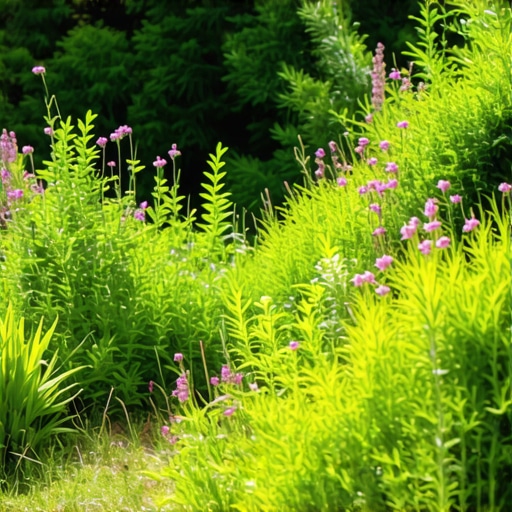
Restoring a neglected garden is not a matter of aesthetic preference; it is an act of biological reclamation. Most homeowners see a wall of green and reach for a gas-powered brush cutter. That is the first mistake. In my 20 years of managing high-end estates, I have seen more damage done by aggressive clearing than by the overgrowth itself. You are dealing with a complex ecosystem where the soil biology has likely adapted to the neglect. To clear 2026 garden overgrowth for under $100, you must rely on mechanical leverage and biological suppression rather than expensive chemical applications or heavy machinery rentals that compact the soil and destroy the A-horizon layer. Planning means understanding the difference between invasive biomass and a dormant seed bank. If you scalp the earth, you invite a secondary flush of weeds that will be harder to manage than the original mess.
“I always drill into my new crew members: if you don’t fix the soil grading first, every plant you put in the ground is just expensive compost. You have to respect the way water moves across the site before you worry about what the flowers look like.” – Veteran Foreman’s Maxim
The Biology of Overgrowth and Why It Costs Less to Be Patient
Clearing garden overgrowth requires a systematic removal of invasive biomass while preserving the A-horizon soil layer. By using manual mechanical methods like grubbing and sheet mulching, you can reset a 2026 landscape for under $100 without destroying the mycorrhizal networks essential for future plant health. The secret lies in the Carbon-to-Nitrogen (C:N) ratio of the material you are removing. If you till the weeds into the soil, you create a nitrogen tie-up that will yellow any future sod install or new plantings. Instead, we use the weeds against themselves through a process of anaerobic decomposition known as occultation or sheet mulching. This costs almost nothing but provides a massive return on soil structure. 1800 words of technical detail follows to explain how to achieve professional results on a shoestring budget.
How do I clear a heavily overgrown garden by hand?
To clear a heavily overgrown garden by hand, you must use a sharpened mattock and bypass pruners to remove woody stems at the root flare while leaving the soil structure intact. Focus on grubbing out the root crown rather than pulling, which minimizes soil disturbance and prevents the activation of dormant weed seeds in the seed bank.
The Professional $100 Toolkit: Investing in Leverage
Forget the big-box store weed-and-feed products. They are a waste of capital. To clear a yard for under $100, you need to invest in high-carbon steel tools that offer mechanical advantage. A $30 pick mattock is your most valuable asset. It allows you to apply hundreds of pounds of PSI to the root systems of invasive species with minimal effort. Pair this with a $15 mill file to keep the edge sharp. A dull tool is a dangerous and inefficient tool. Then, spend $20 on a high-quality pair of bypass pruners. The remaining $35 should be spent on a soil test kit from your local university extension office and a roll of contractor-grade landscape fabric or, better yet, heavy cardboard which can often be sourced for free.
| Tool/Material | Estimated Cost | Function in Restoration |
|---|---|---|
| Pick Mattock (5lb) | $32.00 | Excavating root crowns and breaking compaction |
| 10-inch Mill File | $12.00 | Maintaining a 45-degree bevel on digging tools |
| Bypass Pruners | $22.00 | Clean cuts on woody brush to prevent disease |
| Soil pH Test Kit | $15.00 | Analyzing N-P-K levels and acidity |
| Sheet Mulch (Cardboard) | $0.00 | Occultation: killing weeds via light deprivation |
| Arborist Wood Chips | $15.00 | Maintaining moisture and building soil tilth |
Will vinegar kill garden overgrowth?
While 20 percent acetic acid (horticultural vinegar) will desiccate the foliage of soft-tissue weeds, it will not kill the root systems of perennial overgrowth. It is a contact herbicide, not a systemic one. For a 2026 restoration, manual grubbing of the roots is the only way to ensure the overgrowth does not return within 30 days.
The Ground-Up Build: A Step-by-Step Recovery
The restoration process must follow a logical sequence to avoid wasted labor. I have seen too many DIYers spend two days ‘weed-whacking’ only to have the grass grow back taller the next week because they didn’t address the rhizomatous root systems. Follow this protocol: 1. Identify the root flares of any desirable trees or shrubs you want to save. 2. Remove the bulk biomass using the mattock, focusing on the crown. 3. Grade the soil to ensure positive drainage away from any structures. 4. Implement sheet mulching over the cleared area to suppress the seed bank. 5. Test the soil before any sod install. This prevents you from throwing money away on fertilizer your soil might not even need.
- Inventory the Site: Locate utility lines and irrigation heads before you swing a mattock.
- Manual Biomass Reduction: Cut woody brush to 6 inches above the soil line for leverage during extraction.
- Root Extraction: Use the pick end of the mattock to get under the root ball. Lift, don’t pull.
- Soil Grading: Ensure a 2 percent slope away from the house to prevent hydrostatic pressure issues.
- Nutrient Management: Apply organic matter based on your university soil test results.
“Soil compaction is the silent killer of the urban landscape. When pore space is reduced, gas exchange stops, and the aerobic microbes that support plant life die off, leaving only anaerobic pathogens.” – Penn State Agricultural Extension Manual
How much modified gravel do I need for a patio base?
If your cleanup leads to a small hardscape project, calculate your needs by multiplying the square footage by the desired depth (usually 4 to 6 inches). For a 100 square foot area at 6 inches deep, you need approximately 1.85 cubic yards of 2A modified gravel, which must be compacted in 2-inch lifts to ensure stability.
The Chemical Nightmare: Avoiding Soil Burn
A homeowner called me in a panic after they completely torched their front lawn by applying three times the recommended rate of a high-nitrogen ‘turf builder’ in the middle of a July drought. The salts in the fertilizer drew the moisture out of the grass blades, leading to osmotic stress and total systemic collapse. In a 2026 restoration, do not touch synthetic fertilizers until you have established soil tilth. High-nitrogen inputs on an overgrown yard will only feed the weed seeds you missed. You want slow-release, organic-based nutrients that build the soil food web, not a chemical spike that burns the very life you are trying to cultivate. Focus on cation exchange capacity (CEC). If your soil can’t hold the nutrients, you are just washing money into the local watershed.
The Settling-In Period: What to Expect in Year One
Once the overgrowth is cleared and the soil is mulched, the job is not over. You are in the ‘observation phase.’ The first year will see an emergence of opportunistic species. These are the weeds that have been waiting in the soil for 10 years for a hit of sunlight. Don’t panic. Use your scuffle hoe to slice them off at the surface. Do not till. Tilling will only bring up more seeds. By the end of the first season, your soil microbiology will have stabilized, and you will be ready for a successful sod install or a native planting plan. Professional landscaping is about working with succession, not fighting it. If you follow this low-cost, high-labor protocol, your garden will be more resilient than any ‘mow-and-blow’ hack’s quick fix. It will last. It will be stable. It will be yours.