
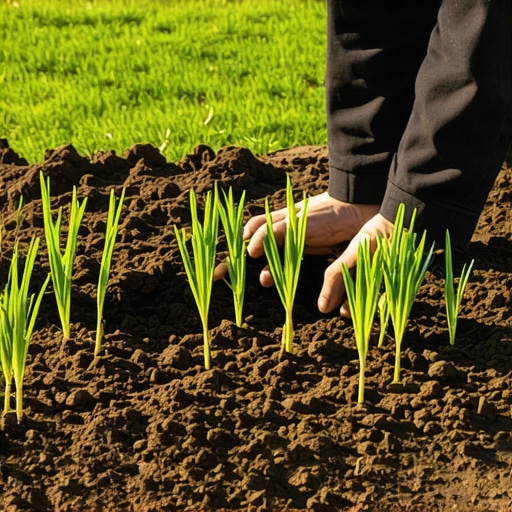
The Mechanics of Dormant Seeding in Early March 2026
Dormant seeding is the practice of spreading turfgrass seed during the late winter or very early spring while the ground is still cold enough to prevent immediate germination, typically when soil temperatures are below 50 degrees Fahrenheit. This technique utilizes the natural freeze-thaw cycle of the soil to pull the seed into the top layer of the earth, ensuring excellent seed-to-soil contact before the spring growth flush begins. In March 2026, as we transition from winter to spring, this window offers a critical advantage for homeowners looking to repair thinning lawns or establish new turf before the summer heat stress arrives. I always drill into my new crew members: if you don’t fix the soil grading first, every plant you put in the ground is just expensive compost. I’ve spent twenty years watching guys throw high-dollar seed on top of compacted clay or layers of un-raked debris, only to watch it wash away with the first spring rain. Proper dormant seeding requires a surgical approach to the yard cleanup and an understanding of the soil microbiology beneath your boots. It’s not about making it look pretty today; it’s about the structural integrity of the root system six months from now.
“Frost heaving is a natural mechanical aerator; as the water in the soil freezes and expands, it creates small fissures that allow grass seed to settle at the ideal depth for early spring emergence.” – Agricultural Extension Agronomy Manual
Why Early March 2026 is the Critical Window
Success in 2026 depends on timing the soil’s hydrostatic pressure shifts. When the ground thaws during the day and freezes at night, the soil literally ‘breathes,’ drawing the seed into the profile. This eliminates the need for heavy mechanical aeration in the spring, which can often disturb the pre-emergent barrier you might need for crabgrass control later. If you wait until April, you’re competing with weed seeds that are already waking up. By seeding in March, your turf gets a three-to-four-week head start on root development. We are looking for that specific window where the snow has retreated, but the soil temperature hasn’t yet stabilized above the germination threshold. This is technical landscaping, not a weekend hobby. You have to monitor the GDD (Growing Degree Days). If you miss this, you might as well be feeding the birds.
The Soil Chemistry of Dormant Success
Before you even touch a spreader, you need to understand your CEC (Cation Exchange Capacity). If your soil is heavy clay, common in many regions, the seed will struggle to penetrate without a proper yard cleanup and surface scarification. I tell my clients that a sod install is a transplant surgery, but dormant seeding is neonatal care. You need to ensure the pH is sitting between 6.2 and 7.0. If you are outside that range, the nutrients in your starter fertilizer—specifically the phosphorus (P2O5) required for root elongation—will remain chemically locked in the soil and unavailable to the seedling. I’ve seen $5,000 seeding jobs fail because the contractor didn’t spend $20 on a soil test. Don’t be that guy. Use a drop spreader for precision; broadcast spreaders are for amateurs who like growing grass in their mulch beds. We focus on the NPK ratio, specifically looking for a high middle number to stimulate the radical and plumule once the ground hits that 55-degree mark.
When is the best time to dormant seed in 2026?
The ideal time for dormant seeding in 2026 is between February 25th and March 15th, depending on your specific hardiness zone and the current moisture levels in the soil. You want the seed in the ground before the first major ‘mud season’ thaws, as the moisture from melting frost provides the necessary hydration for the seed coat to soften without requiring you to fire up your irrigation system prematurely. Firing up irrigation lines in early March is a recipe for a cracked backflow preventer if a late freeze hits. Let nature handle the watering during the dormant phase. It’s about site preparation. A clean slate is mandatory. Any lingering leaf litter or thatch over half an inch thick will act as a barrier, preventing the seed from ever touching the dirt. If it doesn’t touch the dirt, it won’t grow. Period.
| Feature | Dormant Seeding | Sod Installation | Standard Spring Seeding |
|---|---|---|---|
| Cost per 1,000 sq ft | $75 – $150 | $1,200 – $2,500 | $100 – $200 |
| Water Requirement | Low (Natural) | Extreme (Daily) | High (Frequent) |
| Root Depth potential | High | Medium | Low |
| Labor Intensity | Medium | Extreme | High |
How much modified gravel do I need for a patio base?
While we are discussing landscaping prep, many homeowners ask about hardscape integration during their spring yard cleanup. For a standard 4-inch compacted base, you need roughly 1 ton of modified gravel (2A or 2B) per 50 square feet. This is critical because poor soil grading around your patio will lead to water pooling, which will rot your new March seeding. I’ve seen $30,000 patios sink because the base wasn’t compacted in 2-inch lifts. The same logic applies to your lawn: compaction is the enemy of life. If your soil is as hard as a brick, no amount of seed will save it. You must address the compaction layers before the seed goes down. We use a power rake to break the surface tension of the soil. It’s aggressive, but necessary. It’s the difference between a lawn that lasts ten years and one that dies in ten weeks.
“A retaining wall doesn’t fail because of the stone; it fails because of the water trapped behind it.” – Hardscape Engineering Axiom
The 2026 Step-by-Step Dormant Seeding Protocol
- Site Clearance: Remove all debris, dead annual grass, and leaf litter. If the ground is visible, you’re ready.
- Soil Testing: Verify pH and nutrient levels. Apply lime or sulfur if the CEC dictates a shift is needed.
- Mechanical Scarification: Use a verticutter or power rake set to 1/8th inch depth to create grooves in the soil.
- Seed Selection: Use high-quality Turf-Type Tall Fescue or Kentucky Bluegrass. Avoid ‘Big Box’ contractor mixes that contain 20% annual rye—it’s a weed in disguise.
- Application: Apply at a rate of 8-10 lbs per 1,000 sq ft for new areas, or 4-6 lbs for overseeding.
- Starter Fertilizer: Use a slow-release nitrogen source with high phosphorus to feed the roots, not the blades.
Managing Irrigation and Moisture
The biggest mistake people make with irrigation in early March is turning the system on too early. In 2026, we expect a volatile freeze-thaw cycle. Your dormant seed needs moisture, but it doesn’t need a swamp. The natural precipitation from late winter is usually sufficient. Once the grass reaches the ‘spike’ stage in late April, then you can talk about irrigation. Until then, stay off the lawn. Walking on soft, thawing soil creates rutting and destroys the soil structure you just worked so hard to preserve. If you see a footprint that stays for more than an hour, the ground is too wet to work. Wait. Patience is a tool just like a shovel. You cannot rush the nitrogen cycle. If you try to force growth with heavy synthetic fertilizers in March, you’ll just end up with pythium blight or snow mold. Let the soil warm up naturally. Your job is to provide the seed-to-soil contact; biology does the rest.