
The Autopsy of a Failed Irrigation System
I recently got called out to tear up a $30,000 hardscape and planting job that was literally drowning because the previous contractor didn’t understand basic hydraulics. The homeowner was seeing ‘geysers’ in their flower beds every time the zone kicked on. Upon excavation, I found 1/2-inch poly tubing that had ballooned and snapped off the barb fittings. The culprit? A total lack of pressure regulation. They were slamming 80 PSI of municipal water pressure into a system designed for 25 PSI. It was a mechanical slaughter. The plants were suffering from root rot, the mulch was washed onto the driveway, and the ‘professional’ installer was nowhere to be found. This is what happens when you treat landscaping like a hobby instead of engineering.
Why Do Drip Irrigation Emitters Keep Popping Off?
Drip irrigation emitters pop off because static water pressure exceeds the mechanical grip of the barb fittings, typically occurring when homeowners fail to install a 25 PSI or 30 PSI pressure regulator at the zone valve. High pressure causes polyethylene tubing to expand, widening the connection points until the emitter or 1/4-inch distribution line fails under the hydrostatic surge of the system start-up.
“A drip system without a pressure regulator is not an irrigation system; it is a ticking time bomb for your landscape’s root zone health.” – Irrigation Association Standards Manual
The $3 Fix: The Inline Pressure Regulator
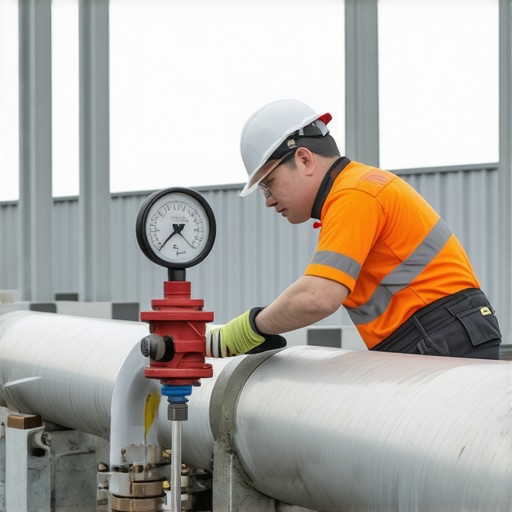
People spend thousands on sod install and high-end nursery stock, then balk at a $3 plastic component. An inline pressure regulator is a non-negotiable piece of hardware. It uses a spring-loaded diaphragm to maintain a constant downstream pressure regardless of fluctuations in the main line. If you are pulling water from a municipal source, your pressure is likely between 60 and 100 PSI. Drip components are engineered for low-flow, low-pressure environments. Without that $3 regulator, you are asking a plastic barb to hold back the weight of a city’s water tower. It won’t happen. The system will fail. Your plants will die. It is that simple.
The Physics of Drip Failures
When water moves through a pipe, it creates friction. In a standard 1-inch PVC main line, this is manageable. But when you transition to 1/2-inch or 17mm drip tubing, the internal surface area increases relative to the volume of water. If the pressure is too high, the velocity of the water creates ‘water hammer’ every time the valve closes. This shockwave travels back through the line, weakening every single connection point. We measure this in Pounds per Square Inch (PSI) and Gallons per Hour (GPH). If you don’t balance these, you get ‘blowouts.’
| Pressure (PSI) | Impact on System | Common Symptom |
|---|---|---|
| 15-30 PSI | Optimal Operating Range | Uniform dripping; no leaks |
| 40-50 PSI | Stress Level | Emitters ‘whistling’ or misting |
| 60+ PSI | Critical Failure | Line separation; barb blowouts |
How to Install a Pressure Regulator Correctly
Don’t just screw it on anywhere. The regulator must come after the valve and the filter. If you put it before the valve, it stays under constant pressure and the diaphragm will fatigue within a single season. 1. Shut off the main water supply. 2. Install your backflow preventer. 3. Thread the valve. 4. Attach a Y-filter (to prevent clogging). 5. Thread the 25 PSI pressure regulator. 6. Connect your tubing adapter. Tighten by hand only. Using a pipe wrench on these plastic threads is a rookie mistake that leads to hairline fractures. Don’t be that guy.
How Much Modified Gravel Do I Need for a Patio Base?
While we are talking about site prep, remember that drainage impacts your irrigation. If you are building a patio near your drip zones, you need a minimum of 6 inches of compacted 2A modified gravel. This prevents the soil from shifting and crushing your poly lines. Hydrostatic pressure doesn’t just happen inside the pipes; it happens in the soil. If your yard cleanup doesn’t include checking the grade, you are inviting water to pool against your foundation. This leads to anaerobic soil conditions where even the best-regulated drip system can’t save your plants.
“Soil compaction and poor drainage account for more plant loss than pests and disease combined.” – Penn State Agricultural Extension
Winterization and the 2026 Blowout Protocol
In colder climates, ‘blowouts’ refers to the process of clearing lines for winter. If you leave water in a regulated drip line, it will freeze, expand, and crack the regulator’s internal housing. Compressed air is the only solution. Set your compressor to no more than 30 PSI. If you blast 100 PSI of air into a drip system to ‘get it done faster,’ you will shatter the emitters from the inside out. I see it every spring. Yard cleanup should always involve a manual drain of the lowest point in the line. [image_placeholder_1]
The Problem with Big-Box ‘All-in-One’ Kits
I despise those pre-packaged kits you find at big-box hardware stores. They usually include a cheap, non-adjustable regulator that fails within six months. Professionals buy components separately. We use commercial-grade pressure-compensating (PC) emitters. These ensure that the first plant on the line gets the same 0.5 GPH as the last plant 100 feet away. Non-PC emitters are garbage; they dump all the water at the beginning of the run and leave the end of the line bone dry. It’s lazy landscaping.
Irrigation Maintenance Checklist
- Check the filter screen for sediment buildup every 90 days.
- Walk the line while the system is running to listen for the ‘hiss’ of a leak.
- Inspect the root flare of trees to ensure emitters aren’t causing collar rot.
- Verify that the pressure regulator hasn’t been bypassed by a ‘handy’ homeowner.
- Flush the main headers annually to remove accumulated ‘fines’ or silt.
What PSI Is Best for Drip Irrigation?
For most residential applications, 25 PSI is the industry gold standard. It provides enough force to push water through several hundred feet of tubing while remaining low enough to prevent fitting failure. If you are running long distances or have significant elevation gains, you might step up to 30 or 40 PSI, but only if you are using high-compression fittings or ‘lock-type’ connectors. Standard barbs will not hold at 40 PSI over the long term. It will leak. You will regret it.
The Role of Soil Type in Irrigation Design
Heavy clay soils in many regions hold water like a bathtub. If your drip system is dumping 2 GPH because you didn’t regulate the pressure, you are creating a swamp. Sandy loams, conversely, need those 25 PSI regulators to ensure the water spreads horizontally through capillary action rather than just shooting straight down past the root zone. Science, not guesswork. Every yard cleanup should start with a soil ribbon test. If you don’t know your soil texture, you don’t know your irrigation run time. Period.