
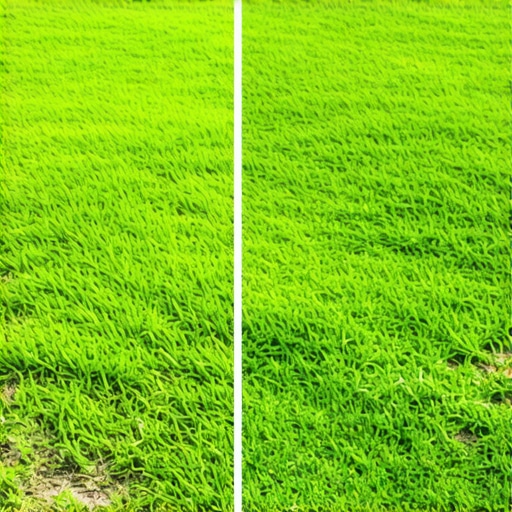
The Forensic Autopsy of a Dying Fescue Lawn
To fix 2026 Fescue bare spots, you must ensure direct seed-to-soil contact using a vertical slicer or power seeder to bury the seed 1/8 to 1/4 inch deep in decompacted, pH-neutral soil. Simply throwing seed on top of thatch is a waste of capital and time because Fescue is a bunch-type grass that cannot spread to fill gaps on its own. It requires mechanical intervention to restore density. You look at your yard and see brown patches. I see a soil compaction rating of over 300 PSI and a biological desert. Most homeowners treat the symptoms with more water. That is a mistake. The water sits on the surface, the roots suffocate, and the Rhizoctonia solani (Brown Patch) fungus takes over. Stop treating your lawn like a decoration and start treating it like a biological engine.
The Apprentice Lesson: Soil is Not Dirt
I always drill into my new crew members: if you don’t fix the soil grading first, every plant you put in the ground is just expensive compost. I remember a job in ’14 where the client wanted a full sod install over what was essentially construction debris and heavy clay. I told him it would fail. He hired a ‘mow-and-blow’ crew instead. Six months later, I was back to excavate eight inches of dead organic matter because they didn’t account for the irrigation runoff or the anaerobic soil conditions. We had to do a complete yard cleanup, regrade the entire lot, and start from the microbiology up. If you don’t respect the soil’s Cation Exchange Capacity (CEC), you’re just throwing money into a pit.
“Tall fescue is a bunch-type grass. It does not spread by rhizomes or stolons; therefore, bare spots must be reseeded to maintain density.” – Penn State Extension
The 2026 ‘Prime-and-Press’ Seeding Hack
The biggest failure in landscaping is the ‘throw and go’ method. The hack for 2026 isn’t a chemical; it is a physical process called Seed Priming and Soil Compression. By soaking your Fescue seed in a humic acid solution for 12 hours and then using a weighted roller after seeding, you trigger the germination enzymes before the seed even hits the dirt. This cuts germination time from 14 days down to 7, beating the weed competition to the punch.
How much modified gravel do I need for a patio base?
While this is a turf guide, soil density matters for everything. For a standard patio, you need a minimum of 4 to 6 inches of compacted 21A or CR-6 modified gravel. If you don’t compact in 2-inch lifts, your pavers will sink, and your turf drainage will be ruined. Drainage and turf health are linked. Standing water on a patio edge kills Fescue faster than a drought.
The Technical Material Breakdown
| Method | Germination Rate | Labor Intensity | Long-Term Viability |
|---|---|---|---|
| Broadcast Seeding | 30-40% | Low | Poor (Birds/Washout) |
| Slit Seeding | 75-85% | Medium | High (Seed-to-Soil Contact) |
| Sod Installation | 95% | High | Instant but expensive |
| The Prime-and-Press Hack | 90% | High | Superior (Rapid Rooting) |
The Step-by-Step Restoration Protocol
- Core Aeration: Pull 3-inch plugs. Don’t use those spike aerators; they just increase sidewall compaction.
- pH Adjustment: Fescue hates acid. Aim for 6.2 to 6.8. Use pelletized calcitic lime, not the cheap dolomitic stuff that takes a year to break down.
- The Prime: Soak your seed. Use a mesh bag. 12 hours. No more.
- The Drop: Use a drop seeder for precision. 6-8 lbs per 1,000 square feet for bare spots.
- The Press: Use a water-filled roller. Seed needs to be squeezed against the soil.
“Adequate phosphorus is essential for root development in new seedlings, even if soil tests show sufficient levels for established turf.” – Agronomy Manual 101
Is my irrigation system killing my grass?
Probably. Most homeowners water for 15 minutes every night. This is garbage. It keeps the leaf blade wet—inviting fungus—but never reaches the root zone. You need deep, infrequent cycles. One inch of water per week, delivered in two 30-minute sessions at 4:00 AM. This forces the roots to chase the moisture down into the cooler subsoil.
The Maintenance Schedule: Year One
After the seeds pop, don’t touch them. Do not mow until the new blades hit 4 inches. Then, only take off the top half-inch. You need the leaf surface area for photosynthesis to build the root system. If you scalp it now, it will die in the July heat. Nitrogen should be applied in a 3-1-2 ratio during the growing season, but back off when the thermometer hits 85 degrees. Excess nitrogen in heat is a death sentence for Fescue. Use a slow-release polymer-coated urea to avoid nitrogen spikes that burn the tender crowns.