
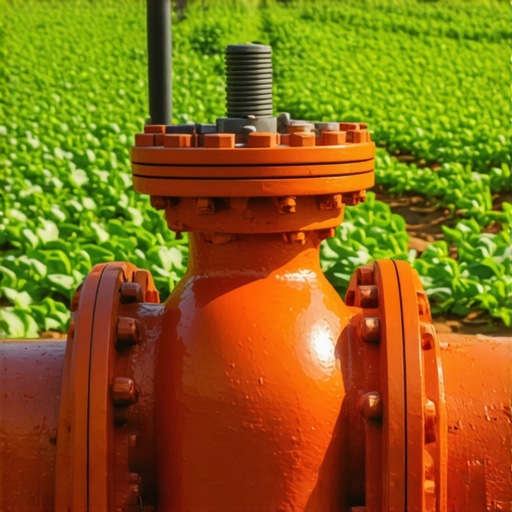
The Sputtering Death of High-End Turf
You hear it before you see it: that pathetic, rhythmic clicking of an impact head that refuses to rotate, or the sad, bubbling weep of a pop-up spray head that can’t quite clear the grass line. I recently got called out to a property where the homeowner had just dropped $15,000 on a premium tall fescue sod install, and within three weeks, the entire backyard looked like a forgotten hay field. They were running the system twice a day, but the pressure had dropped so low that the heads were just ‘drooling’ instead of atomizing. Most contractors would have told them they needed a new $800 booster pump or a complete mainline replacement. I spent ten minutes digging out a single solenoid valve and found the culprit: a tiny shard of PVC glue and a pinch of silt clogging a $5 internal filter. It was a classic case of system strangulation. Don’t let a ‘mow-and-blow’ crew tell you that you need a total overhaul when your system is simply choking on its own debris.
The Anatomy of a Pressure Drop
Irrigation pressure loss is typically caused by friction, elevation changes, or physical blockages within the valve assembly or nozzle screens. When PSI (pounds per square inch) drops below the manufacturer’s operating threshold, the nozzle’s distribution uniformity fails, leading to localized dry spots and eventual sod desiccation. This is a mechanical failure, not a water supply issue.
blockquote>”A system’s efficiency is only as good as its weakest link; even a minor obstruction in the lateral line can reduce head pressure by 40%, rendering the manufacturer’s precipitation rate data useless.” – Irrigation Association Technical Manual
How much modified gravel do I need for a patio base?
While often asked during irrigation repairs, this depends on the soil subgrade; typically, you need 4-6 inches of compacted 21A or #57 stone to ensure proper drainage around valve boxes so they don’t become flooded silt traps. Poor drainage around your valves is exactly how debris enters the system during a yard cleanup or a heavy rain event.
The Forensic Diagnosis: Why Your System is Choking
Before you start digging up your entire lawn, you have to understand the physics of friction loss. Water moving through a 1-inch PVC pipe at 10 GPM (gallons per minute) loses pressure for every foot it travels. If your solenoid valve is partially blocked by a dirty internal filter or ‘inline’ screen, it creates a massive pressure drop right at the source. This is common after a sod install because the ground has been disturbed, and silt often finds its way into the lines during the connection process. It’s a microscopic problem with macroscopic consequences. I see it every year. High-performance sod requires deep, infrequent watering—exactly 1 inch per week—to force roots to chase the water down into the soil profile. If your pressure is low, you aren’t watering; you’re just humidifying the thatch. It will rot. Your grass will die. It’s that simple.
The $5 Solution: Replacing the Valve Filter
Most modern valves, like those from Hunter, Rain Bird, or Irritrol, have a small plastic filter or a ‘pilot hole’ screen located just under the solenoid. This is the heart of the system. If this filter is fouled, the valve won’t open fully. To fix this, shut off the main water supply. Unscrew the solenoid. You’ll see a tiny plastic basket or a small mesh screen. Pull it out with needle-nose pliers. Rinse it in a bucket of clean water. If it’s torn, buy a new one for about five bucks. Most homeowners spend more on a single bag of cheap big-box fertilizer than it costs to fix their entire irrigation system’s pressure. Check your static pressure versus your dynamic pressure. If the needle on your gauge drops more than 20% when the zone kicks on, you have a restriction.
Irrigation Component Comparison Table
| Component | Function | Average Cost | Maintenance Frequency |
|---|---|---|---|
| Inline Mesh Filter | Removes sand/silt from mainline | $25 – $45 | Bi-annually |
| Valve Pilot Filter | Protects solenoid operation | $2 – $7 | Every 2-3 years |
| Nozzle Screen | Prevents head clogging | $0.15 | Annual Cleanup |
| Pressure Regulator | Limits PSI to prevent misting | $15 – $30 | Check annually |
Why Yard Cleanup and Soil Health Matter
You cannot separate landscaping from irrigation engineering. During a standard yard cleanup, most crews blow debris right into the valve boxes. This is a cardinal sin. If your valve box is filled with mulch and dirt, it’s only a matter of time before that grit works its way into the threads of your valves. Furthermore, check your soil pH. If your soil is heavily compacted or high in clay, the water won’t penetrate anyway, regardless of your pressure. You need core aeration to a depth of at least 3 inches to allow the water to reach the root zone. Stop surface watering. It’s useless. Dig a hole. See how deep the moisture actually goes.
“Irrigation water must be applied at a rate that does not exceed the soil’s infiltration capacity to prevent runoff and ensure deep root development.” – Penn State Extension – Turfgrass Management
How do I increase water pressure in my sprinkler heads?
To increase pressure, you must first eliminate physical restrictions by cleaning the valve filters and nozzle screens, then ensure your meter size and mainline diameter are sufficient for the zone’s total GPM requirement. If the physics don’t add up, no amount of ‘tweaking’ will help.
The Step-by-Step Irrigation Pressure Audit
- Check the Meter: Ensure the main shut-off valve is fully open. Sometimes they are only halfway turned.
- Inspect the Backflow: Look for leaks or weeping from the Pressure Vacuum Breaker (PVB).
- Dissect the Valve: Open the valve manifold and clean the internal filters.
- Flush the Lines: Remove the last head on each run and blow out any trapped silt.
- Clean the Nozzles: Every single head has a screen. If they are gray or brown, they are clogged.
The Long-Term Maintenance Schedule
Don’t be the guy who only cares about his grass when it’s already brown. Landscaping is a game of prevention. Every spring, before the heat hits, do a full system flush. Check your lateral lines for root intrusion. If you have large maple or oak trees nearby, their roots will eventually crush PVC pipe. It’s a slow-motion car crash. You’ll notice a gradual drop in pressure over two or three years. That’s not a dirty filter; that’s biology winning against engineering. You have to be proactive. Replace those $5 filters every two years regardless of how they look. It’s cheap insurance for a multi-thousand dollar sod install. Soil isn’t just dirt; it’s a living matrix that requires precise hydration. Respect the PSI, and your lawn will respect you. Neglect it, and you’re just growing expensive compost.