
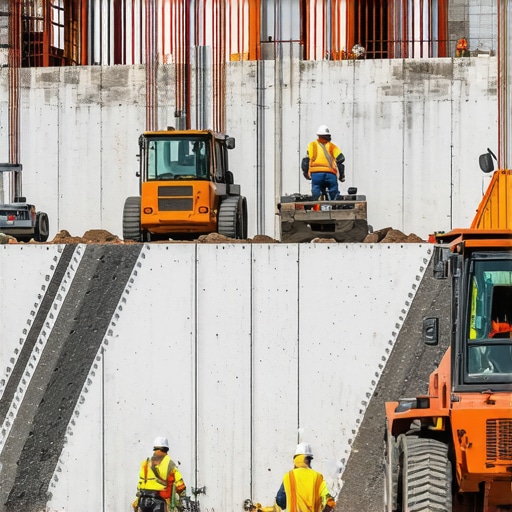
The Hardscape Autopsy: Why Gravity Always Wins
I recently got called out to tear up a $30,000 patio that was sinking because the previous contractor failed to account for hydrostatic pressure. The wall was leaning at a 15-degree angle, not because the stones were weak, but because the soil behind them had turned into a heavy, liquid soup. I’ve spent 20 years digging through failed drainage systems, and the story is always the same. Most homeowners think a leaning wall needs a full replacement. Usually, it just needs a release valve. Physics doesn’t care about your budget. It only cares about the 62.4 pounds of weight every cubic foot of water adds to your soil. If you don’t give that water a path out, it will push through your wall. It’s inevitable.
The $50 Diagnosis: Is Your Wall Saveable?
To fix a leaning retaining wall for under $50, you must focus on hydrostatic pressure remediation and soil moisture management through drainage. If the wall is leaning more than 1/3 of its height in inches, it is a structural failure requiring excavation; otherwise, a $50 drainage retrofit is viable.
“A retaining wall doesn’t fail because of the stone; it fails because of the water trapped behind it.” – Hardscape Engineering Axiom
How do you stabilize a leaning retaining wall without heavy machinery?
The secret is managing the internal angle of friction within the soil. When soil becomes saturated, it loses its ability to hold itself up, shifting the load entirely onto the wall. By installing retroactive weep holes and clearing clogged drainage zones, you reduce the lateral earth pressure significantly. This allows the wall to settle back into its original position over several freeze-thaw or wet-dry cycles. It is a slow fix, but it works for minor leans. You aren’t fighting the wall; you are fighting the water.
The Mechanics of Failure: Hydrostatic Pressure and Saturated Fines
Every retaining wall is a dam that doesn’t hold water. If it does hold water, it fails. Most ‘mow-and-blow’ hacks ignore the fines—those tiny silt particles that migrate into your gravel base and clog it over time. Once those pores are filled, the wall is effectively a solid block resisting a massive weight. Irrigation leaks exacerbate this. A single broken sprinkler head can dump 500 gallons of water directly behind your wall in a week. That is over 4,000 pounds of extra pressure. Don’t overlook your sod install either; if the turf is graded toward the wall, you are funnelling disaster into your hardscape.
| Material | Cost (Approx.) | Function in Remediation |
|---|---|---|
| #57 Clean Stone | $4.00/bag | High-porosity drainage layer |
| Perforated PVC | $12.00/10ft | Main water evacuation artery |
| Non-Woven Geotextile | $15.00/roll | Prevents soil fines from clogging stone |
| Masonry Drill Bit | $18.00 | Necessary for drilling weep holes |
The Step-by-Step Drainage Remediation (The $50 Fix)
You need a percussion drill and a 1-inch masonry bit. Start at the lowest point of the wall. Drill holes every three feet, roughly two inches above the ground level. This is your new weep hole system. If the wall is made of timber, use a standard wood bit. Once the hole is clear, push a small length of PVC pipe into the hole. Wrap the end of the pipe that goes into the soil with a scrap of geotextile fabric. This prevents the dirt from washing out. Total cost? Roughly $45 if you own the drill. This single move can drop the pressure behind the wall by 40% overnight. It will stop the leaning from getting worse. Don’t skip the fabric. Without it, your wall will eventually hollow out and collapse.
“The hydrostatic pressure of saturated soil can exceed 1,000 pounds per square foot, a force few residential walls are designed to withstand without proper drainage.” – ICPI Design Manual
Why is my retaining wall leaning forward?
Your wall is leaning forward because of differential settlement or excessive surcharge loads combined with poor drainage. Often, a yard cleanup project removes the very vegetation that was helping to stabilize the soil’s moisture content, leading to rapid saturation during rain. When the base layer—usually modified gravel—becomes saturated, it softens, allowing the toe of the wall to sink. This creates the ‘lean’ you see. To fix this, you must redirect all irrigation and downspouts at least six feet away from the wall’s top edge.
Soil Grading and the Irrigation Link
I see it every day. A homeowner spends $20,000 on a wall then installs an irrigation system right on the edge of the capstone. It is madness. You are literally injecting the enemy into your wall’s foundation. If you want to save that wall, you need to check your grading. The soil above the wall should slope away from it, or at the very least, have a swale to catch runoff. If you just finished a sod install, ensure the installer didn’t block your existing weep holes. Most landscaping crews treat walls like furniture. They aren’t furniture. They are active engineering components.
The Master Landscaper’s Maintenance Checklist
- Inspect Weep Holes: Check for clogs or soil migration every spring.
- Monitor Downspouts: Ensure they discharge far from the wall’s backfill zone.
- Check Capstones: Any gaps in the top stones allow water to seep directly into the core.
- Vegetation Control: Keep large tree roots away; they can exert 200 PSI against the blocks.
- Surface Grading: Maintain a 2% slope away from the wall’s top edge.
Professional Remediation Tactics
If the wall is leaning due to freeze-thaw cycles, the issue is likely a lack of non-frost-susceptible backfill. In regions with heavy clay, this is a nightmare. Clay holds water, water freezes and expands by 9%, and that expansion pushes the wall. A $50 fix here involves removing a small vertical trench of soil behind the wall and replacing it with clean stone. It’s back-breaking work, but it’s cheap. You are creating a ‘chimney drain’ that allows the water to drop to the weep holes before it can freeze and push. It’s the difference between a wall that lasts 5 years and one that lasts 50. Use yard cleanup time to clear any debris from these drainage paths. A single pile of leaves can act like a dam. Clear it. Stay diligent. Soil is alive and it’s always moving.