
The Symptom: Why Your Yard is Dying One Flash at a Time
A 2026 irrigation timer fault is rarely a computer ghost; it is almost always a short circuit, a blown solenoid, or a grounding issue that triggers the internal fuse of the controller. You fix it by isolating the wiring loop and checking for 24VAC output across the terminals before hard-resetting the microprocessor. When that LCD screen starts flashing ‘FAULT’ or ‘ZONE ERROR,’ your landscape isn’t just thirsty—it’s under biological stress. I see it every July. A homeowner spends five figures on a sod install, only to have a $150 timer blow a fuse while they’re on vacation. By the time they get back, the Kentucky Bluegrass is crispy, and the yard cleanup involves a rake and a trash bag instead of a mower.
The Apprentice Lesson: Programming for Survival
I always drill into my new crew members: if you don’t fix the soil grading first, every plant you put in the ground is just expensive compost. But the second lesson is even more critical: the irrigation timer is the heartbeat of the project. I remember a job back in ’08. We had just finished a massive landscaping overhaul. Three days later, the timer glitched during a lightning storm and stayed ‘ON’ for 48 hours. It turned the backyard into a literal swamp. The hydrostatic pressure from the oversaturated soil actually caused a small timber retaining wall to lean two inches. It wasn’t the wall’s fault. It was the logic board’s fault. If you don’t understand how to reset and calibrate these units, you are gambling with your client’s equity. Modern 2026-series controllers are sensitive. They aren’t just clocks; they are small computers managing irrigation flow rates. Treat them with the same respect you’d give your truck’s ECU.
“Proper irrigation management requires understanding the soil water-holding capacity, not just setting a clock.” – Texas A&M AgriLife Extension
The Forensic Autopsy: Why Controllers Fail
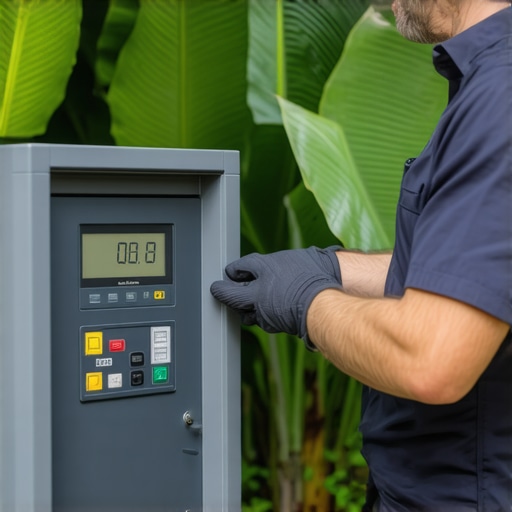
Diagnosis begins at the controller cabinet. Most failures in 2026 models stem from ‘Inrush Current’ spikes. When a solenoid coil starts to fail, its resistance drops. This draws more amperage than the controller is rated for. The result? A ‘Fault’ light. This is the system’s way of preventing a fire. Don’t just clear the code. If you don’t find the shorted wire or the burnt-out solenoid, the fault will return within one watering cycle. It will rot your roots. Excessive water leads to Pythium blight, a fungal nightmare that can liquefy a new sod install in 72 hours. Check your common wire. If that white wire is loose, the entire circuit is broken. It’s binary. It works, or it’s garbage.
How do I test my irrigation solenoid with a multimeter?
To test a solenoid, turn off the power, disconnect the zone wire and the common wire, and set your multimeter to Ohms (Ω). A healthy solenoid should read between 20 and 60 ohms; if the reading is near zero, you have a short circuit, and if it is infinite, the internal coil is broken. Replace it immediately. No amount of resetting the timer will fix a physical copper failure. This is where most DIYers fail. They keep hitting ‘Reset’ while the solenoid is literally melting underground.
The 2026 Reset Protocol: Step-by-Step
If you’ve confirmed the wiring is solid, follow this specific sequence to clear the internal memory of a 2026-series controller. This is the only way to ensure the software ‘handshake’ with the weather sensors is clean. Don’t skip steps. Accuracy matters. 1. Disconnect the 9V backup battery. 2. Unplug the transformer from the wall outlet. 3. Wait exactly 120 seconds for the capacitors to discharge. 4. Hold the ‘Plus’ and ‘Minus’ buttons simultaneously while plugging the unit back in. 5. Once the screen flashes all icons, release the buttons. You are now back to factory defaults. Now, the real work begins: re-programming based on the landscaping needs of your specific micro-climate.
What is the fastest way to clear a ‘Zone Fault’ error?
The fastest way to clear a zone fault is to isolate the specific terminal, remove the wire, and see if the controller still throws the error when that zone is manually activated. If the error persists without the wire, the controller’s internal triac is blown. If the error disappears, the fault is in your field wiring or the solenoid itself. This ‘Process of Elimination’ is the bedrock of professional irrigation repair. It saves you from digging up the whole yard looking for a nicked wire that isn’t there.
| Component | Expected Reading | Failure Sign | Action Required |
| :— | :— | :— | :— |
| Transformer | 24-28 VAC | 0 VAC | Replace Power Supply |
| Solenoid | 20-60 Ω | < 10 Ω | Replace Solenoid Coil |
| Rain Sensor | Closed Circuit | Open Circuit | Check for Debris/Cleanup |
| Backflow | 0 PSI Drop | Water Leak | Professional Rebuild |
The Information Gain: Why ‘Smart’ Timers Fail the Yard
While the internet tells you to water every day, turf grass actually needs deep, infrequent watering—exactly 1 inch per week—to force roots to chase the water down. Most 2026 timers come with ‘Smart’ features that use local weather data. This is often a trap. These systems don’t know if you have heavy clay or sandy loam. If you rely on the default ‘Smart’ setting after a new sod install, the system might only run for 5 minutes. That barely wets the thatch. For new sod, you need three short cycles a day for the first 14 days. After that, you must pivot. Force those roots deep. If you don’t, the first heatwave of August will kill the lawn. Use a ‘Cycle and Soak’ setting to prevent runoff. This is especially true if your yard cleanup didn’t involve core aeration this spring. Compacted soil won’t take water fast. It just runs off into the street. That’s wasted money.
“Electrical resistance in irrigation wiring should remain within 20 to 60 ohms; anything outside this range indicates a failing solenoid or compromised wire jacket.” – Irrigation Association Technical Manual
The Post-Reset Maintenance Checklist
- Check all wire nuts in the valve box for corrosion. Use waterproof grease caps.
- Inspect the rain sensor for spider webs or debris that might be ‘tricking’ the timer into staying off.
- Verify the ‘Run Time’ for each zone matches the head type (Rotor vs. Spray).
- Ensure the 9V battery is replaced annually. It’s cheap insurance.
- Perform a ‘Walk-Through’ manual test to ensure no heads were broken during the last yard cleanup.
The Long Game: Protecting the Investment
Your landscaping is a living, breathing asset. The 2026 irrigation timer is its life support. When it faults, the clock is ticking. Don’t let a simple electrical hiccup turn into a full-scale renovation project. Understand the voltage. Respect the ohms. Monitor the soil. A green lawn is the result of engineering, not luck. If you’ve reset the clock and it still fails, call a pro who knows how to use an underground wire locator. Do not start digging random holes. You will hit a gas line or the main water feed. Precision is the mark of a master. Anything else is just playing in the dirt. Keeping your system calibrated ensures that your sod install reaches its full genetic potential, providing a deep, healthy root system that can survive the harshest dormant seasons. Stay diligent. Check the clock. Trust the multimeter.