
The Chemical Nightmare: Why Your DIY Grub Control Just Killed Your Earthworms Instead
Fixing 2026 lawn grubs requires a strategic intervention using preventative insecticides like Chlorantraniliprole or curative treatments like Dylox applied during the specific larval hatch window between July and September to protect turfgrass root systems from terminal subsurface feeding damage.
A homeowner called me in a panic last August. They had spent three weekends and five hundred bucks on big-box store ‘triple action’ bags because they saw a few brown spots. By the time I arrived, their front lawn looked like a charred wasteland. It wasn’t the grubs that did the most damage; it was the homeowner. They had dumped three different chemicals at double the recommended rate during a heatwave, effectively salting the earth. The soil pH was trashed, the beneficial microbial life was dead, and the grubs? They were happily chewing away three inches down, protected by a layer of thatch that the chemicals couldn’t even penetrate. This is what happens when you treat your yard like a laboratory experiment without a license. Real landscaping isn’t about throwing stuff at the wall to see what sticks. It is about understanding the biological lifecycle of the Phyllophaga and Popillia japonica. If you don’t time the application to the specific instar stage of the larvae, you are just pouring money into the storm drain.
“The first step in any pest management program is the correct identification of the pest and an understanding of its lifecycle to ensure chemical efficacy.” – Penn State Extension
The Forensic Autopsy: Identifying the Squish Beneath Your Feet
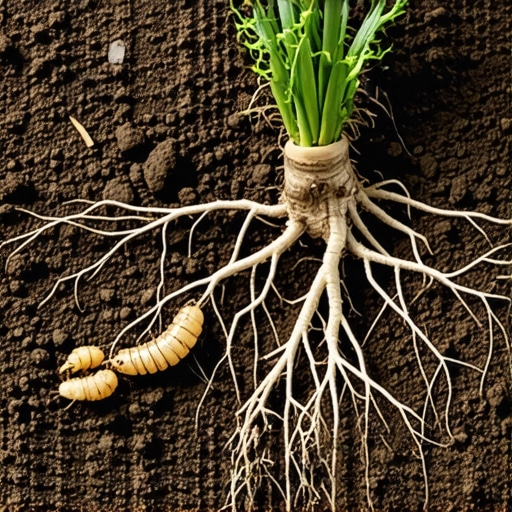
Identifying lawn grubs involves looking for irregular brown patches that peel back like a rolled carpet, indicating that the root architecture has been completely severed by C-shaped larvae feeding in the upper soil profile.
You walk out on your lawn and it feels like you are walking on a sponge. That squishiness? That is the sound of structural failure. When grubs are active, they devour the fibrous roots that anchor your turf to the soil. Without those roots, your grass cannot take up water or nutrients. It doesn’t matter how much irrigation you provide; if the plumbing is gone, the plant dies. I tell my crew to look for the birds. If you see a dozen crows or starlings tearing up a specific patch of your yard, they aren’t there for the scenery. They are hunting for protein-rich larvae. That is your first diagnostic clue. The second is the ‘tug test.’ Grab a handful of the affected grass and pull straight up. If it comes away with no resistance, revealing a collection of white, C-shaped grubs huddled in the dirt, you have a 10-alarm fire on your hands. We aren’t just talking about a few bugs. A heavy infestation can mean 20 to 30 grubs per square foot. At that density, your lawn is already dead; it just hasn’t realized it yet.
How do I know if I have lawn grubs?
Check for localized brown spots that don’t recover with watering. Peel back a one-square-foot section of turf. If you count more than 6-10 grubs in that single square, you need an immediate curative treatment. Anything less might be manageable through healthy turf competition, but high numbers require a professional-grade insecticide. Do not wait for the whole yard to turn brown. By then, you will be looking at a full sod install rather than a simple yard cleanup.
| Treatment Type | Primary Chemical | Application Window | Mechanism of Action |
|---|---|---|---|
| Preventative | Chlorantraniliprole (Acelepryn) | April – June | Systemic uptake; kills young larvae as they hatch. |
| Curative | Trichlorfon (Dylox) | August – September | Contact kill; targets larger, active larvae. |
| Biological | Milky Spore / Nematodes | Late Spring | Natural pathogens that infect and kill grubs over time. |
The Engineering of Eradication: Why Timing Beats Power
Effective grub eradication depends on the synchronization of chemical application with the egg-hatch cycle, ensuring that systemic insecticides are present in the rhizosphere exactly when the first-instar larvae begin feeding in mid-summer.
Most people fail because they try to kill grubs in the spring. That is a waste of time. The big grubs you see in April are nearing the end of their lifecycle. They are about to pupate and turn into beetles. Their carapaces are thick, and their metabolism is slowing down. They are almost impossible to kill with standard treatments. The real target is the next generation. In June and July, the beetles emerge, mate, and lay eggs back in your soil. Those eggs hatch into tiny, hungry larvae in late July and August. This is the window. This is when they are vulnerable. If you used a preventative earlier in the season, the chemical is already in the grass blades. When those tiny grubs take their first bite, they die. If you missed that window, you have to use a curative contact killer. But here is the catch: you must water it in. I see so many guys spread granules and then just leave them. The sun breaks down the chemical, or it just sits on top of the thatch. You need at least a half-inch of irrigation immediately after application to drive that poison down into the root zone where the grubs live. It is basic hydraulic engineering. No water, no kill.
“Effective control of soil-dwelling larvae requires precise timing relative to the egg-hatch cycle and sufficient soil moisture to facilitate chemical movement into the root zone.” – Hardscape and Turf Management Manual
When is the best time to apply grub control?
The best time to apply a preventative grub control is between May and June. This allows the turfgrass to absorb the active ingredients before the Japanese beetle egg-hatch occurs in July. For curative treatments, the window is late August when the grubs are actively feeding near the surface.
Remediation and Recovery: From Dirt to High-Performance Turf
Lawn restoration after a grub infestation requires core aeration to reduce thatch buildup, followed by overseeding or a sod install to re-establish turf density and prevent opportunistic weed encroachment in the damaged soil areas.
Once the grubs are dead, the work actually begins. You can’t just leave a patch of dead grass and expect it to fix itself. Nature abhors a vacuum. If you don’t fill that space with high-quality seed or sod, Mother Nature will fill it with crabgrass and dandelions. First, we clear the debris. A heavy yard cleanup is necessary to remove the dead organic matter. Then, we look at the soil. Grubs love thatch. Thatch is that layer of undecomposed stems and roots between the green grass and the soil. If your thatch is more than a half-inch thick, you are basically building a luxury hotel for pests. We run a core aerator over the yard to pull two-inch plugs. This breaks up the thatch, relieves soil compaction, and lets oxygen reach the remaining roots. If the damage is catastrophic, we go straight to a sod install. We cut out the dead stuff, level the grading to ensure proper drainage, and lay down fresh Kentucky Bluegrass or Tall Fescue. It is an instant fix, but it requires irrigation discipline. You have to keep that new sod wet for the first 14 days or you are just throwing money away. Don’t be the guy who spends three grand on sod and then forgets to turn on the sprinklers.
- Assess the damage: Determine if the lawn can be saved or needs a full replacement.
- Mechanical Aeration: Pull 2.5-inch cores to improve soil gas exchange and water penetration.
- Soil Testing: Check pH levels; grubs thrive in slightly acidic soil, but your grass prefers 6.5 to 7.0.
- Strategic Overseeding: Use high-performance, endophytic-enhanced seed that naturally resists surface-feeding insects.
- Irrigation Calibration: Ensure your system provides 1 inch of water per week, delivered in two deep sessions to encourage deep rooting.
Maintaining the Perimeter: Long-Term Defense
Long-term grub prevention is achieved by maintaining optimal turf health through proper mowing heights (3.5 to 4 inches) and balanced nitrogen fertilization, which creates a robust root system capable of withstanding minor pest pressure without visible foliar decline.
Stop scalping your lawn. I see it every Saturday: homeowners setting their mowers to the lowest setting because they think it looks like a golf course. It doesn’t. It looks like a stressed-out weed patch. When you cut grass that short, you stop root growth. Short grass equals short roots. Short roots are easily destroyed by even a small number of grubs. Keep your blades high. This shades the soil, which actually discourages some beetles from laying eggs there, as they prefer warm, moist, exposed dirt. Also, watch your irrigation. Keeping your lawn perpetually soaked in June and July is like putting out a ‘vacancy’ sign for beetles. They want moist soil for their eggs. Let the top inch of soil dry out occasionally. It won’t hurt the grass, but it will kill the eggs. Professional landscaping is about working with the environment, not trying to beat it into submission with a bag of chemicals. Stay vigilant. If you see the signs, act fast. It will rot if you don’t.