
The Foundation of a Healthy Landscape
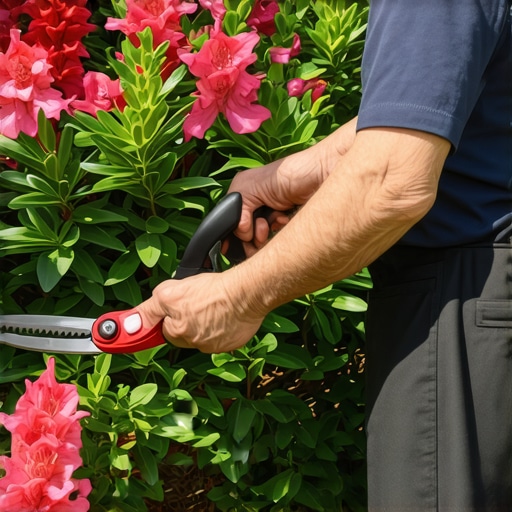
To prune overgrown azaleas without sacrificing next year’s blooms, you must perform selective heading-back cuts or renewal pruning immediately after the spring flowering cycle ends and before flower buds set in mid-summer. This timing ensures the shrub has enough growing season to develop new wood. I always drill into my new crew members: if you don’t fix the soil grading first, every plant you put in the ground is just expensive compost. I remember an apprentice who spent three days planting a row of Southern Indicas into a low spot that collected water from the downspouts. Within a month, the root rot had claimed them all. We had to dig them up, regrade the entire bed for proper drainage, and start over. It is the same with pruning. You cannot just take a pair of electric hedge trimmers and buzz the top of an overgrown azalea. You are essentially committing horticultural malpractice. You destroy the plant’s natural form and cut off every single flower bud for the following year. Professional landscaping requires understanding plant physiology, not just making things look neat for a week.
The Biology of Bloom Cycles and Pruning Timing
Azaleas, specifically those in the Rhododendron genus, differentiate their flower buds on old wood during the late summer months. If you wait until August or September to cut them back, you are removing the embryonic flowers. The window for pruning is narrow. You have roughly three to four weeks after the last flower drops to do your heavy lifting. Any later, and you are looking at a green bush with zero color next spring. It is a simple biological clock. The plant needs time to trigger lateral bud growth and then transition those buds from vegetative to reproductive states before the first frost hits. Don’t skip this window. If you do, you are better off waiting another year.
“Pruning should be completed within three weeks after the blooms fade to avoid removing next year’s flower buds.” – Texas A&M AgriLife Extension
The Renewal Pruning Method for Overgrown Shrubs
When an azalea has reached eight feet and is blocking a window, you need rejuvenation pruning or renewal pruning to restore the shrub’s structural integrity and foliage density. The goal is to reduce the height while encouraging light penetration into the interior of the plant. Without light, the inner branches become leggy and bare. We use the 1/3 rule: never remove more than one-third of the total plant mass in a single season. Start by identifying the oldest, thickest canes. Trace them down into the canopy and cut them back to a main lateral branch or about 6 inches above the ground. This stimulates the dormant buds at the base to push new, vigorous growth. This is not about a haircut; it is about a structural overhaul. You must use bypass pruners, not anvil pruners. Anvil pruners crush the vascular tissue (xylem and phloem), leading to dieback and disease entry points. Clean cuts are non-negotiable.
How much modified gravel do I need for a patio base?
For a standard paver patio, you generally need a 6-inch base of modified gravel (CR6 or 21A), which equates to approximately 1 ton of gravel per 50 square feet. Proper compaction of this base is the only thing preventing your hardscape from settling and heaving over time. Just as soil structure dictates the health of your azaleas, the sub-base dictates the life of your stone work. If you skip the plate compactor, the patio will fail. Period.
Can I use irrigation systems to help azaleas recover?
Using drip irrigation or soaker hoses is the most efficient way to deliver the one inch of water per week required for azaleas to recover from heavy pruning stress. Avoid overhead irrigation, as it promotes petal blight and leaf spot. Proper irrigation ensures the plant has the hydraulic pressure needed to push new foliage after a major cutback. We often install dedicated drip lines for large ornamental beds during a yard cleanup to ensure long-term survivability.
The Tools and Chemistry of Recovery
After you have made your cuts, the plant is in a state of metabolic high-demand. It needs nutrients, but don’t go throwing high-nitrogen fertilizer at it immediately. You want a balanced, slow-release acidic fertilizer. Azaleas are acid-loving plants. If your soil pH is above 6.5, the plant cannot uptake iron, leading to interveinal chlorosis (yellow leaves with green veins).
“Azaleas require an acidic soil environment, typically a pH between 4.5 and 6.0, for optimal nutrient uptake and vigor.” – Penn State Extension
| Pruning Intensity | Goal | Recovery Time | Bloom Impact |
|---|---|---|---|
| Maintenance Thinning | Improve Airflow | 1 Season | Minimal |
| Heading Back | Control Height | 1 to 2 Seasons | Moderate |
| Rejuvenation | Total Restart | 3 Seasons | High (No blooms Yr 1) |
- Sterilize your pruners with 70 percent isopropyl alcohol between plants to prevent the spread of Phytophthora.
- Identify the branch collar and cut just outside it; do not leave long stubs that will rot.
- Apply a 2-inch layer of pine bark mulch to regulate soil temperature and moisture.
- Ensure the root flare is visible; never mound mulch against the trunk.
- Check soil moisture 2 inches deep before adding more water.
Year One: The Settling-In Period
Once the pruning is done, the work isn’t over. The first year after a heavy cut is the most critical. You will see thin, spindly shoots emerging. This is the plant’s hormonal response to the loss of apical dominance. As the terminal buds were removed, the auxin levels dropped, allowing cytokinins to trigger lateral growth. You may need to pinch these new shoots in mid-summer to encourage branching. If you just let them grow, you’ll end up with a sparse, leggy plant again. It takes discipline to maintain a high-end landscape. You can’t just set it and forget it. You have to monitor for lace bugs and spider mites, which love the tender new growth. Use a horticultural oil if you see stippling on the leaves. Keep the water consistent. In my 20 years, I’ve seen more plants killed by ‘kindness’ (over-watering) than by neglect. Stick to the measurements. Get the pH right. Follow the biology. If you do that, your azaleas will be the cornerstone of the property for decades. It won’t happen by accident. It happens through engineering and botanical precision. “