
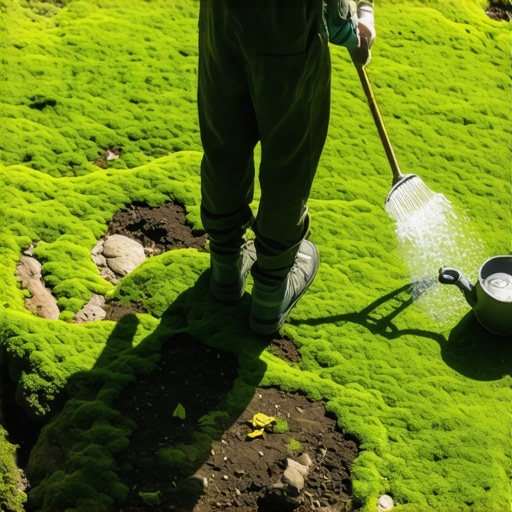
The Forensic Autopsy of a Dying North-Side Lawn
To remove thick moss from a north-side yard, you must remediate the underlying environmental stressors including soil compaction, acidic pH levels, and poor drainage. Mechanical removal via power raking is the first step, followed by applying pelletized lime to adjust pH and core aeration to break up anaerobic soil layers. If you do not change the environment, the moss will return every single season without fail. It is biology, not luck.
I have spent twenty years looking at the north sides of residential properties, and the story is almost always the same. Homeowners see a green carpet and think it is just a different kind of grass until they realize it is a spongy, rootless colony of Bryophyta. I recently dealt with a chemical nightmare where a homeowner called me in a panic after they completely torched their front lawn. They had applied five times the recommended rate of a high-nitrogen ‘weed and feed’ product, hoping to burn out the moss. Instead, they spiked the soil salinity to toxic levels and created a chemical burn that killed every blade of fescue. The moss, which lacks a traditional vascular system, actually fared better than the grass. We had to excavate three inches of topsoil just to make the ground viable for sod install again. This is what happens when you treat symptoms instead of the underlying soil physics.
“Soil acidity is a primary factor in moss encroachment; most turfgrasses struggle when the pH drops below 6.0, whereas mosses can thrive in highly acidic environments where nutrient availability is limited for higher plants.” – Penn State Center for Turfgrass Science
Why Your North-Side Yard is a Moss Magnet
Moss does not compete with grass. It occupies space where grass has already failed. On the north side of a structure, you have the ‘perfect storm’ for turf failure: limited photosynthetic opportunity, high humidity, and soil that never dries out. When soil stays saturated, the pore spaces fill with water instead of oxygen. This leads to anaerobic conditions. Grass roots need oxygen to respire. When they cannot breathe, they die. Moss, which absorbs water and nutrients through its leaves (phyllids) rather than a deep root system, finds these damp, compacted conditions ideal. It will colonize the area and form a thick, hydrophobic mat that prevents any future grass seed from ever reaching the soil. It is a biological takeover.
The Technical Remediation Process
You cannot just spray a chemical and expect a yard cleanup to be finished. You need a mechanical and chemical overhaul. First, we use a power rake or a heavy duty dethatching unit set deep enough to tear the moss away from the soil surface. This is a messy, labor intensive process. You will likely pull up bags and bags of organic material. Once the soil is exposed, we perform a soil test. Ninety percent of the time, the pH is hovering around 5.2 to 5.5. Grass needs 6.5 to 7.0 to effectively take up nutrients like phosphorus and magnesium. We apply pelletized calcitic lime at a rate determined by the Cation Exchange Capacity (CEC) of your soil. Do not guess on the dosage. Too much lime can lock up micronutrients like iron.
| Condition | Moss Preference | Turfgrass Preference |
|---|---|---|
| Soil pH | 4.5 to 6.0 (Acidic) | 6.2 to 7.0 (Neutral) |
| Compaction | High / Anaerobic | Low / Aerated |
| Sunlight | Low (Shade) | High (4 to 6 hours min) |
| Moisture | Constant / Surface Damp | Deep / Infrequent |
How much modified gravel do I need for a patio base?
If the moss is caused by a structural drainage failure, you might be considering replacing the turf with a hardscape. For a stable patio, you typically need a 6 inch base of 2A modified crushed stone, compacted in 2 inch lifts. To calculate volume, multiply the square footage by the depth in feet (0.5), then divide by 27 to get cubic yards. If you skip the compaction, your patio will settle and become a new home for moss in the gaps of the pavers. Landscaping is 80 percent preparation and 20 percent finishing. If the base is wrong, the project is a failure.
Addressing Irrigation and Drainage Infrastructure
Most irrigation systems are programmed by amateurs. They set the zones to run for 15 minutes every morning. This is the absolute worst thing you can do for a north-side yard. It keeps the surface constantly damp, which is exactly what moss wants. Grass needs deep, infrequent watering. You should be aiming for one inch of water per week, delivered in one or two heavy sessions. This forces the roots to grow downward into the soil profile to find moisture as the surface dries out. If the area has a grading issue where water pools against the foundation, no amount of irrigation adjustment will help. You need a French drain or a swale to move that hydrostatic pressure away from the lawn area.
“Water is the most common cause of retaining wall and landscape failure; without proper hydrostatic relief, even the strongest structures will eventually heave and collapse.” – Hardscape Engineering Axiom
The Step-by-Step Moss Removal Checklist
- Identify the Stressor: Determine if the issue is shade, water, pH, or compaction.
- Mechanical Extraction: Use a power rake or heavy metal tines to strip the moss mat.
- Core Aeration: Pull 3 inch plugs to allow oxygen and nutrients to reach the root zone.
- Soil Amendment: Apply lime and a high-phosphorus starter fertilizer based on lab results.
- Over-seeding or Sod: Install shade-tolerant cultivars like Creeping Red Fescue or TTTF.
- Cultural Adjustment: Raise your mower height to 3.5 or 4 inches to increase leaf surface area for photosynthesis.
How do I stop moss from coming back?
The secret is light and air. If you have low hanging tree limbs, prune them up to allow for better air circulation and ‘dappled’ sunlight. If the soil is heavy clay, you must continue core aeration annually. Moss cannot grow on dry, aerated soil that is being shaded by a dense, healthy stand of tall fescue. You must be aggressive. It will rot if you don’t fix the drainage. Don’t skip the soil test. Proper sod install requires a clean, level, and chemically balanced seedbed. If you just slap sod over moss, the sod will fail within two seasons. You are building a biological system, not painting a room. Treat it with the engineering respect it deserves.