
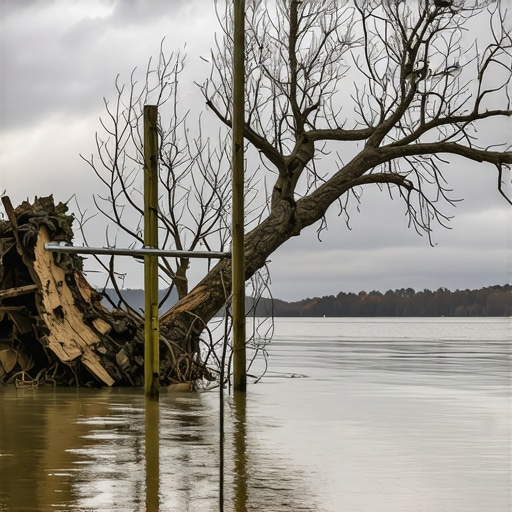
The Post-Flood Autopsy: Recovering Saturated Landscapes
When the floodwaters finally recede, the landscape left behind is not just wet; it is suffocating. You walk out into your yard and the smell hits you first. It is a pungent, metallic stench of anaerobic decay and hydrogen sulfide. The ground under your boots feels like quicksand. This is not a time for aesthetic concern; it is a biological emergency. For a veteran horticulturist, this is a forensic scene where the victim is the root system of your mature trees. Most homeowners wait until the leaves turn brown to act, but by then, the vascular system of the tree is already shuttering. You have a narrow window to intervene before the roots succumb to hypoxia and subsequent fungal invasion.
The Suffocation Mechanism: Why Floodwater Kills Mature Trees
Trees die in floods because excess water displaces oxygen in the soil, leading to root hypoxia. Without oxygen, roots cannot perform cellular respiration, causing them to rot and die within days, particularly in heavy clay soils that retain moisture and lack proper landscaping drainage. When the soil pore space, which should ideally be fifty percent solid, twenty five percent water, and twenty five percent air, becomes one hundred percent liquid, the metabolic processes of the tree grind to a halt. I always drill into my new crew members: if you don’t fix the soil grading first, every plant you put in the ground is just expensive compost. I saw a project last year where a beautiful white oak was lost simply because the contractor built a raised bed around it right before a storm, essentially creating a bowl that held water for a week. That tree did not just die; it was murdered by poor engineering.
“A tree’s ability to survive flooding depends on the duration of the saturation and the species’ physiological adaptations to anaerobic conditions.” – USDA Forest Service Technical Manual
How long can a tree survive underwater?
Survival depends on whether the tree is in its active growing season or dormant. During the summer, a tree can suffer permanent root damage in as little as 48 hours of standing water. If the water is moving, it carries more dissolved oxygen, giving the tree a slightly longer lifespan. However, stagnant water is a death sentence. The physical weight of the water also exerts pressure on the soil, compacting it further and sealing the surface as it dries, which creates a crust that prevents future gas exchange.
The Cleanup Protocol: Removing Toxic Silt and Debris
Immediate yard cleanup is the first step in remediation, focusing on removing the fine layer of silt and clay sediment left by floodwaters. This silt layer, often only an inch thick, acts as a physical barrier that prevents oxygen from reaching the roots even after the water has drained away. You must scrape this material away manually. Do not use heavy machinery; the ground is too saturated, and the PSI from a skid steer will crush the remaining soil structure, turning your yard into a parking lot of compacted mud. Use a flat shovel and a light touch. This is the unglamorous side of landscaping that saves lives.
| Tree Species | Flood Tolerance Level | Soil Preference Post-Flood |
|---|---|---|
| Bald Cypress | High | Moist, Acidic |
| River Birch | Medium-High | Alluvial Silt |
| Sugar Maple | Low | Well-drained Loam |
| White Oak | Very Low | Sandy Loam |
Hydraulic Pressure and Hardscape Integrity
Flood events do not just affect the plants; they wreak havoc on your infrastructure. If you have a patio or a retaining wall near your trees, the hydrostatic pressure can cause significant shifting. I have seen sod install projects stripped clean off a slope because the irrigation lines underneath were pressurized by floodwater and blew out. You need to inspect the base layers of your hardscapes. If you see settling or cracking, the modified gravel base has likely been washed out or contaminated with fines. This requires a full excavation and reset; there are no shortcuts here.
“A retaining wall doesn’t fail because of the stone; it fails because of the water trapped behind it.” – Hardscape Engineering Axiom
How much modified gravel do I need for a patio base?
Standard patio construction requires at least 6 inches of compacted 21A or 57 stone, but post-flood areas should consider 8 to 10 inches to provide better drainage and structural support against future saturation. The goal is to create a reservoir that allows water to move through the profile without moving the soil. If your yard lacks this, you are just waiting for the next disaster.
The Remediation Process: Air and Nutrition
Once the silt is gone, you must address the compaction through vertical mulching or radial trenching. This involves drilling 2 inch diameter holes 18 inches deep throughout the drip line of the tree and filling them with a mix of pea gravel and organic compost. This creates chimneys for air to reach the roots. Do not fertilize with high nitrogen products immediately. The tree is under stress; pushing top growth with nitrogen is like asking a marathon runner to sprint while they are having a heart attack. Focus on mycorrhizal fungi and humic acid to stimulate root recovery first.
- Inspect the root flare: If it is buried by more than 2 inches of new sediment, dig it out.
- Check irrigation valves: Silt will ruin solenoids and clog emitters. Flush the entire system.
- Monitor for secondary pests: Stressed trees emit chemicals that attract borers and bark beetles.
- Test soil pH: Floodwater often alters chemistry, especially if it was contaminated with street runoff.
It will rot if you do not act. Don’t skip the aeration. The tree may look fine for three months, then suddenly drop every leaf in August. That is the delayed mortality of root rot. You are playing a long game now. Maintenance for the next two years must be precise. Water the tree during droughts, but do not over-saturate. The root system is now smaller and less efficient. It needs professional-grade care, not just a sprinkler on a timer. Every inch of water counts.