
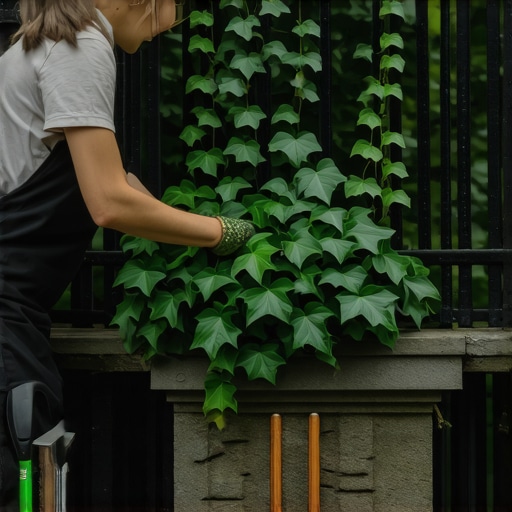
The Hard Reality of Ivy on Timber
I always drill into my new crew members: if you don’t fix the soil grading first, every plant you put in the ground is just expensive compost. The same hard-nosed logic applies to your perimeter fencing. Stripping thick ivy from fences without wood rot requires a surgical approach to sever the vascular connection between the vine and the soil, followed by a mandatory desiccation period to weaken aerial rootlets before mechanical removal begins. I have seen hundreds of fences that looked sturdy until we peeled back the Hedera helix, only to find the 4×4 pressure-treated posts had the structural integrity of a wet sponge. You aren’t just cleaning a fence; you are performing a forensic extraction to save your landscaping investment.
“A fence covered in invasive vines creates a micro-climate where the relative humidity at the wood surface remains near 100 percent, facilitating rapid colonization by decay fungi.” – Forest Products Laboratory Research Note
The Anatomy of Wood Rot Under Invasive Ivy
To strip thick ivy from fences without causing wood rot, you must identify the cellulose-degrading fungi that thrive in the moisture trap created by the vine canopy and its aerial rootlets. These rootlets secrete a bio-adhesive that anchors the vine, while simultaneously channeling water into the grain of the wood, leading to catastrophic failure of the lignin structure. It is a slow-motion car crash for your property. I recently inspected a property where the homeowner thought the ivy was holding the fence up. They were right. The wood had vanished, leaving only a skeleton of roots and irrigation-soaked mulch. To avoid this, you need to understand the biology of the enemy.
How do you remove ivy residue from wood?
Removing the residual ‘feet’ of the ivy requires a stiff-bristled nylon brush and a localized application of a white vinegar solution or a specialized wood cleaner. Do not use a pressure washer on high settings, as this will inject water deep into the softwood fibers, inviting brown rot. Patience is your only tool here. Let the vine remnants dry until they are brittle. If you try to scrub them while they are green, you will pull the wood grain right off the board. You are looking for a clean separation of the adhesive disc from the cellulose wall.
| Wood Type | Rot Resistance | Ivy Impact Level | Remediation Difficulty |
|---|---|---|---|
| Pressure Treated Pine | Moderate | High (Chemical reaction) | Hard |
| Western Red Cedar | High | Moderate (Tannin protection) | Medium |
| Redwood | Very High | Low (Natural oils) | Easy |
| Untreated Spruce | None | Extreme (Rapid decay) | Near Impossible |
The Step-by-Step Forensic Extraction Process
The first step is the ‘Girdle Cut.’ Take your bypass pruners and cut every single ivy vine at the base, about 12 inches above the ground. Do not pull them yet. You must wait. This is where most yard cleanup crews fail. They start pulling immediately and destroy the fence panels. [IMAGE_PLACEHOLDER] You need the vine to die and shrink. This process takes two to three weeks. During this time, the hydrostatic pressure within the vine drops, and the grip of the rootlets loosens. Once the leaves turn brown and crispy, you can begin the removal from the top down. Work in small sections. Use a flat-head screwdriver or a small pry bar to gently lift the main stems away from the fence pickets. If you feel resistance, cut the vine into smaller pieces. Never ‘rip’ the vine.
“Invasive species management on structural timber requires a multi-phase approach: mechanical disruption, chemical desiccation, and long-term moisture control.” – USDA Forest Service Technical Bulletin
Will ivy kill a wooden fence?
Yes, ivy will kill a wooden fence by trapping moisture against the surface and providing a conduit for wood-boring insects and fungal spores. The weight of a mature ivy colony can also exceed the structural load capacity of the fence posts, especially during heavy rain or wind events. I have seen 400-pound ivy mats snap a 4×4 post at the ground line because the wood was already softened by white rot fungi. It is not a matter of if, but when.
Yard Cleanup and Post-Extraction Restoration
Once the fence is clear, your job isn’t done. The ground at the base of the fence is now a graveyard of ivy roots and high-nitrogen organic matter. This is the perfect time for a sod install or a fresh layer of landscaping mulch, but first, you must address the soil. Use a mattock to dig out the main root balls. If you leave them, they will resprout within weeks. Check your irrigation heads. Often, ivy thrives because a sprinkler is hitting the fence directly. Re-aim those heads to ensure the wood stays dry. A dry fence is a long-lived fence. Don’t skip the grading check either; ensure water flows away from the post footings. If the wood is still sound but stained, apply a high-quality oil-based stain with a mildewcide additive. This creates a hydrophobic barrier that future spores cannot penetrate easily.
- Safety Gear: Heavy leather gloves, eye protection, and a long-sleeved shirt to avoid skin irritation from sap.
- Pruning Tools: Sharp bypass pruners and a small folding saw for thick woody trunks.
- Scrubbing Tools: Stiff nylon or brass brushes (avoid steel wire, as it leaves rust-prone metal fragments).
- Chemical Help: 5 percent acidity white vinegar or a professional-grade wood brightener.
- Disposal: Do not compost ivy; the seeds and stems can survive and re-infest your yard. Bag it and haul it.
How much does it cost to remove ivy from a fence?
Professional removal of thick ivy from a standard residential fence typically ranges from $15 to $30 per linear foot, depending on the height and density of the growth. This cost reflects the labor-intensive nature of manual stripping and the specialized yard cleanup required. If the fence requires structural repair or post replacement due to wood rot, the price can double. Doing it yourself saves money but requires significant time to ensure the wood remains intact. Don’t be a hack. Do it right or don’t do it at all.
{“@context”:”https://schema.org”,”@type”:”HowTo”,”name”:”How to Strip Thick Ivy from Fences Without Wood Rot”,”step”:[{“@type”:”HowToStep”,”text”:”Cut all ivy vines at the base, 12 inches above the soil line.”},{“@type”:”HowToStep”,”text”:”Wait 14 to 21 days for the foliage to die and the rootlets to dry out.”},{“@type”:”HowToStep”,”text”:”Gently pry the main stems away from the wood using a flat-head tool.”},{“@type”:”HowToStep”,”text”:”Scrub remaining rootlet ‘feet’ with a stiff nylon brush and vinegar solution.”},{“@type”:”HowToStep”,”text”:”Apply a protective oil-based stain to seal the wood from future moisture.”}],”totalTime”:”P21D”}