
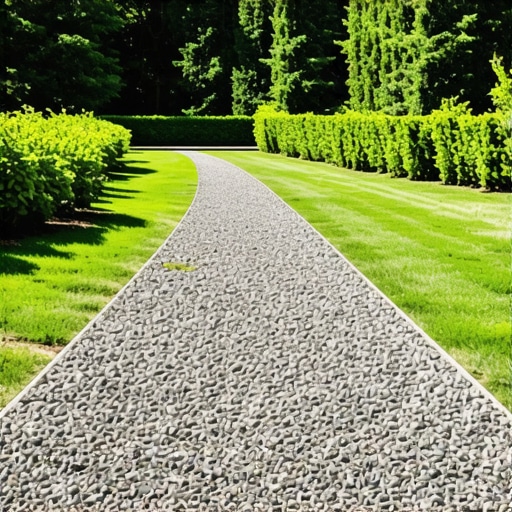
Laying a Gravel Path That Won’t Wash Away in 2026
I recently got called out to tear up a $30,000 landscape project where the walkways were literally sliding into the neighbor’s drainage ditch. The previous contractor, one of those ‘mow-and-blow’ outfits that decided to try their hand at hardscaping, simply dumped two inches of pea gravel directly onto uncompacted topsoil. Within six months, the gravel had migrated into the clay, and the first heavy spring rain turned the path into a slurry of mud and expensive stone. It was a textbook failure of base-layer engineering. I had to tell the homeowner that the only way to fix it was a total excavation. If you don’t respect the soil physics, the earth will always win. Do it right the first time or don’t do it at all.
Why Most Gravel Paths Fail Within Two Seasons
To prevent a gravel path from washing away, you must address soil stabilization, hydrostatic pressure, and aggregate friction through a multi-layered approach involving excavation, geotextile barriers, and mechanical compaction. Most failures occur because the installer ignores the sub-grade preparation or chooses rounded stones that lack the internal friction to lock together under foot traffic or water flow.
“A retaining wall doesn’t fail because of the stone; it fails because of the water trapped behind it.” – Hardscape Engineering Axiom
How deep should a gravel path base be?
For a standard residential footway, you need a minimum depth of four to six inches. This includes a three-inch sub-base of compacted crushed stone and a two-inch finish layer. In areas with high clay content or poor drainage, you may need to go deeper to reach stable sub-soil. Excavation is the hardest part. Do not skip it. If you build on top of turf, it will rot. The organic matter will decompose, creating voids that lead to immediate sinking and ruts.
| Material Type | Drainage Rating | Compaction Strength | Best Use Case |
|---|---|---|---|
| #57 Crushed Stone | High | Moderate | Base layers and drainage trenches |
| #411 Limestone (Crushed) | Medium | Very High | Structural sub-bases for paths |
| Pea Gravel (Rounded) | Very High | Zero | Decorative top-dress only (not for slopes) |
| Decomposed Granite | Low | High | Drought-tolerant, firm walking surfaces |
The Engineering of the Base: Excavation and Compaction
Structural integrity starts with the Modified Proctor Density of your soil. Once you have cleared the yard debris and performed a thorough yard cleanup, you must excavate the path to a depth of at least five inches. Remove all organic material, including roots and sod. If you leave a single root flare from a nearby tree, it will eventually heave your path. After excavation, the sub-grade must be compacted using a vibratory plate compactor. A hand tamper is not enough. You need at least 3,000 lbs of centrifugal force to bridge the air gaps in the soil. This prevents future settling. Soil is a living structural material. It moves. You must force it to stay still.
“Proper compaction of the sub-base is the single most important factor in the longevity of any aggregate installation.” – ICPI Manual
The Critical Role of Geotextile Fabric
Never let your stone touch the dirt. This is the golden rule of landscaping. You must install a non-woven geotextile fabric between the compacted soil and your gravel base. This fabric performs ‘separation,’ preventing the heavy stone from sinking into the soft sub-grade while still allowing water to permeate through to the water table. If you use cheap, woven ‘weed barrier’ from a big-box store, it will fail. You need a 4-ounce or 6-ounce needle-punched non-woven fabric. This manages hydrostatic pressure by letting the ground breathe. It also stops ‘fines’ from migrating upward and clogging your drainage layers. It is non-negotiable.
How do you keep gravel from washing away on a slope?
On any grade steeper than 5 percent, you must use angular aggregates and permeable pavers or cellular confinement grids (geocells). Angular stones like crushed limestone have jagged edges that lock together like a jigsaw puzzle. Rounded stones like pea gravel act like ball bearings and will roll down the hill the moment someone steps on them. For extreme slopes, a sod install nearby can help redirect runoff away from the path, but the path itself needs mechanical stabilization. Use aluminum or heavy-duty steel edging to contain the lateral spread of the stone.
Material Selection: Angular vs. Rounded Aggregates
Selection of material is where most DIY projects go off the rails. You aren’t just looking for a color; you are looking for a sieve size. For the base layer, I always use a #411 or #617 crushed stone. This is a mixture of 3/4-inch stone down to stone dust. When compacted, the dust fills the voids between the larger rocks, creating a surface as hard as concrete but still permeable. For the top one-inch ‘wear’ layer, you can use a clean #8 or #9 angular chip. This looks professional and stays put. Avoid ‘screenings’ for the top layer in wet climates, as they can track into the house. Keep it clean. Keep it angular.
- Call 811 before you dig to mark irrigation lines and utilities.
- Use a 2-to-3-inch lift for compaction; don’t try to compact 6 inches at once.
- Pitch the path 1/4 inch per foot to one side to ensure surface runoff.
- Install edge restraints slightly below the surrounding grade to prevent tripping.
- Use a non-woven geotextile, not plastic sheeting.
Long-Term Maintenance and the 2026 Outlook
A well-engineered path requires minimal maintenance, but it is not maintenance-free. Over time, organic matter like leaves and grass clippings will blow onto the path. If left to rot, this creates a ‘soil’ layer on top of your gravel where weeds will germinate. You must perform a regular yard cleanup by blowing or raking off debris. If you see weeds, don’t just spray them; ask why they are there. Usually, it’s because the path is dirty, not because the fabric failed. In 2026, we expect more intense rainfall patterns. This means your irrigation and drainage systems must work in tandem with your hardscaping. If your gutters dump water directly onto your gravel path, no amount of compaction will save it. Direct that water elsewhere. Build for the storm, not for the sun.