March 16, 2026 | Michael Smith

3 Warrenton VA Mulching Fixes to Stop Garden Rot in 2026
3 Warrenton VA Mulching Fixes to Stop Garden Rot in 2026

The sky over Fauquier County often hangs heavy with the scent of damp earth and wood smoke. You stand on your back porch, coffee cooling in your hand, watching the gray mist settle over the boxwoods. It is a quiet beauty. But beneath that silence, something else is happening. The red clay soil, notorious for its stubbornness, is beginning to choke. The roots of your favorite azaleas are drowning in a slow-motion flood that you cannot see. This is the reality of our local weather—a cycle of saturation and stagnant air that turns a vibrant yard into a soggy grave for expensive greenery. Editor’s Take: To survive the coming seasons, homeowners must move beyond aesthetics and treat mulch as a biological defense system rather than a cosmetic rug.

3 Warrenton VA Mulching Fixes to Stop Garden Rot in 2026

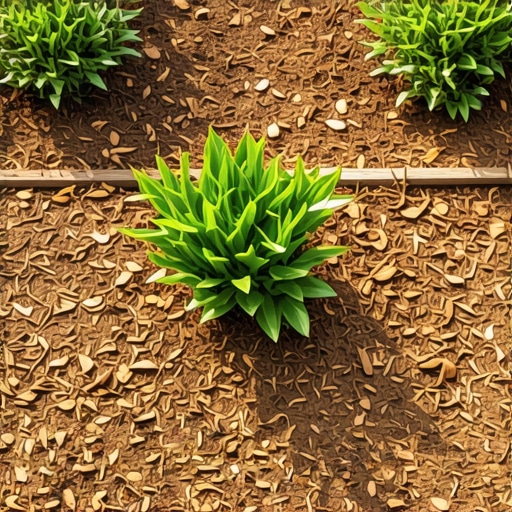
Understanding the nature of Landscape maintenance Warrenton VA requires a shift in perspective. It is not about keeping things tidy for the sake of the neighbors; it is a psychological battle against the entropy of the Piedmont region. When people seek out Landscaping services in Warrenton VA, they often do so out of a deep-seated desire for order. We want our outdoor spaces to reflect a sense of peace that the modern world denies us. This connection to the land is primal. We plant, we prune, and we wait. But the psychology of gardening often ignores the invisible. We focus on the bloom, forgetting the fungus. Mulching services Warrenton VA should be viewed as the skin of the earth. Without it, the soil temperature fluctuates wildly, and the microbiome suffers. Sod installation Warrenton VA fails when the transition between the grass and the beds isn’t managed with physical barriers. It’s about creating a sanctuary that actually functions. Professional Landscaping services in Warrenton VA focus on this biological balance, ensuring that every layer added to the earth serves a purpose deeper than just looking sharp for a Saturday afternoon barbecue. The soil, hungry and depleted, needs that organic interaction to stay alive.

Reality is messy. I have seen the most expensive Tree and shrub planting Warrenton VA projects crumble within eighteen months because of ‘volcano mulching.’ This is where mulch is piled high against the trunk, creating a dark, moist habitat for rot and rodents. It feels like you are protecting the tree, but you are actually suffocating it. Hardscaping contractors Warrenton VA often have to come in after the fact to fix drainage issues that poor planting caused. The highs of a fresh yard are intoxicating—the smell of cedar, the crisp lines of a new stone path. The lows are the discovery of root rot in a thousand-dollar Japanese Maple. Sometimes, the Patio installation Warrenton VA looks perfect, but the runoff wasn’t calculated. The water pools. It sits. It breeds mosquitoes and ruins the lawn. You need to watch the water during a downpour. If it doesn’t move, your yard is in trouble. Retaining wall builders Warrenton VA provide more than just height; they provide the structural integrity required to keep the hillside from sliding into your foundation. The struggle is constant. It is a dance between the desire for a flat, usable space and the natural inclination of the Virginia hills to move and breathe.

A War Between Stone and Stem

There is an old-school approach that says more is always better. Pile on the bark. Build the wall higher. But modern Warrenton VA landscape design leans toward ecological intelligence. We are moving away from dyed mulches that leach chemicals into the groundwater and toward triple-shredded hardwoods that knit together, preventing erosion on those tricky slopes. Expectation says your yard should look like a magazine cover on day one. Reality says a healthy yard takes three years to truly find its rhythm. Lawn care services Warrenton VA are evolving. We are seeing a move toward native plants that require less intervention. When comparing approaches, the ‘set it and forget it’ mentality is the fastest way to lose your investment. You must be an active participant. Even the best Hardscaping contractors Warrenton VA cannot account for every shift in the local water table without regular check-ins. It is a partnership between the homeowner and the professional. The best results come when we respect the natural drainage patterns of the land rather than trying to force them into submission. According to a study by the Virginia Cooperative Extension, proper organic matter management can reduce water needs by up to sixty percent. This isn’t just theory; it is survival for your garden in an increasingly volatile climate.

Frequently Asked Questions from the Neighborhood

Does mulch really prevent all weeds? No. It suppresses them and makes the ones that do appear much easier to pull. How deep should the mulch be? Two to three inches is the sweet spot. Any more and you are blocking oxygen. When is the best time for Tree and shrub planting Warrenton VA? Late fall or early spring, giving the roots time to establish before the summer heat hits. What about the drainage near my new patio? Every Patio installation Warrenton VA should include a pitch of at least one inch for every ten feet to ensure water moves away from the house. Your yard is an living, breathing thing. It deserves a hand that understands its moods. If you are ready to stop the rot and start building a space that lasts, reach out to someone who knows the local soil. Let us look at your drainage and your mulch layers before the 2026 rains begin. Your garden will thank you for the care. [IMAGE_PLACEHOLDER]
March 16, 2026 | Anna Lee

5 Sod Rooting Tactics to Save Your 2026 Lawn From Heat Stress

5 Sod Rooting Tactics to Save Your 2026 Lawn From Heat Stress

The Brutal Reality of Modern Turf Survival

The dirty secret of the landscaping industry is that most sod is dead before it even hits your driveway. Homeowners spend thousands on yard cleanup and sod install projects only to watch the grass turn into expensive kindling by July. If you want a lawn that survives the projected heat spikes of 2026, you have to stop thinking like a gardener and start thinking like a civil engineer. I always drill into my new crew members: if you don’t fix the soil grading first, every plant you put in the ground is just expensive compost. You can’t out-water a bad base. We recently saw a site where a ‘mow-and-blow’ hack laid TifTuf Bermuda directly over compacted construction debris; within three weeks, the root system had hit a literal wall and charred. If the roots don’t chase the moisture down into the sub-base, the surface heat will cook the crown of the plant every time.

1. Precision Sub-Grade Excavation and Soil Decompaction

Soil decompaction involves mechanically breaking up the ‘hardpan’ layer to a depth of 6-8 inches to ensure roots can penetrate deep enough to escape surface thermal 100-degree spikes. Most residential soils are compacted to a bulk density that rivals concrete, preventing oxygen exchange and water infiltration. Do not ignore the 811 markers before you dig. We use a heavy-duty hydraulic tiller or a subsoil ripper to shatter the clay. If you are dealing with heavy red clay, you must incorporate expanded shale or coarse sand to create macropores. This isn’t about fluffing the dirt; it’s about structural soil integrity.

“A retaining wall doesn’t fail because of the stone; it fails because of the water trapped behind it, and a lawn fails for the same reason—poor subsurface drainage and compaction.” – Hardscape Engineering Axiom

How deep should soil be tilled before sod installation?

For high-performance turf, you need a minimum of 6 inches of friable, loose soil. This allows the primary and secondary roots to establish a vertical architecture. If you only scratch the surface, the roots will grow horizontally, making them extremely susceptible to desiccation during a drought. We measure compaction with a penetrometer; if it’s over 300 PSI, the roots stop growing. Period.

2. Calibrating Irrigation for Deep Capillary Action

Irrigation calibration for new sod requires a shift from frequent, shallow misting to deep, infrequent soaking once the initial knitting phase is complete to force root elongation. In 2026, water restrictions will likely be tighter, meaning your irrigation system must be 100% efficient. We use MP Rotator heads because they deliver water at a slower rate (0.4 inches per hour), which matches the soil’s infiltration rate. If you apply water faster than the soil can absorb it, you get runoff and wasted money.

PhaseFrequencyDuration (Target)Goal
Days 1-103x Daily10-15 minsKeep pads moist
Days 11-211x Daily30 minsEncourage initial rooting
Day 22+2x Weekly1.0 inch totalDeep root chasing

How much water does new sod need in high heat?

New sod needs approximately 1 inch of water per day for the first week, split into three sessions to prevent the soil from reaching the ‘wilting point.’ However, by week four, you must drop the frequency. If you keep the surface wet, the roots have no reason to grow down. They stay lazy and shallow. That is how you kill a lawn.

3. Microbial Inoculation and Cation Exchange Optimization

Soil microbiology optimization involves introducing mycorrhizal fungi and humic acid to the soil profile to enhance the plant’s ability to uptake nutrients and withstand osmotic stress. We don’t just dump 10-10-10 fertilizer; that’s a rookie mistake. High-salt fertilizers can actually burn the tender new roots of fresh sod. Instead, we focus on the Cation Exchange Capacity (CEC).

“The ability of a soil to hold onto nutrients is just as critical as the nutrients themselves; without organic matter, your fertilizer is just washing into the groundwater.” – Texas A&M Agronomy Extension

We use a liquid kelp and humic acid blend during the landscaping process to stimulate the ‘root hairs’—the microscopic structures that do 90% of the water absorption. It’s science, not magic.

4. The ‘Forensic’ Yard Cleanup and Thatch Management

A professional yard cleanup prior to sodding must involve the total removal of legacy vegetation and the application of a non-selective herbicide to prevent Bermuda or Nutsedge from punching through your new $5,000 lawn. You cannot just lay sod over old grass. It will rot. The decaying matter creates an anaerobic environment that breeds Pythium blight. We use a sod cutter to strip the old layer entirely. Then, we inspect the grade. If the water doesn’t move away from the house at a 2% slope, we fix it with a Harley rake before the first pallet arrives. Don’t skip this. A flat yard is a swamp; a sloped yard is a system.

5. Mechanical Integration: The Roller Mandate

Root-to-soil contact is the single most overlooked factor in sod survival; air pockets between the sod pad and the dirt act as a death trap for new roots. After the sod install, you must use a water-filled lawn roller. It should weigh at least 200-300 pounds. The goal is to press the sod into the mud. If you can pull a corner of the sod up easily, it isn’t making contact.

  • Step 1: Lay sod in a brickwork pattern to minimize seams.
  • Step 2: Use a sharp machete for clean cuts around irrigation heads.
  • Step 3: Roll the entire area in two directions (North-South and East-West).
  • Step 4: Top-dress the seams with a 50/50 sand and compost mix to prevent edge drying.
  • Step 5: Apply a starter fertilizer with high Phosphorus (the ‘P’ in NPK) to trigger ATP production in the roots.

The 2026 Survival Checklist

  • Verify soil pH is between 6.0 and 7.0; adjust with lime or sulfur 3 weeks prior to install.
  • Ensure the irrigation system has a rain sensor and smart controller (EPA WaterSense certified).
  • Check for ‘root flare’ visibility if planting trees near the new turf.
  • Confirm the sod was cut within 24 hours of delivery; yellowing is a sign of nitrogen burn and heat stress in the pallet.

March 15, 2026 | Jane Doe

5 Yard Cleanup Tools That Clear Wet Leaves in Minutes [2026]

5 Yard Cleanup Tools That Clear Wet Leaves in Minutes [2026]

Wet leaves are not just a cosmetic nuisance; they are a structural and biological threat to your landscaping. When moisture levels in leaf litter exceed 40%, the debris undergoes a physical transition from loose organic matter to a compacted, semi-permeable mat that exerts significant downward pressure on turf grass blades. This compaction creates a localized anaerobic environment, effectively suffocating the crown of the plant. If you are serious about yard cleanup, you need to understand that mass and friction are your primary enemies. In 2026, the industry has shifted away from raw horsepower toward high-volume airflow (CFM) and mechanical agitation to break the surface tension of water-saturated foliage.

The Critical Physics of Wet Leaf Management

Yard cleanup for saturated debris requires tools that generate a minimum of 800 CFM (Cubic Feet per Minute) at the nozzle to overcome the static friction of wet organic material. Standard consumer blowers often focus on MPH (Miles Per Hour), which is effective for dry, light material but fails against the adhesive properties of wet maple or oak leaves. High CFM provides the ‘shoving’ force necessary to move the entire mass of the leaf pile rather than just the top layer. You must move the water and the leaf as a single unit. It is heavy work. It requires professional-grade engineering.

“A leaf layer exceeding 1/2 inch in thickness creates an anaerobic seal that traps carbon dioxide and prevents oxygen exchange in the rhizosphere, leading to rapid root rot in high-value turf environments.” – University of Massachusetts Amherst Turfgrass Program

The Chemical Nightmare: A Cautionary Tale of Rot and Nitrogen

I recall a client in late 2024 who had just invested $18,000 in a premium sod install. They decided to save a few hundred dollars by handling the fall cleanup themselves with a cheap electric rake. They left a three-inch thick blanket of wet leaves over the new Kentucky Bluegrass for just fourteen days during a rainy spell. By the time I was called back, the soil pH had plummeted due to the rapid decomposition of the leaf tannins, and the grass had literally fermented. The sod was slimy, black, and dead. We had to strip the entire area, re-grade the soil to fix irrigation drainage issues that the homeowner hadn’t noticed, and start from scratch. It was an expensive lesson: wet leaves are a biological ticking clock. If you don’t clear them with the right tools, you are just composting your investment.

5 Professional Tools for Rapid Wet Leaf Removal

1. High-Output Stand-On Blowers (1200+ CFM)
For large-scale landscaping, the stand-on blower is the undisputed king of 2026. These machines use heavy-duty centrifugal fans that pull air through a 20-inch intake. The sheer volume of air is enough to lift wet mats of leaves and move them 15 feet in a single pass. Unlike handheld units, these maintain consistent pressure even when the pile reaches 12 inches in height. Don’t skip the dual-directional nozzle feature.

2. Walk-Behind Suction Vacuums with Serrated Impellers
A standard vacuum will clog on wet leaves. You need a unit equipped with a serrated steel impeller. These impellers act like a blender, slicing through wet, heavy debris and reducing the volume at a 12:1 ratio. This is critical for yard cleanup because it turns a massive pile of heavy waste into manageable mulch that can be hauled off easily. Look for units with a 3.5-inch intake clearance to avoid choking on twigs.

3. Power Brooms (Mechanical Agitation)
Sometimes air isn’t enough. When wet leaves are matted into the turf, you need mechanical force to break them loose. A power broom with nylon bristles flick the leaves upward, breaking the seal with the grass and allowing your blower to finally catch the edge. This is the secret weapon for clearing wet leaves from driveways and walkways where they have been compressed by vehicle tires. It is aggressive but necessary.

4. Industrial-Grade Debris Loaders
If you are clearing a massive property, a debris loader mounted to a truck bed or trailer is the only way to finish in minutes. These machines use 18-to-25 horsepower engines to vacuum leaves directly from the curb. In 2026, the new ‘V-Flow’ tech minimizes clogs even with 90% moisture content. If you’re doing a pro-level sod install later in the spring, you need this debris gone now so the soil can breathe through the winter.

5. Commercial Mulching Mowers with High-Lift Blades
For thinner layers of wet leaves, a commercial mower with ‘high-lift’ blades creates a vacuum effect under the deck. This lifts the leaves into the spinning blades, pulverizing them into micronized particles. This only works if the blade is sharp enough to shear, not tear. These particles then drop into the thatch layer and decompose quickly, returning nitrogen to the soil without blocking oxygen.

“Leaf mulching is only effective if the particle size is reduced to less than 1/8th of an inch; otherwise, it contributes to rapid thatch accumulation and promotes fungal pathogens.” – Michigan State University Extension

How do you clear wet leaves without damaging grass?

To clear wet leaves without tearing the turf, you must use high-volume air blowers rather than raking. Raking wet leaves often pulls at the roots of the grass, especially if a new sod install was recently completed. Set your blower nozzle at a 30-degree angle to the ground to get under the leaf mat and lift it mechanically with air pressure.

Tool TypeIdeal ConditionEfficiency RatingSoil Impact
Stand-On BlowerDeep, wet piles9.5/10Low (Wide Tires)
Power BroomMatted/Packed debris8.0/10Moderate
Leaf VacuumSmall properties/Mulching7.5/10Low
Mulching MowerLight, damp cover8.5/10Variable
Handheld BlowerDry edges only2.0/10Neutral

What is the best time of day for yard cleanup?

The best time for yard cleanup is mid-afternoon, around 2:00 PM. This allows any morning dew or overnight rain to evaporate slightly, reducing the weight of the leaves by up to 20%. Even a small reduction in moisture content significantly increases the effectiveness of your irrigation-friendly tools and prevents soil compaction from heavy machinery.

  • Inspect all irrigation heads before using heavy walk-behind equipment.
  • Check soil moisture: if the ground is ‘squishy,’ heavy blowers will leave ruts.
  • Always wear ear protection; commercial blowers operate at 95+ decibels.
  • Clear the perimeter first to prevent ‘back-drifting’ of debris into clean areas.
  • Verify 811 markings if you are doing any deep aeration alongside the cleanup.

Proper management of wet leaves is the difference between a healthy spring lawn and a muddy, diseased mess. Don’t be the homeowner who thinks a plastic rake from the garage is going to save their $20,000 landscaping investment. Use the right tools, understand the biology of your turf, and move that debris before the frost sets in. It will rot if you don’t. Plan accordingly.

March 15, 2026 | Jane Doe

4 Native Plant Fixes for Warrenton VA Landscaping in 2026

4 Native Plant Fixes for Warrenton VA Landscaping in 2026

4 Native Plant Fixes for Warrenton VA Landscaping in 2026

The sun hangs heavy over Main Street in July. It is that thick, Fauquier County humidity that makes you feel like you are breathing through a wet wool blanket. Most homeowners are obsessed with a specific suburban ideal, spending thousands on mowing warrenton va services to keep a carpet of non-native grass alive in a place that desperately wants to be a forest. It is a losing battle. The red clay here is stubborn. It is ancient. It does not care about your aspirations for a golf course backyard. This realization is where the shift happens. People are waking up to the idea that lawncare warrenton va is not about domination. It is about partnership. In 2026, the smart money is on the plants that were here long before the first fence post was driven into the ground. Editor’s Take: To survive the intensifying Virginia summers, ditch the thirsty turf and lean into the resilient, deep-rooted natives that actually belong in the Piedmont.

The Red Clay Reckoning

The soil in Warrenton is not just dirt. It is a dense, iron-rich challenge that chokes the life out of delicate ornamentals. When the rain stops for two weeks in August, that clay turns into a ceramic brick. Traditional grass, with its shallow roots, simply gives up. You see it every year: the brown patches, the dust, the frantic watering. But look at the edges of the woods. See the cedars? The oaks? They are fine. They are thriving. This tells us everything we need to know about landscaping warrenton va. We have been fighting the biology of our own zip code. The first fix is radical: stop trying to fix the soil and start choosing plants that love the struggle. Little Bluestem is a perfect example. It does not just survive in our clay; it prefers it. Its roots can reach down five feet, finding water when the surface is baked dry. It turns a striking copper in the autumn, standing tall against the wind while the neighbors’ fescue lays flat and sodden.

Where the Grass Often Quits

Shade is where most residents lose their minds. They try to grow grass under a century-old White Oak and wonder why they end up with a mud pit every spring. It is a classic conflict. The tree is winning the nutrient war, and the grass is a casualty. Instead of forcing another round of mowing warrenton va in the dark, we look to the Oakleaf Hydrangea. This is not the finicky blue mophead you see at big-box stores. It is a rugged, peeling-bark native that handles the deep shade of our local canopies with a certain quiet dignity. It provides a structural anchor that survives the heavy ice storms we have been seeing more of lately. This shift in perspective—moving from a lawn-first mindset to a canopy-support mindset—is what defines modern lawncare warrenton va. According to a 2023 study by the Virginia Native Plant Society, these localized ecosystems support ten times the pollinator variety compared to standard turf, creating a yard that feels alive rather than merely maintained.

The Resistance of the Wild

Then there is the issue of water. Our topography in Warrenton is full of dips and rises. The water pools in the low spots, creating boggy areas that rot the roots of standard boxwoods. People call for landscaping warrenton va help because they think they need expensive French drains. Often, they just need the right biological sponge. Enter Joe-Pye Weed. It is a tall, purple-topped powerhouse that drinks the excess and looks spectacular doing it. It turns a problem area into a destination. This is the reality of the high-and-low cycle in Virginia gardening. You have either too much water or none at all. By integrating these species, you create a buffer. It is a system that self-regulates. You spend less time worrying about the forecast and more time watching the swallowtails. The cost of landscaping becomes an investment in a permanent, evolving asset rather than a monthly bill for a life-support system for grass that hates the heat.

A New Vernacular for the Piedmont

We need to talk about the visual language of our neighborhoods. There is an old-school belief that a “neat” yard must look like a flat green sheet. But that is changing. The modern aesthetic in Warrenton is textured. It is the pink cloud of an Eastern Redbud in April followed by the golden spray of Goldenrod in September. These plants do not need chemical interventions. They do not need the constant, loud hum of equipment. When you choose the Eastern Redbud as your fourth fix, you are adding a nitrogen-fixing tree that literally heals the soil as it grows. It is the ultimate low-maintenance pivot. Compare this to the high-input reality of traditional lawncare warrenton va, where fertilizers often wash off into the Rappahannock River before they even hit the roots. The shift to natives is not just about being “green” in the environmental sense; it is about being efficient. It is about having a yard that does the work for you.

The Small Victories

How do I start transitioning? Begin with a single bed. Replace the dead patch of grass by the mailbox with Wild Bergamot. It is tough as nails and smells like mint and oranges. Can I still have a lawn for my kids or dog? Yes, but keep it small. Treat the grass like a rug, not the whole floor. Is this more expensive up front? Sometimes, but the long-term savings on water, chemicals, and labor are undeniable. The final word on our local environment is simple: the land remembers what it was before the houses were here. When we align our landscaping warrenton va choices with that memory, everything gets easier. The birds come back. The soil softens. The 2026 season should not be a battle against the heat. It should be a quiet, thriving success. If you are ready to stop fighting your yard and start enjoying it, it is time to look at the plants that have been waiting for you to notice them all along.

March 15, 2026 | Jane Doe

3 Staking Fixes to Keep 2026 Sod From Sliding on Slopes

3 Staking Fixes to Keep 2026 Sod From Sliding on Slopes

The Physics of Slope Failure: Why Your New Lawn is Sliding

To keep 2026 sod from sliding on slopes, you must establish a mechanical bond using biodegradable stakes, implement an erosion control blanket foundation, and utilize a staggered herringbone installation pattern. These methods counteract the gravitational shear force and hydrostatic pressure that typically cause sod slabs to detach from the subsoil during heavy rain events or irrigation cycles.

I recently got called out to tear up a $30,000 patio that was sinking because the previous contractor didn’t understand the basic physics of water movement on a 20-degree grade. But before we even touched the stone, I looked at the ‘lawn’ above it. The homeowner had laid five thousand square feet of premium fescue sod the month before. One heavy thunderstorm later, and half of that sod had slumped down the hill like a wet blanket, clogging the drainage channels and putting immense pressure on the retaining wall. This wasn’t a ‘bad batch’ of grass. It was a failure of engineering. If you don’t anchor the organic mass to the inorganic subgrade, gravity wins every single time. Modern landscaping isn’t about making things look pretty; it is about managing the kinetic energy of water and the relentless pull of 9.8 m/s².

The Engineering of the Substrate: Preparation Before the Roll

Preparation for a sloped sod install requires more than a rake; it requires creating a keyed-in surface that increases the coefficient of friction. A smooth, compacted slope is a slide waiting to happen. You need to ‘scarify’ the soil. We use a Harley rake or a heavy-duty garden weasel to create horizontal grooves—essentially mini-terraces—that catch the roots and the stakes. If you are dealing with heavy clay, which is common in many regional yard cleanup projects, you must also address the interface layer. When you lay sod on top of compacted clay, the water hits that clay line and stops, creating a lubricated ‘slip plane’ that allows the entire sheet of grass to slide off the hill. We incorporate gypsum or expanded shale into the top two inches to break up that surface tension and encourage the roots to penetrate deep into the subsoil quickly.

“Slope stability depends entirely on the mechanical bond between the vegetation’s root system and the underlying soil profile.” – University of California Division of Agriculture and Natural Resources (ANR)

How do you install sod on a steep hill?

Installing sod on a steep hill involves laying the slabs perpendicular to the direction of the slope, staggering the seams like bricks in a wall, and physically anchoring each piece with specialized stakes. You must ensure the ‘uphill’ edge of each sod piece is tucked tightly against the ‘downhill’ edge of the piece above it to prevent water from getting underneath the roll.

Fix 1: The Biodegradable Stake Matrix

Biodegradable stakes, specifically 6-inch PLA (polylactic acid) or hardwood pins, provide the initial mechanical shear strength required to hold sod in place while the primary root system establishes. These pins should be driven in at a slight uphill angle to maximize their resistance to the downward pull of the sod’s water-saturated weight.

Don’t use metal staples. I see ‘pros’ doing this all the time, and it’s a rookie mistake. Metal staples rust out or, worse, stay in the ground forever, waiting to be launched by a lawnmower blade in three years. We use 6-inch wooden stakes or biodegradable cornstarch-based pins. The ‘dice-five’ pattern is the only way to do this right: one stake in each corner of the sod slab and one in the dead center. On grades steeper than 3:1, we increase this to three stakes per linear foot along the top edge of every third row. You are essentially ‘stitching’ the grass into the earth. The stake must be flush with the soil surface. If it’s sticking up even a quarter-inch, the first time you run a mower over it, you’re going to rip the stake out and tear the sod slab.

Fix 2: The Jute Netting Foundation (Erosion Control Blankets)

An erosion control blanket (ECB) made of jute or coir fiber acts as a high-friction substrate that prevents soil washout beneath the sod during the critical 21-day rooting period. This layer provides a textured ‘grip’ that the sod install can bite into, significantly reducing the risk of mass wasting on grades exceeding 25 degrees.

For the most aggressive slopes, we don’t put sod directly on the dirt. We lay down a thin layer of jute netting first. Why? Because the bottom of a sod roll is often smooth from the harvester. When that smooth bottom gets wet, it becomes a lubricant. Jute netting creates a ‘velcro’ effect. It also manages hydrostatic pressure. Water moving down the hill under the sod is slowed down by the fibers of the netting, preventing the formation of ‘rills’—those tiny canyons that form under your grass and eventually wash out the whole hillside. This is a critical component of professional landscaping that DIYers almost always skip because it costs an extra $0.15 per square foot. Skip it, and you’ll be buying the sod twice.

Stake MaterialDegradation TimeBest Use CaseShear Strength
Hardwood Stakes12-18 MonthsHeavy Clay, Steep SlopesHigh
PLA Bio-Stakes6-12 MonthsResidential Lawns, Moderate SlopesMedium
Metal StaplesNever (Rusts)Flat areas ONLYLow
Plastic PinsIndefiniteNot Recommended (Environmental Hazard)High

What is the best type of grass for erosion control?

The best grass for erosion control is a rhizomatous or stoloniferous species like Kentucky Bluegrass or Hybrid Bermuda, which spreads via underground runners or surface creepers to create a continuous, interconnected root mat. These species provide superior soil stabilization compared to bunch-type grasses like Tall Fescue.

Fix 3: Staggered Herringbone and ‘Trench-Keying’

A staggered herringbone pattern eliminates long vertical seams that act as water channels, while trench-keying involves burying the top row of sod in a shallow trench to prevent water from diving under the installation. This structural approach ensures that water flows over the top of the grass blades rather than underneath the root zone.

Think of it like roofing. You wouldn’t line up all the shingles in a straight vertical line; the water would go right through. In a sod install, the seams are your weakest point. We offset every row by exactly half a length. At the very top of the hill, where the slope begins, we dig a ‘key trench’—about three inches deep. We tuck the top edge of the first row of sod into that trench and backfill it with soil. This prevents the ‘peel-back’ effect. When heavy rain hits the top of the hill, it hits the grass and flows over it. Without that key trench, the water finds the gap between the sod and the hill, gets underneath, and creates a pressurized pocket of water that lifts the sod off the ground. Once it lifts, it slides. It’s a binary outcome.

“A slope doesn’t fail because of the grass; it fails because of the water trapped under it.” – Hardscape Engineering Axiom (Adapted)

The 10-Point Slope Sod Installation Checklist

  • Grade the slope to ensure no ‘bellies’ or depressions exist.
  • Scarify the subsoil horizontally to a depth of 2 inches.
  • Test soil pH; apply lime or sulfur if the irrigation water is highly alkaline.
  • Install irrigation heads at the top of the slope, never the bottom.
  • Lay the first row of sod at the base of the hill and work upward.
  • Stagger all seams by at least 12 inches.
  • Insert 5 stakes per 2’x5′ roll in a ‘dice-five’ pattern.
  • Use a water-filled roller (half-full) to press sod into the substrate.
  • Apply 1 inch of water immediately to eliminate air pockets.
  • Hand-tuck and soil-fill any visible seams to prevent air-drying.

Irrigation Management: The ‘Pulse’ Method

The biggest mistake people make after a sod install on a hill is over-watering. They turn the irrigation on and let it run for 30 minutes. On a slope, the soil can only absorb water so fast—this is the infiltration rate. Once you exceed that rate, you get runoff. On a slope, runoff means the water is going under the sod. We use ‘pulse’ irrigation: 5 minutes on, 20 minutes off, repeated four times. This allows the water to soak deep into the root zone and the subsoil without creating the saturation levels that lead to sliding. If you see water trickling out from the bottom of the sod at the base of the hill, you have already failed. Stop the water. Let it tighten up. This is the ‘settling in’ period where the soil and sod become one single biological unit. Within 14 days, those roots should have traveled through the jute netting and deep into the scarified subsoil. At that point, the stakes have done their job, and the biology takes over from the engineering. Final maintenance requires keeping the mower height high—at least 3.5 inches—to keep the soil cool and encourage deeper rooting. Don’t scalp it. Scalping kills the very roots holding your hill together.

“,”image”:{“imagePrompt”:”A high-detail cross-section technical illustration of a sod installation on a 30-degree slope. Show the layered structure: compacted subsoil with horizontal scarification grooves, a thin layer of jute erosion netting, the sod slab on top, and 6-inch biodegradable wooden stakes driven at an uphill angle through the sod and netting into the subsoil. Labels should indicate ‘Shear Plane’, ‘Key Trench’ at the top, and ‘Staggered Seams’. Photorealistic style with earth tones.”,”imageTitle”:”Technical Cross-Section of Slope Sod Anchoring”,”imageAlt”:”Diagram showing how to stake sod on a slope using biodegradable pins and jute netting to prevent erosion.”},”categoryId”:14,”postTime”:”2025-05-15T08:00:00Z”}

March 14, 2026 | Michael Smith

Stop 2026 Sod From Peeling With 3 Root-Locking Fixes

Stop 2026 Sod From Peeling With 3 Root-Locking Fixes

The Anatomy of Failed Turf: Why Your Sod Peels Like a Cheap Rug

You step onto your newly installed lawn and the ground shifts. You reach down, grab a handful of grass, and the entire section lifts up, exposing a dry, matted mess of roots that never bit into the earth. It is a visual and tactile failure of biological integration. For a professional, there is no sight more frustrating than seeing several thousand dollars of high-quality turf fail because the installer ignored the transition zone between the sod’s nursery soil and the property’s native subgrade. This peeling phenomenon isn’t just an aesthetic issue; it is a sign of root desiccation and anaerobic pocketing that will eventually lead to a total die-off. To fix it, you have to look past the green blades and analyze the interface of the rhizosphere.

I always drill into my new crew members: if you don’t fix the soil grading first, every plant you put in the ground is just expensive compost. I’ve seen kids who think they can just slap a roll of Kentucky Bluegrass over compacted clay and walk away. It doesn’t work that way. If the soil isn’t graded to allow for proper drainage and scarified to permit root penetration, you’re just creating a temporary green carpet that will bake in the sun and rot in the rain. We don’t build on top of the ground; we build into it. If you aren’t sweating the grading, you aren’t doing landscaping; you’re doing interior decorating with plants that are destined to die.

The Science of the Root-Locking Mechanism

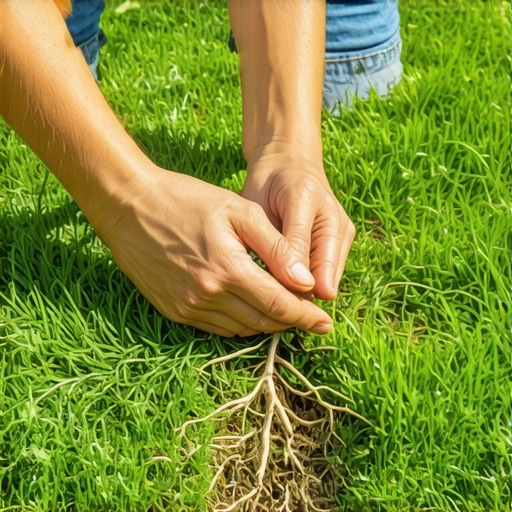
To stop sod from peeling in 2026, you must establish immediate hydraulic capillary action between the sod roll and the subgrade through mechanical rolling, pH-balanced soil amendments, and deep-cycle irrigation that encourages downward geotropism of the roots into the native soil profile. This process requires more than just water; it requires the physical elimination of air pockets and the chemical stimulation of root hairs. When sod is harvested, the root system is severed. The plant is in a state of high-stress survival. To trigger ‘root-locking,’ the moisture levels must be consistent enough to prevent the crown from drying out but sparse enough in the upper half-inch of the sod to force the roots to ‘hunt’ for water in the deeper native soil. If you keep the top saturated 24/7, the roots have no biological incentive to grow downward. They stay in the sod mat, and that’s when you get peeling.

Why does new sod peel like carpet?

Peeling occurs when there is a physical or chemical barrier preventing the adventitious roots of the turfgrass from penetrating the underlying soil. This is often caused by ‘glazing,’ where a heavy clay subgrade is smoothed over by a skid-steer bucket, creating a surface as hard as a sidewalk. Other culprits include excessive thatch layers in the sod itself or a ‘soil bridge’ where the soil type of the sod is significantly different in texture from the native soil, preventing water from moving across the boundary layer. Without water movement, roots won’t follow.

“A retaining wall doesn’t fail because of the stone; it fails because of the water trapped behind it.” – Hardscape Engineering Axiom

Fix 1: Subgrade Preparation and Soil Tilth

Fixing peeling sod starts with preparing the subgrade to a depth of 4 to 6 inches using a power tiller or a Harley rake to eliminate compaction and ensure a bulk density of approximately 1.3 to 1.4 g/cm3. Most ‘mow-and-blow’ contractors skip this. They rake the surface and call it a day. To get a true root-lock, you need to break up the ‘pan layer.’ If your soil is heavy clay, you must incorporate organic matter or calcined clay to improve pore space. We are looking for a balance of macro-pores for drainage and micro-pores for water retention. This is where you perform your yard cleanup—removing every stone larger than a nickel and every bit of debris. Any foreign object left under the sod creates an air pocket. Air pockets kill roots. Period. You should also check your pH. Turf grass generally thrives in the 6.0 to 7.0 range. If you’re at a 5.0, your phosphorus—the primary nutrient for root development—is chemically locked away from the plant. No amount of watering will fix a chemical lockout.

Fix 2: The Mechanical Hydraulic Bond

The mechanical bond is achieved by using a water-filled lawn roller (approximately 200-300 lbs) immediately after laying the sod to force the root zone into direct physical contact with the prepared subgrade. This is not about leveling the lawn; it is about eliminating the ‘death zone’—the thin layer of air between the sod and the earth. Roots cannot grow through air. By rolling the sod, you are effectively ‘stapling’ it to the ground. This also initiates capillary action. Think of the sod and the earth like two sponges. If they aren’t touching tightly, water won’t move from one to the other. Once rolled, the sod should feel firm underfoot, not spongy. If you can still see the seams between the rolls, you haven’t rolled enough or you haven’t tight-tucked the edges. Every seam is a potential site for moisture loss and peeling. [image_placeholder_1]

Fix 3: The Geotropic Irrigation Strategy

Geotropic irrigation involves a tapering schedule that moves from frequent, shallow watering in the first 72 hours to deep, infrequent applications by day 14 to force roots to descend into the subgrade. Most homeowners fail here. They either under-water and the sod turns into parchment, or they over-water for three weeks straight, essentially drowning the roots and encouraging Pythium blight. During the first week, you want the soil to be moist, not muddy. By week two, you skip a day. This ‘drought stress’ is intentional. When the upper layer dries slightly, the plant’s hormonal response (auxins) signals the roots to grow deeper to find the water table. This is the ‘lock.’ If the roots stay in the top inch, the sod will peel next summer the moment the temperature hits 90 degrees. You need those roots 4 to 6 inches deep to survive a 2026 heatwave.

How much modified gravel do I need for a patio base?

While often asked during landscaping overhauls, the rule of thumb for any hardscape adjacent to your sod is a minimum of 4 to 6 inches of compacted 21A or 3/4-inch minus gravel. If you don’t have a solid base, the drainage from your patio will wash out the subgrade of your new sod, leading to sinking and, you guessed it, peeling near the edges. Always slope your base 1/8 inch per foot away from the house to manage hydrostatic pressure.

Soil ComponentIdeal RangeImpact on Root-Locking
Soil pH6.2 – 6.8Maximizes Phosphorus availability for root growth.
Bulk Density1.3 – 1.5 g/cm3Allows for oxygen exchange and root penetration.
Organic Matter3% – 5%Improves Cation Exchange Capacity (CEC) and moisture retention.
Phosphorus (P)HighThe primary engine for initial root branching.

“The success of any turfgrass stand is 90% dependent on the physical properties of the soil at the time of installation.” – Penn State Agricultural Extension

Zero-Peel Installation Checklist

  • Confirm 811 utility markings are complete before any subgrade excavation.
  • Remove all existing vegetation and thatch using a sod cutter; do not just till it in.
  • Scarify the subgrade to a depth of 4 inches to break surface tension.
  • Apply a high-phosphorus ‘starter’ fertilizer (e.g., 10-20-10) to the bare soil.
  • Lay sod in a staggered, brick-like pattern to minimize long seams.
  • Roll with a 250lb roller within 30 minutes of laying the first roll.
  • Perform a ‘pull test’ on day 10; you should feel significant resistance.

How long does it take for sod to root in 2026?

In optimal conditions (temperatures between 60-75°F), you should see ‘white-hair’ roots emerging within 3 to 5 days. Full structural integration, where the sod cannot be lifted by hand, typically takes 14 to 21 days. If you can still lift the corners after three weeks, your irrigation is likely too frequent or your subgrade is too compacted.

March 14, 2026 | Emily Clark

4 Tools to Clear 2026 Yard Debris in Under 60 Minutes

4 Tools to Clear 2026 Yard Debris in Under 60 Minutes

The Engineering of Yard Debris Removal

Efficient yard cleanup in 2026 is no longer about labor-intensive raking; it is about managing organic mass through mechanical advantage and biological timing. To clear a standard residential lot in under 60 minutes, you must treat the yard as a logistics site where landscaping debris is moved, processed, and staged for decomposition or removal. Speed is a byproduct of high-CFM equipment and a fundamental understanding of the friction coefficients of your turf grass. If you are still using a plastic rake and a 30-gallon bag, you are wasting calories on a problem that requires physics.

The Apprentice Lesson: Why Prep Matters

I always drill into my new crew members: if you don’t fix the soil grading first, every plant you put in the ground is just expensive compost. The same logic applies to debris. I remember a job in ’14 where a homeowner spent three days raking oak leaves into a low spot that didn’t drain. By the time we arrived for a sod install, that debris had turned into a slimy, anaerobic mat that had literally suffocated the soil microbiology. We had to excavate four inches of ‘black butter’ just to find a stable base. Cleanups aren’t just about aesthetics; they are about preventing the structural failure of your ecosystem.

“A lawn’s ability to breathe is directly proportional to the absence of necrotic organic matter at the soil surface.” – University of Minnesota Extension

1. High-Volume Backpack Blowers (700+ CFM)

The fastest way to move yard debris is using high-volume air displacement where cubic feet per minute (CFM) is prioritized over raw air speed (MPH). In 2026, professional-grade battery blowers have reached the 800-CFM threshold, allowing a single operator to move heavy, wet debris mats that previously required three men with rakes. Backpack blowers with a tapered nozzle create a focused air column that can strip debris from the base of irrigation heads without damaging the hardware.

Tool FeatureHomeowner GradeProfessional Standard (60-Min Target)
Air Volume (CFM)350 – 450750 – 1000+
Air Velocity (MPH)120200+
Weight DistributionHandheld (Unbalanced)Ergonomic Backpack (Padded)
Runtime / Fuel15-20 minsDual-Battery / 2-Cycle High Capacity

What is the fastest way to clear large yard debris?

To clear large yard debris quickly, use a high-CFM backpack blower to consolidate material into a central ‘staging line’ rather than multiple small piles. By creating a single windrow, you minimize the number of times you have to physically lift or bag the material, reducing labor time by 40%.

2. Heavy-Duty Polypropylene Drag Tarps

Moving debris is a friction problem, and polypropylene drag tarps with a low-friction coating are the solution for rapid site clearing. Instead of dragging a heavy bin, a 10×12 tarp allows you to consolidate an entire yard’s worth of yard cleanup waste into one load. The tensile strength must be rated for at least 200 lbs to handle wet wood chips or saturated pine needles. This is the primary method for getting material to the curb for municipal pickup or to the chipper in record time.

How much modified gravel do I need for a debris staging area?

For a permanent landscaping debris staging area, you need a 4-inch base of #2 modified gravel compacted at 95% Proctor density. This prevents the heavy weight of a chipper or debris truck from rutting the soil and damaging your irrigation lines buried below. Don’t skip the compaction; loose gravel will just migrate into your lawn during the next storm.

3. Commercial-Grade Power Rakes and Dethatchers

When the debris isn’t just on top of the grass but woven into it, you need a power rake to disrupt the thatch layer. Thatch is a layer of dead and living stems, roots, and debris that accumulates between the green vegetation and the soil surface. If this exceeds 0.5 inches, it acts as a sponge, stealing water from your sod install and harboring fungal pathogens like Rhizoctonia. A mechanical dethatcher pulls this material to the surface in minutes, where it can be blown into rows.

“Excessive thatch layers exceeding 0.5 inches act as a hydrophobic barrier, preventing irrigation from reaching the root zone.” – Turfgrass Management Handbook

Pro-Tip: Always check your irrigation head depth before power raking. A flail blade hitting a high-seated rotor will shatter the casing instantly. Mark every head with a flag. No exceptions.

4. High-Ratio Wood Chippers and Shredders

The final tool for a 60-minute cleanup is a high-ratio wood chipper (minimum 15:1 reduction ratio). The biggest bottleneck in yard cleanup is the volume of the material. By shredding branches and sticks on-site, you convert bulky waste into high-quality mulch that can be repurposed in garden beds. This eliminates the need for ‘hauling’ time, which is usually where the clock runs out on a one-hour cleanup window. Look for a unit with a ‘self-feed’ hopper to keep your hands free for the next bundle.

2026 Yard Debris Efficiency Checklist

  • Pre-Check: Map all irrigation heads and low-voltage lighting to avoid equipment damage.
  • Blow: Use 800-CFM blower to create a single windrow of leaves and light debris.
  • Disrupt: Run the power rake over high-thatch areas to pull up necrotic organic matter.
  • Drag: Consolidate windrows onto a low-friction tarp for rapid transport.
  • Process: Feed woody debris into a chipper for immediate volume reduction.
  • Hydrate: Run a 5-minute irrigation cycle to settle any dust and re-hydrate the disturbed turf.

Maintaining Soil Health Post-Cleanup

Once the debris is cleared, the soil is exposed. This is the critical window for landscaping maintenance. If the cleanup was aggressive, the soil surface may be compacted. This is the perfect time to check your NPK (Nitrogen, Phosphorus, Potassium) levels. A heavy debris load often indicates a high carbon-to-nitrogen ratio which can ‘lock up’ nitrogen as the remaining organic bits decompose. A light application of a slow-release nitrogen fertilizer will ensure the grass recovers and stays competitive against weeds. It will rot if you don’t manage the moisture. Don’t let the bare soil bake in the sun. If you have sections of bare earth, consider a sod install immediately to prevent erosion and siltation of your drainage systems. Ground-level engineering is the only way to keep a yard functional long-term.

March 14, 2026 | Michael Smith

3 Red Flags for Warrenton VA Retaining Wall Builders [2026]

3 Red Flags for Warrenton VA Retaining Wall Builders [2026]

3 Red Flags for Warrenton VA Retaining Wall Builders [2026]

The ground doesn’t care about your aesthetic. Last April, a local homeowner watched their ‘handyman special’ stone wall surrender to a three-day soak, sliding into the driveway like a spilled bowl of oatmeal. It wasn’t just a mess; it was a five-figure mistake. Editor’s Take: If your contractor talks more about the price of the blocks than the physics of the soil, run. Most homeowners in Fauquier County think they are buying a border, but they are actually buying an engineering solution to keep tons of wet Virginia clay from reclaiming their patio. You need someone who understands the heavy lifting.

The Mud Always Wins

Hydrostatic pressure is the silent killer of suburban dreams. When the sky opens up over the Blue Ridge, that red clay behind your wall turns into a heavy, viscous sludge. Without proper drainage, that wall is just a dam waiting to burst. I’ve seen Hardscaping contractors Warrenton VA skip the gravel backfill because the client wanted to save two grand. It’s a fool’s errand. A real pro will insist on perforated pipes and clean stone, even if it’s hidden. If they don’t mention weep holes, they aren’t builders; they’re just stacking rocks. Gravity is patient. It will find the weak point. [IMAGE_PLACEHOLDER] Most Lawn care services Warrenton VA can trim a hedge, but few can calculate the load-bearing requirements of a four-foot tier. It’s about more than just looking pretty; it’s about structural integrity during a Nor’easter. When seeking Landscaping services in Warrenton VA, look for those who obsess over what is behind the wall, not just the face of it.

Gravity Doesn’t Care About Your Budget

There is a specific kind of hubris in thinking a few bags of Quikrete can hold back a hill. Many Retaining wall builders Warrenton VA operate on a ‘trust me’ basis without ever pulling a permit or checking local soil codes. That is the first red flag. If they don’t know the difference between a gravity wall and a reinforced wall, you are in trouble. We are talking about thousands of pounds of pressure. I remember a project where the builder used timber in a high-moisture zone. Predictably, it rotted within five years. Modern Warrenton VA landscape design demands more—think segmental retaining wall units that lock together like giant Lego bricks, designed to move slightly with the freeze-thaw cycle without cracking. You want a team that treats your backyard like a construction site, not a garden party. This level of Warrenton VA landscape design ensures your property value stays anchored, literally.

Why Most Walls Are Just Expensive Speed Bumps

The second red flag is the ‘one-size-fits-all’ quote. If they give you a price over the phone without seeing the slope, they are guessing with your money. Soil composition varies wildly from the base of the mountains to the flats of the town. You might need geogrid—a synthetic mesh that stabilizes the soil behind the wall—especially if you’re building high. I’ve seen Patio installation Warrenton VA projects ruined because the retaining wall beneath the pavers settled unevenly. It creates a trip hazard and a drainage nightmare. Quality Landscape maintenance Warrenton VA starts with getting the foundation right. If the base trench isn’t compacted with a vibrating plate tamper, the whole thing will sag by next spring. It is the boring, invisible work that matters most.

The 1980s Called and Their Timbers Are Rotting

Comparing the old-school pressure-treated wood walls to modern masonry is like comparing a typewriter to a laptop. Sure, the wood is cheaper, but it’s a temporary bandage. Real Sod installation Warrenton VA and long-term yard health depend on permanent structures. The third red flag? A lack of a portfolio that shows walls older than five years. Anyone can make a wall look good on day one. Show me how it looks after five Virginia winters. That’s where the pros separate themselves from the weekend warriors. Even Tree and shrub planting Warrenton VA needs to be planned around these structures so root systems don’t compromise the wall’s stability. It’s a holistic ecosystem, not just a series of chores. When you invest in Mulching services Warrenton VA, you’re polishing the surface, but the wall is the skeleton of your yard.

Clearing the Air

Do I really need a permit for a two-foot wall? Usually, anything under three feet in Warrenton is fair game, but once you go higher, the county wants to know about it. How long should a professional wall last? If built with stone or concrete blocks and proper drainage, it should outlast your mortgage. Is gravel really necessary? Yes, 100%. Without it, your wall is a ticking time bomb. Getting your yard right isn’t about finding the cheapest guy with a truck; it’s about finding the one who understands that nature always tries to level the playing field. Don’t let your investment wash away in the next summer storm. Reach out for a consultation that respects the science of your soil.

March 13, 2026 | Jane Doe

3 Clay Soil Drainage Fixes to Stop 2026 Sod Rot [Pro Tip]

3 Clay Soil Drainage Fixes to Stop 2026 Sod Rot [Pro Tip]

The $30,000 Hardscape Autopsy: Why Drainage Always Wins

I recently got called out to tear up a $30,000 patio that was sinking because the previous contractor thought four inches of 21A crush-and-run was enough for a heavy clay subgrade. It was not. Within two seasons, the clay saturated, turned into a gelatinous soup, and the hydrostatic pressure from the uphill runoff forced the pavers to heave and settle unevenly. This isn’t just a hardscape failure; it is a fundamental misunderstanding of soil physics. If you are planning a sod install in 2026, you must realize that clay soil doesn’t care about your aesthetics. It only cares about gravity and saturation. When water has nowhere to go, it sits against the root zone of your new turf, creates an anaerobic environment, and triggers the dreaded hydrogen sulfide rot. It will die. Don’t skip the prep work.

The Science of Clay: Why Your Sod is Rotting at the Root

Sod rot in clay soil is caused by anaerobic conditions where water fills all available pore space, effectively suffocating the root system by cutting off oxygen exchange. To prevent this in 2026, you must implement flocculation, positive surface grading, and subsurface evacuation to ensure a healthy NPK uptake. This is biology, not just yard work.

“Soil compaction in clay-heavy regions reduces pore space, effectively suffocating the root system by cutting off oxygen exchange.” – USDA Soil Science Manual

Clay is comprised of microscopic, flat platelets that stack tightly together. When these platelets get wet, they swell. When they are compacted by heavy equipment during a messy yard cleanup or a rushed landscaping job, they create an impermeable shelf. If you lay sod directly on this shelf, the roots hit a wall. Water pools on top of the clay but under the sod, creating a ‘sponge’ effect. You’ll know you have it when the ground feels squishy under your work boots three days after a rain. That squish is the sound of your investment dying.

How do I know if my clay soil has poor drainage?

To diagnose the severity, perform a percolation test. Dig a hole 12 inches deep and 12 inches wide. Fill it with water and let it drain completely. Refill it and time how long it takes to empty. If it takes longer than 4 hours, your clay is essentially a bathtub. You cannot fix this with more fertilizer. You need engineering.

Fix #1: The Engineering of Sub-Surface French Drains

A French drain in clay soil must be built using rigid SDR-35 perforated pipe and clean 57-stone to facilitate rapid water movement away from the turf’s A-horizon. Avoid corrugated ‘black pipe’ at all costs, as the ridges catch sediment and the thin walls collapse under the weight of wet clay. Don’t use it.

“A retaining wall doesn’t fail because of the stone; it fails because of the water trapped behind it.” – Hardscape Engineering Axiom

The key is the ‘taco wrap’ method. Line your trench with a non-woven geotextile fabric. This fabric allows water through but keeps the microscopic clay particles from clogging your gravel. Fill the bottom with 2 inches of 57-stone, lay your rigid pipe with the holes facing down (water enters from the bottom as the water table rises), and backfill with more clean stone to within 3 inches of the surface. Fold the fabric over the top like a taco. This ensures that even in 2026, when we expect higher-than-average precipitation cycles, your sod remains high and dry.

Material ComponentSpec RequirementReasoning
Drainage PipeSDR-35 Rigid PVCPrevents crushing and sediment buildup
Aggregate#57 Clean Washed StoneMaximum void space for water flow
Filter FabricNon-woven GeotextilePrevents clay siltation of the drain
Slope/GradeMinimum 1% (1/8″ per foot)Ensures laminar flow via gravity

Fix #2: Positive Surface Grading and Swales

Surface grading is the process of manipulating the topography of your yard to ensure that 100% of surface runoff moves at a rate of at least 2 feet per second toward a designated discharge point. In clay environments, a 2% minimum slope is the industry standard for preventing sod saturation and fungal pathogens.

Most ‘mow-and-blow’ hacks will tell you that a yard looks flat, so it is fine. Flat is the enemy. We use laser levels to find the low spots. If your yard has a natural depression, you don’t just fill it with dirt; you cut a swale. A swale is a wide, shallow ditch that is aesthetically integrated into the landscaping. Think of it as a dry creek bed. By lining the center of the swale with river rock or a dense-growing, water-tolerant turf variety, you create a highway for water. This prevents the ‘lake effect’ in the middle of your yard that turns expensive sod into a muddy mess.

How much modified gravel do I need for a patio base?

For a standard patio base in clay soil, you need a minimum of 6 inches of compacted 21A or 3/4-inch minus gravel. Calculate this by multiplying your square footage by the depth (0.5 feet) and dividing by 27 to get cubic yards. In heavy clay, I often recommend an extra 2 inches of #57 stone underneath the modified gravel to act as a capillary break.

Fix #3: Chemical Flocculation and Core Aeration

Soil flocculation involves applying Calcium Sulfate (Gypsum) to heavy clay to initiate a chemical reaction that displaces sodium ions and forces clay platelets to clump together, creating larger macropores for drainage. This is not a ‘miracle’ fix; it is basic soil chemistry that takes time to execute.

If you are prepping for a 2026 sod install, start now. Apply pelletized gypsum at a rate of 40 lbs per 1,000 square feet. Follow this with a heavy core aeration. We aren’t talking about those little spikes you strap to your shoes. You need a commercial-grade aerator that pulls 3-inch to 4-inch plugs out of the ground. Leave the plugs. As they break down, they mix with the gypsum and organic matter, slowly changing the structure of the soil from a brick-like consistency to a friable loam. This is the only way to ensure the long-term survival of your irrigation and landscaping investment. Do it twice a year.

  • Checklist for Pre-Sod Clay Prep:
  • Call 811 to mark all underground utilities before digging.
  • Remove all ‘mow-and-blow’ debris and organic thatch layers.
  • Install all irrigation lines at least 8 inches deep to avoid aeration damage.
  • Test soil pH; clay is often acidic and may require lime.
  • Till in 2 inches of leaf compost to boost microbial activity.
  • Final grade the soil with a landscape rake, ensuring no ‘bird baths’ remain.

Proper landscaping isn’t about the green on top; it’s about the brown underneath. If you treat your soil like a structural element rather than an afterthought, you won’t be calling me in three years to dig up a rotting lawn. High-quality sod costs too much to treat it like a disposable rug. Build the base right, manage the water, and the biology will take care of the rest.

March 13, 2026 | Michael Smith

5 Mowing Mistakes Ruining Warrenton VA Lawns in 2026

5 Mowing Mistakes Ruining Warrenton VA Lawns in 2026

5 Mowing Mistakes Ruining Warrenton VA Lawns in 2026

The damp morning fog over the Fauquier horse farms isn’t just a scenic backdrop. It is a moisture trap. You pull the starter cord on the mower, the smell of old gasoline and damp earth filling the air, and you wonder why the turf looks ragged despite your weekend sacrifice. Editor’s Take: Most homeowners in Northern Virginia fail not because they lack effort, but because they treat their yard like a carpet rather than a biological entity. The hard truth about mowing warrenton va is that the margin for error has shrunk as our local climate shifts toward more extreme heat cycles. Stop cutting for aesthetics and start cutting for survival.

The Psychological Trap of the Saturday Morning Cut

There is a specific rhythm to life in Warrenton. We value order. We value the sharp line between the driveway and the fescue. This drive for perfection often leads to the first and most damaging error in lawncare warrenton va: the obsession with height. We want it low. We want it looking like a putting green at a fancy golf club. But your Tall Fescue—the backbone of our region—hates being short. When you scalp the grass, you expose the sensitive crown to the brutal Virginia sun. This isn’t just about looks; it is about moisture retention. Short grass means hot soil. Hot soil means dead roots. The cycle is vicious and predictable. Local landscaping experts often see the aftermath of this ‘haircut’ mentality: a brown, crispy yard that even the heaviest irrigation can’t save.

The Blade of Damocles and Other Sharp Realities

If you haven’t sharpened your mower blades since the Nationals won the World Series, you aren’t cutting your grass; you are shredding it. Look at a blade of grass after you mow. Is it a clean, straight line? Or is it white and frayed at the top? Frayed edges are open wounds. These wounds invite fungus and disease to move in faster than a commuter on I-66. This is where landscaping warrenton va becomes a battle of attrition. A dull blade tears the tissue, causing the plant to lose moisture at an alarming rate. Imagine shaving with a butter knife. That is what you are doing to your yard. In our heavy clay soils, the grass is already struggling for oxygen. Adding the stress of a jagged cut is often the final blow that turns a lush yard into a weed-choked patch of dust.

[image_placeholder]

Why the Neighbors Are Staring

The timing of your mow matters more than the machine you use. In the height of summer, mowing at noon is an act of horticultural violence. The grass is already under heat stress; your heavy mower tires are compacting the soil, and the sudden loss of leaf surface area shocks the system. The best time? Late afternoon, when the sun’s intensity has faded but the grass is dry. Wet grass clumps. Clumps create shade. Shade kills the grass beneath. It’s a simple equation with a messy solution. If you must mow in the morning, wait for the dew to evaporate. Your mower, and your neighbors who are tired of looking at your patchy lawn, will thank you. For more on localized soil health, check out our guide on soil testing in Fauquier County to see how nutrient levels impact your cut.

The Clippings Controversy

We have been lied to for decades. The big bag on the back of your mower? It’s a nitrogen thief. When you bag your clippings, you are hauling away free fertilizer. In 2026, the shift toward sustainable lawncare warrenton va means embracing the mulch. Those tiny bits of grass decompose quickly, returning vital nutrients to the earth. People worry about thatch, but thatch is made of woody roots and stems, not soft leaf blades. Unless you’ve let the yard grow into a hay field, leave the clippings. It builds the organic matter our clay-heavy soil desperately needs. It is the easiest way to improve your turf without spending a dime at the big-box store. For those curious about long-term maintenance, our seasonal lawn guide covers the transition from spring growth to winter dormancy.

Common Questions from the Fauquier Front Lines

How high should I actually set my mower? Aim for 3.5 to 4 inches. It feels tall, but it shades the soil and crowds out crabgrass. Is electric better for our local grass? The power source matters less than the blade sharpness, though electric mowers are often lighter, which reduces soil compaction in our heavy clay. How often should I sharpen my blades? Every 20 to 25 hours of use. For most Warrenton yards, that means twice a season. The difference is visible from the street.

Winning the war on your lawn requires a shift in perspective. You aren’t a barber; you’re a steward of a tiny, green ecosystem. Stop the scalping, sharpen the steel, and let the clippings stay where they fall. If you can master these basic shifts, your yard won’t just survive the Virginia summer—it will thrive. It’s time to stop fighting the grass and start working with it. Your Saturday mornings are too valuable to waste on mistakes that can be fixed with a simple adjustment of the mower deck.