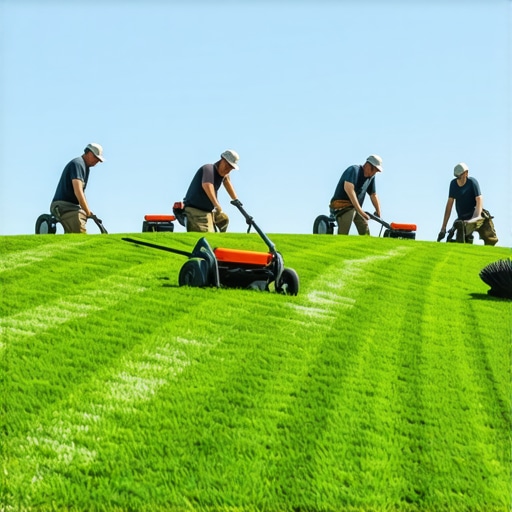
It was a hot July afternoon when I stepped outside and nearly tripped over a patchy, brown turf that refused to bounce back. I had thought I was doing everything right—laying sod, watering diligently, and avoiding the weeds. But somehow, my yard looked more like a neglected parking lot than a lush paradise. That lightbulb moment made me realize something crucial: The little things I overlooked were draining my efforts—and my lawn’s vitality.
Why Your Dream Lawn Might Be Just Out of Reach (And How to Fix It)
Getting that perfect, emerald-green lawn in 2025 isn’t just about laying down sod or turning on the sprinklers. It’s a delicate dance of strategic installation and tailored irrigation. If you’ve ever felt frustrated watching your investment wilt under the summer sun or drown during a heavy rain, you’re not alone. From my early blunders, I learned that one common mistake is neglecting the importance of proper **sod installation and irrigation planning**. When done correctly, these methods turn your yard into a thriving oasis.
Is All the Hype About Spray-and-Play Green Lawns Just a Gimmick?
Honestly, I was skeptical at first. It seemed too good to be true that a few tweaks could make my lawn foolproof. I made the rookie mistake of underestimating the significance of a well-designed irrigation system—assuming a standard sprinkler would do the trick. Turns out, the devil is in the details. According to landscaping experts, a tailored irrigation setup can boost water efficiency and promote uniform growth, saving money and time in the long run. Check out the [top irrigation tips for a healthy lawn in 2025](https://urbanlandscapingx.com/top-irrigation-tips-for-a-healthy-lawn-in-2025) for insights on perfecting this setup.
Having faced these hurdles myself, I understand how discouraging yard troubles can be. But with the right approach, your sod and irrigation systems will work in harmony, transforming your yard into a lush haven. Ready to dive into the practical steps that will elevate your landscaping game? Let’s get started.
Prepare Your Ground Thoroughly for the Perfect sod
Start by removing weeds, rocks, and debris to create a clean slate. Use a garden fork or rototiller to loosen compacted soil, which enhances root penetration. For clay-heavy soil, mix in organic compost to improve drainage and fertility. Rake the surface smooth, ensuring a slightly sloped grade for proper water runoff. This initial prep is crucial; I once hastily laid sod over unlevel ground, leading to uneven growth and pooling water. Investing time here pays off, setting a solid foundation for your lawn.
Lay sod with precision and care
Unroll the sod in a brick-like pattern, staggering joints to prevent gaps. Avoid stretching or overlapping edges—think of it like fitting puzzle pieces together. Use a sharp knife to cut sod to fit around curves and obstacles. Water each section immediately after installation to keep the roots moist. I remember frantically trying to rush this step, leading to gaps and air pockets that hinder root contact. Take your time, and your lawn will establish faster and look more uniform.
Water mindfully for lush growth
Initially, keep the soil consistently moist—about 1 inch of water per session, two to three times daily. Use a portable sprinkler or an irrigation system with adjustable zones for even coverage. Think of your lawn like a sponge: it needs to remain damp but not waterlogged. During the first two weeks, avoid heavy foot traffic to prevent damage. I once overwatered, causing the roots to drown; a simple adjustment in watering frequency stabilized growth. The goal is to encourage deep root systems that withstand drought later on.
Design an irrigation system that works for you
Instead of relying on fixed spray zones, opt for a programmable irrigation setup with adjustable heads. For irregularly shaped yards, consider installing pop-up sprinklers that can be tailored to specific areas. Use a soil moisture sensor to avoid overwatering and conserve water. Imagine your irrigation system as a network of veins delivering life to your turf efficiently. I installed a controller myself, which initially confused me—connecting the zones correctly made a visible difference in water distribution. Proper design reduces waste and ensures uniform growth across your yard.
Maintain your setup for long-term success
Regularly inspect your irrigation heads for clogs or misalignment; a misdirected spray can create dry patches. Deeply water during dry spells to promote resilient roots, but avoid watering during rainstorms to prevent runoff. Conduct annual adjustments to watering schedules based on seasonal changes. Additionally, periodically aerate the soil to reduce compaction, especially in high-traffic areas. I learned that neglecting the maintenance of these systems leads to patchy lawns. A bit of routine care extends the lifespan of your installation and keeps your yard thriving.
When it comes to lawn care, many homeowners believe that following basic instructions guarantees success. However, there’s a *hidden nuance* that often trips up even experienced enthusiasts—understanding the complex interplay between soil health, proper drainage, and precise timing. Contrary to popular belief, simply laying sod over prepared soil without ensuring optimal moisture levels and soil aeration can lead to patchiness and root rot. Recent studies, such as those highlighted by turfgrass experts, emphasize that integrating soil testing before installation enhances longevity and resilience of your lawn. Moreover, a common myth is that more water equals healthier grass. In reality, overwatering creates anaerobic conditions, promoting disease and weed invasion. A balanced approach, combining deep watering with proper soil aeration and organic amendments, results in a thriving yard. Don’t overlook the importance of synchronized yard cleanup and irrigation planning; neglecting this can undermine your entire effort. Want to elevate your landscaping game? Explore detailed strategies at [expert yard cleanup and landscaping tips](https://urbanlandscapingx.com/top-yard-cleanup-landscaping-tips-for-a-lush-2025-garden). Have you ever fallen into this trap? Let me know in the comments.Maintaining your lawn’s health and vibrancy over the long term requires the right equipment and a proactive approach. One of my go-to tools is a high-quality soil moisture meter, such as the XL PRO Soil Moisture Sensor. I personally rely on this device because it provides real-time readings that help me adjust watering schedules precisely, preventing overwatering or underwatering, which are common pitfalls. Another essential is a durable lawn aerator, like the Agri-Fab Lawn Aerator, which I use annually to alleviate soil compaction and promote healthy root growth. Regular aeration ensures that nutrients, water, and oxygen reach the grassroots more effectively, especially in high-traffic areas. When it comes to irrigation, I prefer an advanced, programmable sprinkler system like the Rain Bird ESP-TM2 series. Its customizable zones and weather-adjusting features save water and maintain consistent moisture levels, vital for a lush lawn. The future of lawn care is moving toward smart automation. Integrating Wi-Fi-enabled controllers that sync with weather forecasts is on the rise, providing real-time adjustments without manual input. To stay ahead, I recommend trying a smart irrigation controller – it’s a game-changer in resource efficiency and lawn health.
How do I maintain my irrigation system over time?
Regular inspection is key. I check for clogged nozzles, misaligned heads, and leaks at least twice a year. Flush out filters regularly to prevent blockages. Seasonal adjustments are important too; skip watering during rain or when the forecast predicts high humidity to avoid waste. An often-overlooked maintenance step is winterizing your system if you live in colder climates—draining the pipes to prevent damage. A tip I found particularly useful comes from the experts at Hunter Industries, who recommend annually calibrating sprinkler heads to ensure even coverage. This simple step helps avoid dry patches and overly saturated zones.
Investing in proper tools and routine maintenance not only keeps your yard looking great but also prolongs the lifespan of your equipment. For a comprehensive guide on optimizing your irrigation setup, check out the [top irrigation tips for a healthy lawn in 2025](https://urbanlandscapingx.com/top-irrigation-tips-for-a-healthy-lawn-in-2025). Begin by implementing a programmable controller with weather adjustment features—you’ll see immediate benefits in water savings and turf health. Ready to take your lawn maintenance to the next level? Give these tools and practices a try today!
The Hardest Lesson I Learned About sod install,landscaping,yard cleanup,irrigation
My biggest realization was that rushing the preparation phase leads to long-term setbacks. For example, I initially skipped soil testing, assuming my dirt was fine. The result? Uneven growth and persistent dry patches. Testing and amending soil layers early on saved me headaches later, emphasizing that foundational work can’t be rushed.
Three Myths About sod install,landscaping,yard cleanup,irrigation That Held Me Back
One false belief was that more water accelerates growth. Instead, I found deep, infrequent watering fosters resilient roots. Another was that a perfectly level yard isn’t crucial—in reality, uneven terrain causes drainage issues. Debunking these myths changed my approach and improved my results.
What Experts Won’t Tell You About sod install,landscaping,yard cleanup,irrigation
Professionals often focus on the big picture, but the small details matter—like calibrating sprinklers or aerating soil annually. These overlooked steps significantly impact the health and appearance of your lawn, revealing that expert advice includes consistent, proactive maintenance.
My Essential Toolkit for Achieving a Thriving Lawn
Tools like a high-quality soil moisture meter and a reliable aerator became my best friends. I trust the XL PRO Soil Moisture Sensor for precise watering, while the Agri-Fab Lawn Aerator alleviates soil compaction, promoting vigorous growth. These tools streamline my efforts and ensure consistent yard health.
Where to Go from Here
If you’re eager to elevate your landscaping skills, start by implementing a smart irrigation controller or scheduling regular yard cleanup sessions. For comprehensive guidance, visit our detailed resources on yard cleanup and landscaping. Embracing continuous learning and small adjustments can transform your outdoor space into a true oasis.
Your Turn to Try
Remember, mastering your lawn involves patience and attention to detail. Now, I want to hear from you: what has been your biggest challenge in lawn care, and how did you overcome it? Share your story below and let’s learn together!
I really appreciate this detailed breakdown of proper sod installation and irrigation. It’s easy to overlook the importance of soil prep, but as you pointed out, starting with a good foundation really makes all the difference. I’ve learned that soil testing and organic amendments aren’t just optional steps—they’re crucial for long-term success. I especially agree with the idea of using a soil moisture sensor; it takes the guesswork out of watering and helps prevent overwatering, which can lead to root rot. Has anyone tried integrating smart irrigation controllers that sync with weather apps? I’m curious whether they truly save water and improve lawn health in practice. I’ve been considering upgrading my system but want to hear real experiences before investing. Also, I’d love to hear how others maintain their irrigation systems through seasonal changes and long-term wear. It’s fascinating how the little adjustments, like calibrating sprinklers or aerating the soil, continue to impact the overall lawn quality. Thanks for sharing these valuable insights—these tips will definitely help me take my lawn to the next level this year.
Reading your detailed insights really resonated with my own lawn care experiences, especially the emphasis on proper soil preparation and irrigation. I’ve found that integrating soil testing early in the process can truly save time and resources later on. Additionally, using a smart irrigation controller that syncs with weather forecasts has been a game-changer for me—I’ve noticed significant water savings and more consistent lawn health. However, one challenge I’ve faced is maintaining the system over the seasons, especially in colder climates where winterizing becomes crucial. Regular inspections and calibrations, as you mentioned, are essential, but have you or others found effective ways to streamline winter prep without it becoming too cumbersome? I’m curious about practical tips for keeping everything in top shape year-round while minimizing effort. Overall, your post reinforces that paying close attention to these small details delivers big results with our lawns. Would love to hear more about how others incorporate seasonal adjustments into their irrigation routines and avoid common pitfalls.