
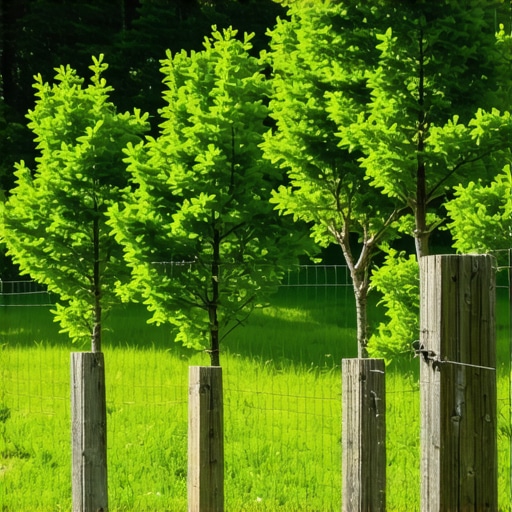
The Ground-Up Blueprint for 2026 Sapling Survival
Protecting 2026 young trees requires an immediate shift from aesthetic gardening to defensive engineering. An effective deer fence must be at least 8 feet tall or utilize a double-fence 3D design to exploit the deer’s poor depth perception, ensuring your landscaping investment survives the winter browse. Success starts with site prep, including yard cleanup and soil grading, before the first post is driven.
I always drill into my new crew members: if you don’t fix the soil grading first, every plant you put in the ground is just expensive compost. Last season, I watched a junior foreman install a dozen high-caliper oaks without checking the drainage. The irrigation system was over-delivering to a low spot, and the trees were essentially drowning in a bathtub of clay. By the time the deer got to them, the root flares were already rotting. We don’t just plant trees; we manage a biological system. If that system is weak, the local Odocoileus virginianus (white-tailed deer) will pick it apart like a vulture. You need to understand the mechanical limits of your materials and the physiological needs of the wood.
Why Standard Fencing Fails Young Trees
Most homeowners think a four-foot picket fence is a barrier. It is not. It is a hurdle. A healthy adult deer can clear six feet from a standstill without breaking a sweat. When we talk about protecting 2026 young trees, we are talking about total exclusion. This means high-tensile woven wire. Unlike welded wire, which snaps at the joints under pressure, woven wire uses a knotted hinge that absorbs the impact of a 150-pound buck hitting it at 20 miles per hour. This is the difference between a fence that lasts a decade and one that fails during the first February snowstorm.
“A retaining wall doesn’t fail because of the stone; it fails because of the water trapped behind it.” – Hardscape Engineering Axiom
The same logic applies to fencing. A fence fails because the tension wasn’t handled correctly or the posts weren’t set to the proper depth. For an 8-foot deer fence, your corner posts need to be 10 to 12 feet long, with at least 36 to 42 inches in the ground, depending on the frost line. If you are in an area with heavy freeze-thaw cycles, like the Northeast, those posts will ‘heave’ right out of the dirt if you don’t use a bell-shaped concrete footing or a deep-driven ground-up anchoring system.
How much modified gravel do I need for a fence post base?
To stabilize an 8-foot deer fence post, you need approximately 0.5 to 0.75 cubic feet of modified gravel (2A or 3/4-inch minus) per hole to provide adequate drainage and compaction. This prevents the wooden post from sitting in standing water, which causes basal rot, and ensures the post remains plumb even when the irrigation lines saturate the surrounding landscaping soil. Do not use pea gravel; it acts like ball bearings and offers zero structural stability.
The Engineering of the 3-D Deer Barrier
If you cannot go 8 feet high due to HOA restrictions, you go wide. This is a 3-D fence. You install two 4-foot fences spaced about 3 to 5 feet apart. Deer have notoriously bad depth perception. They cannot judge if they can clear both fences in one jump, and they are terrified of getting trapped in the ‘no-man’s land’ between the wires. This is a tactical win for landscaping in high-pressure zones.
| Material Type | Height Requirement | Estimated Lifespan | Impact Resistance |
|---|---|---|---|
| Polypropylene Mesh | 7.5 – 8 Feet | 5-7 Years | Low (Can be chewed) |
| Woven Wire (Fixed Knot) | 8 Feet | 20-30 Years | High (Structural) |
| Electric (Multi-Strand) | 5-6 Feet (3D) | 10-15 Years | Moderate (Psychological) |
| Wood Slat (Privacy) | 6 Feet | 15-20 Years | Moderate (Visual Block) |
Notice the Fixed Knot Woven Wire in the table. That is the gold standard. It doesn’t stretch like cheap ‘farm-and-home’ wire. If a tree branch falls on it during a yard cleanup mishap, it bounces back. It is the only material I trust for high-value sod install areas where deer pressure is extreme. Don’t skip the tensioning wire at the top and bottom. Without a bottom tension wire, deer will simply crawl under the fence. They are lazy; they would rather go under than over if the option exists.
The Biological Cost of Deer Browsing
When a deer bites the leader (the top vertical branch) of your young trees, it destroys the apical dominance. This triggers the tree to send out multiple side shoots, resulting in a bushy, deformed mess instead of a strong, central trunk. For a tree targeted for 2026 maturity, this is a death sentence for its structural integrity. Furthermore, deer saliva contains enzymes that can sometimes stress the tissue, but the real danger is the buck rub. In the fall, bucks scrape their antlers on the bark to remove velvet and mark territory. This shreds the cambium layer, the vascular tissue that moves water and nutrients. If they scrape more than 50 percent of the circumference, the tree is dead. It will rot. Period.
“Effective pest exclusion is a combination of physical barriers, cultural practices, and biological understanding of the target species.” – Agricultural Extension Manual
How do I integrate irrigation with my deer fence?
To integrate irrigation with a deer fence, you must install drip-line tubing inside the fenced perimeter to prevent the deer from tripping over surface lines or damaging emitter heads. Ensure the irrigation main line enters the enclosure through a PVC sleeve buried 12 inches deep to protect against yard cleanup tools and frost-heaving. High-pressure spray heads should be avoided near the fence line as they can cause premature oxidation of the wire coating.
Checklist for 2026 Tree Protection Installation
- Identify the ‘Deer Highways’ (natural trails) through your property before landscaping.
- Perform a full yard cleanup to remove attractants like fallen apples or acorns.
- Select high-tensile woven wire (12.5 gauge minimum).
- Ensure corner posts are set at least 36 inches deep with 2A modified gravel.
- Install a bottom tension wire no more than 2 inches off the ground.
- Flag the fence with white streamers for the first 30 days so deer ‘learn’ the new boundary.
- Verify irrigation emitters are focused on the root flare, not the trunk.
Sod Installation and Tree Competition
I see this mistake constantly: people do a fresh sod install right up to the base of their young trees. This is nitrogen robbery. The grass roots are more aggressive than the tree roots. They will suck up every drop of water from your irrigation before it hits the tree’s rhizosphere. When you fence your trees, keep a 3-foot radius of mulch (not a mulch volcano!) inside the fence. This eliminates competition and keeps your string trimmer away from the bark. One nick from a trimmer can do as much damage as a deer. It is a slow kill. The tree starves because the ‘piping’ is cut.
Advanced Tactical Measures: The Electric Supplement
If you have a particularly aggressive herd, you can add a single strand of electric wire about 30 inches off the ground, offset 12 inches outside your main fence. Bait this wire by folding a piece of aluminum foil over it with a smear of peanut butter. The deer gets a localized 2,500-volt ‘lesson’ on their nose. They won’t come back. It sounds harsh, but it’s better than a dead $500 specimen tree. We are engineers of the landscape. We use the tools that work. While the internet tells you to use soap bars or predator urine, those are myths. Deer in high-density areas will eat a ‘deer-resistant’ Hosta while standing next to a bar of Irish Spring. Only steel and physics stop them.
Long-Term Maintenance of the Barrier
Your fence is a living structure. Soil shifts. Trees grow. Every spring, as part of your yard cleanup, you need to check the tension. If the wire is sagging, the deer will notice. Use a wire crimping tool to take up the slack. Check the gates. If a gate doesn’t close flush, a fawn will squeeze through, get stuck, and then you have a real mess on your hands. Ensure the irrigation hasn’t washed out the soil under the fence line. If you see a gap, fill it with large cobble or rip-rap stone. Make it difficult for them. Make them go to your neighbor’s yard instead.