
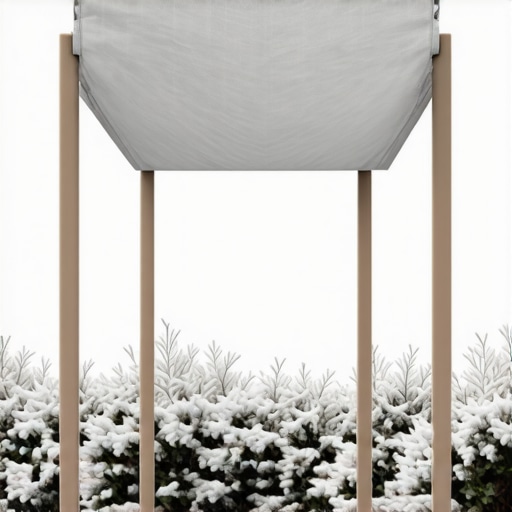
The Core Strategy for Winter Shrub Survival
To protect 2026 shrubs from heavy snow loads, you must prioritize structural integrity through proper pruning, strategic species selection, and physical reinforcement like burlap wrapping or A-frame shelters. This prevents branch snapping and root ball heaving caused by excessive weight and freeze-thaw cycles.
I always drill into my new crew members: if you don’t fix the soil grading and plant structure first, every plant you put in the ground is just expensive compost. Last season, I watched a greenhorn install a row of upright Junipers right under a metal roof overhang. I told him then, and I will tell you now: gravity always wins. When forty pounds of wet, heavy snow slides off that roof at thirty miles per hour, it does not matter how much fertilizer you used in April. That plant will split down the middle because the crotch angles were too wide and the placement was amateur. You have to think like a civil engineer before you act like a gardener. Landscaping is not about making things look pretty for the photos; it is about ensuring those plants survive the brutal physics of a ten-year storm.
The Physics of Snow Loading on Woody Ornamentals
Snow is not just frozen water; it is a variable weight load that fluctuates based on moisture content. ‘Heart attack snow’—that heavy, wet slush—can weigh up to 20 pounds per cubic foot. When this accumulates on broadleaf evergreens like Rhododendrons or multi-stemmed shrubs like Boxwoods, it creates massive leverage on the branch unions. If your shrub has ‘included bark’—where two branches grow so close together that bark is trapped between them—the union is structurally compromised. Under the weight of a 2026 winter storm, that union will fail. It is a mechanical certainty. You must identify these weak points during your autumn yard cleanup. We use a process called structural thinning. We are not ‘haircutting’ the plant; we are removing specific interior branches to allow snow to fall through the canopy rather than sitting on top of it. It requires a sharp pair of bypass pruners and an understanding of apical dominance.
“Failure of woody plants under snow load is often a result of poor branch architecture, specifically narrow crotch angles and included bark, which act as a wedge when weighted.” – USDA Forest Service Technical Report
The 2026 Shrub Selection Matrix
Your 2026 landscape success starts with the nursery tag. Stop buying plants based on the flower color and start looking at the wood density and growth habit. For heavy snow regions, you want plants with flexible wood or a conical shape that naturally sheds weight. A Japanese Yew (Taxus cuspidata) is a tank in the snow because its wood is incredibly dense and pliable. Compare that to a brittle Burning Bush (Euonymus alatus), which will shatter under a light glaze of ice. Irrigation management also plays a role here. If you over-watered your shrubs during the late summer, you forced a flush of succulent, ‘soft’ growth. That soft wood has thin cell walls and will be the first to snap when the temperature drops and the snow piles up. Proper irrigation should be tapered off in late August to allow the plant to ‘harden off’ and lignify its stems.
| Shrub Variety | Snow Load Resistance | Primary Failure Mode | Recommended Protection |
|---|---|---|---|
| Boxwood (Buxus) | Low | Splaying/Splitting | Twine Wrapping |
| Arborvitae (Emerald Green) | Medium | Multi-leader Splitting | Burlap/Spiral Tie |
| Japanese Yew | High | Minimal Failure | None Required |
| Rhododendron | Low | Branch Snapping | A-Frame Shelter |
How much snow can a boxwood handle before it splits?
Most Boxwoods can handle approximately 3 to 5 inches of heavy, wet snow before the outer branches begin to splay permanently. Once the branches are bent past their elastic limit, the vascular tissue is damaged, and the shrub will lose its tight, manicured form even after the snow melts. This is why mechanical intervention is mandatory for these species. I do not care if it looks ugly for three months; use a spiral wrap of heavy-duty twine. Start at the base, tie it to the main trunk, and wrap upward in a tight helix. This pulls the branches together, turning the shrub into a single, solid column. It reduces the surface area where snow can accumulate. It is basic geometry. Smaller surface area equals less weight. Less weight equals a living plant in the spring.
The Hardscape Connection: Drainage and Heaving
If your landscaping does not account for drainage, your shrubs are at risk from the ground up. When heavy snow melts, that water has to go somewhere. If your yard cleanup did not include clearing the debris from your French drains or ensuring the sod install was graded away from the planting beds, you are creating a ‘bathtub effect.’ The soil saturates, then freezes, then expands. This hydrostatic pressure can literally pop a newly planted 2026 shrub out of the ground—a phenomenon called frost heaving. Once those roots are exposed to the sub-zero air, the plant is dead in forty-eight hours. You must maintain a 3-inch layer of wood mulch, but keep it away from the root flare. We call them ‘mulch volcanoes,’ and they are the hallmark of a hack contractor. They hold too much moisture against the bark and invite rot, which weakens the base of the plant before the snow even arrives.
“Saturated soils combined with rapid freeze-thaw cycles provide the mechanical force necessary to heave shallow-rooted ornamentals out of their planting pockets.” – Cornell University Extension
Essential Winterization Checklist
- Structural Pruning: Remove all dead, damaged, or crossing branches by late October.
- Deep Hydration: Ensure 1 inch of water per week until the ground freezes to prevent winter desiccation.
- Anti-Desiccant Sprays: Apply a wax-based film to broadleaf evergreens to stop moisture loss through leaves.
- Mechanical Ties: Use poly-twine for upright conifers to prevent splaying.
- A-Frame Shelters: Build plywood covers for shrubs located in the ‘roof-shed zone’ where snow slides occur.
- Mulch Inspection: Ensure a consistent 3-inch deep ring around the drip line, not the trunk.
The Critical Role of Late-Season Irrigation
A dehydrated plant is a brittle plant. Most homeowners think that because the leaves have fallen, the work is done. Wrong. Your irrigation system should remain active until the first hard frost. Roots are still active even when the canopy is dormant. If a shrub enters a frozen-soil state while thirsty, it cannot replace the moisture that the winter wind sucks out of its needles or leaves. This is called ‘winter burn.’ It is the leading cause of death for newly installed 2026 shrubs. When you combine winter burn with the physical weight of snow, the plant has no structural resilience. It’s like trying to bend a dry cracker versus a piece of leather. Keep the soil moist, not soggy, to ensure the cell turgor pressure is high enough to withstand the mechanical stress of winter. Do not skip this. It is the difference between a thriving spring landscape and a yard full of brown sticks.
How to wrap shrubs with burlap for winter?
Wrapping shrubs with burlap requires a burlap screen method rather than a tight ‘mummy wrap’ to ensure proper airflow and prevent heat trapping. Drive four wooden stakes into the ground around the shrub, then staple the burlap to the stakes, leaving a 2-inch gap at the top and bottom. This creates a windbreak and a snow shield without touching the foliage directly. Touching the foliage with wet burlap can lead to fungal issues or localized freezing. If you are in a high-wind area, this is not optional. The burlap breaks the laminar flow of the wind, reducing the chill factor and keeping the snow from packing into the center of the plant. It is a simple barricade, but it is effective. Use 811 to mark your lines before driving stakes if you have a subsurface irrigation system. I have seen too many guys pierce a lateral line while trying to save a ten-dollar shrub. That is a five-hundred-dollar mistake.