
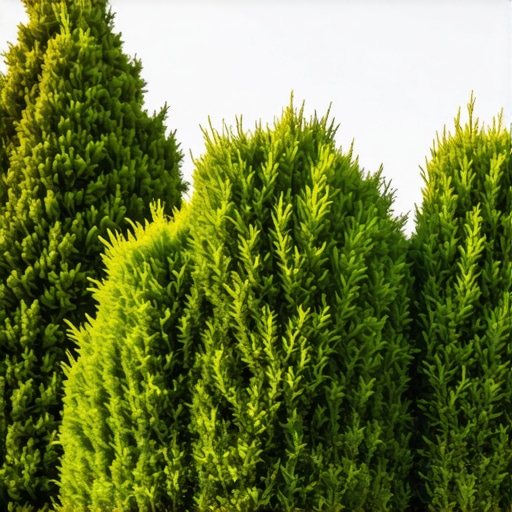
The Foundation of the 2026 Privacy Screen Strategy
To prune evergreens for a thicker 2026 privacy screen, you must utilize heading cuts on the current season’s growth to stimulate lateral bud development, ensuring the cut is made just above a node. This process, combined with soil nutrient management and consistent irrigation, forces the plant to fill internal gaps rather than just gaining height. I always drill into my new crew members: if you don’t fix the soil grading first, every plant you put in the ground is just expensive compost. I have seen countless $50,000 privacy screens fail because the contractor didn’t account for the hydrostatic pressure of a slope or the fact that the root flares were buried four inches too deep in heavy clay. When we talk about a 2026 goal, we are talking about a two-year physiological cycle where every cut we make today dictates the density of the foliage twenty-four months from now. Many homeowners think a yard cleanup is just about raking leaves, but in a professional landscaping context, it is the removal of pathogenic inoculum from the base of your evergreens to prevent needle cast. We don’t just ‘trim’ trees; we manage auxins and cytokinins. By removing the terminal leader or the tips of the branches, we stop the apical dominance that makes the tree grow tall and thin, and we force those resources into the latent buds inside the canopy. This is how you get a wall of green instead of a row of sticks.
“Heading back a branch to a lateral bud or twig redirects growth hormones and encourages the development of a denser canopy through lateral branching.” – Penn State Extension Arboriculture Guide
The Planning Phase: Why 80% of the Work Happens Before the Cut
Before you even touch a pair of bypass pruners, you have to assess the USDA hardiness zone and the specific species of your screen. A Thuja occidentalis (Emerald Green Arborvitae) reacts very differently to a blade than a Picea abies (Norway Spruce). You need to inspect the caliper of the trunk and the internodal spacing. If you are also doing a sod install nearby, you must ensure the irrigation zones are separated; turf needs frequent, shallow watering, while your evergreen screen needs deep, infrequent saturation to reach the taproot and lateral anchors. We often see ‘mow-and-blow’ crews scalp the grass and then hit the evergreens with the same reckless speed. That is a recipe for a brown-out. A professional install requires a modified gravel base if you are near a retaining wall to ensure drainage, because ‘wet feet’ will kill an Arborvitae faster than any pest. We look at the pH levels of the soil; evergreens generally prefer a slightly acidic 5.5 to 6.5 range. If your yard cleanup revealed alkaline deposits from concrete runoff, your pruning won’t matter because the tree won’t have the micronutrients like iron and manganese to push new growth.
| Evergreen Species | Optimal Pruning Window | Growth Habit Focus |
|---|---|---|
| Arborvitae (Thuja) | Early Spring / Mid-Summer | Lateral Density |
| Spruce (Picea) | Late Winter (Dormant) | Terminal Control |
| Pine (Pinus) | Spring (Candle Stage) | Internode Reduction |
| Boxwood (Buxus) | Late Spring | Architectural Shaping |
How do I make my cedar hedge grow thicker?
To make a cedar hedge grow thicker, you must perform light tipping of the outer branches twice a year, which breaks apical dominance and stimulates the dormant buds along the inner stems. This must be supported by an irrigation system that delivers 1 inch of water per week directly to the root zone, avoiding the foliage to prevent fungal blights. Stop using high-nitrogen ‘big box’ fertilizers that cause leggy, weak growth; instead, use a slow-release organic amendment that builds soil microbiology. The goal is to create a structure where light can still penetrate the outer 4 inches of growth. If you prune too hard and hit the ‘dead zone’—the area where no needles exist—the branch will never recover. It will rot. Don’t skip the soil test. If you don’t know your cation exchange capacity, you are just guessing with your fertilizer. I’ve seen homeowners torch their entire landscaping investment by over-applying pre-emergent herbicides too close to the root zone of young evergreens.
The Installation and Execution: Precision Pruning Mechanics
When you begin the actual pruning for your 2026 goal, you are looking for the branch collar. Never flush-cut a branch against the main trunk; you will destroy the parent tissue and prevent the tree from compartmentalizing the wound. We use the three-cut method for any limb larger than two inches to prevent the bark from stripping down the side of the tree. This isn’t just aesthetic; it is biosecurity for the plant. If you are doing a yard cleanup at the same time, ensure your tools are sterilized with 70% isopropyl alcohol between every single tree to prevent the spread of Cytospora canker. For those aiming for a thicker screen, the candling technique is essential for pines. You pinch the new growth (the candles) by half when they are soft in the spring. This doubles the number of bud sites for the following year. It is tedious work that the ‘cheap guys’ won’t do. They’ll just use a gas-powered hedge trimmer and leave ragged edges that turn brown and invite spider mites. You want clean, scissor-like cuts. The blade should be sharp enough to shave with.
“A retaining wall doesn’t fail because of the stone; it fails because of the water trapped behind it.” – Hardscape Engineering Axiom
When is the best time to trim evergreens in my zone?
The best time to trim most evergreens for density is late winter or early spring before the first flush of growth begins, as this allows the plant to direct all its stored carbohydrates into the new 2026 bud sites. For ‘narrow-leaf’ evergreens like junipers, avoid pruning in late fall, as the new growth stimulated by the cuts won’t have time to harden off before the first hard freeze, leading to tip dieback. If you are in a region with heavy clay soil, your pruning schedule must also align with your irrigation shutdown to ensure the plants aren’t sitting in stagnant water during the dormant season. We always check the 811 Dig Safe markings before we start any heavy landscaping or sod install near the screen to ensure we aren’t cutting irrigation lines that provide the lifeblood to these trees. A single week of drought on a freshly pruned evergreen can stall its growth for an entire season.
Professional Evergreen Maintenance Checklist
- Tool Calibration: Ensure bypass pruners are tensioned to avoid crushing the vascular cambium.
- Hydration Check: Use a tensiometer to verify soil moisture is at 15-20% before pruning.
- Sanitation: Remove all detritus and infected needles from the interior of the tree to increase airflow.
- Nutrient Application: Apply a 10-10-10 fertilizer only if the soil test indicates a deficiency.
- Mulch Management: Maintain a 2-3 inch layer of arborist wood chips, but never touch the bark (no mulch volcanoes).
The 2026 Outlook: Managing the Settling-In Period
By the time 2026 rolls around, your evergreens should have filled the inter-branch gaps. This year-one and year-two period is the ‘settle-in’ phase. You will see the results of your heading cuts as the lateral branches begin to overlap. If you see yellowing in the center of the tree, don’t panic; this is often seasonal needle drop, a natural process. However, if the yellowing is on the newest growth, you have a nutrient lockout or an irrigation failure. Your landscaping is a living system. If you installed a sod install right up to the base of the trees, you’ve likely created a nitrogen competition zone. I always recommend a 3-foot no-turf buffer around the screen to ensure the trees don’t have to fight the grass for water. This is where a professional yard cleanup becomes a maintenance strategy: keep the grass away, keep the mulch fresh, and keep the blades sharp. The 2026 screen isn’t built in a day; it’s built one calculated, scientific cut at a time. Do not skip the dormant oil spray in late winter to kill overwintering scales. If you ignore the biology, the engineering won’t save you. Real landscaping is about longevity, not just the ‘after’ photo for a website.