
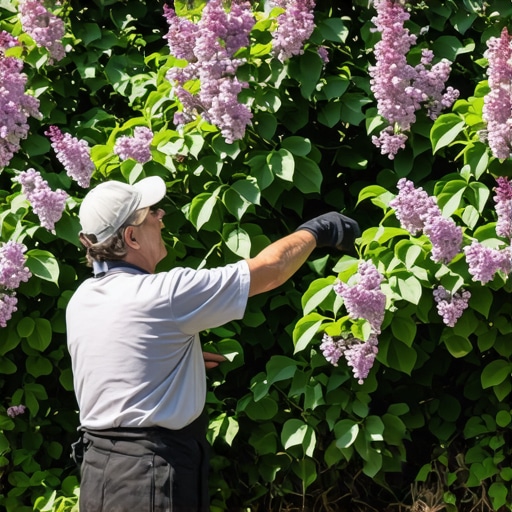
Professional landscaping is not merely about aesthetics; it is an exercise in applied botany and structural engineering. When we talk about pruning overgrown lilacs, specifically Syringa vulgaris, we are discussing the manipulation of plant hormones and carbohydrate reserves to force a geriatric shrub back into a productive lifecycle. Most homeowners and ‘mow-and-blow’ laborers approach a lilac with a pair of dull shears and no plan, resulting in a butchered plant that refuses to flower for years. Success in the field requires a clinical understanding of how these plants store energy and respond to wounding.
The Planning Phase: Why 80% of Landscaping Happens Before the First Cut
To successfully prune overgrown lilacs, professionals must first assess the plant’s structural integrity, age, and soil health to determine if it can withstand rejuvenation. This involves checking the root flare for girdling, testing the soil pH (aiming for 6.5 to 7.0), and mapping out a three-year renewal plan rather than attempting a single, catastrophic cut.
I always drill into my new crew members: if you ignore the three-year renewal rule, you are just killing the plant slowly. I remember a job three years ago where a client insisted we ‘level’ an eight-foot lilac hedge to four feet in one afternoon. I refused the job. Six months later, I saw that hedge again; it was a graveyard of dead wood and fungal cankers because the previous contractor didn’t understand the root-to-shoot ratio. They stripped the plant’s ability to photosynthesize while leaving a massive root system with no outlet for its energy. You don’t just cut; you negotiate with the plant’s biology.
“Lilacs should be pruned immediately after the flowers fade. Waiting too long into the summer risks removing the buds for next year’s display, as the plant begins setting future bloom tissue almost immediately after the current petals drop.” – Penn State Extension
The Science of Lilac Dormancy and Bloom Cycles
Lilacs operate on a system of apical dominance where the terminal bud suppresses the growth of lateral buds through the release of auxins. When we perform rejuvenation pruning, we are breaking this hormonal suppression to encourage dormant adventitious buds located lower on the stems to break dormancy and create new, vigorous wood.
An overgrown lilac is essentially a collection of exhausted wood. Old stems, usually those thicker than two inches in diameter, have diminished vascular efficiency. They struggle to move water and nutrients from the roots to the canopy. This results in smaller leaves, leggy growth, and those pathetic, sparse flower clusters that look more like grey lint than actual blooms. By removing these old ‘canes,’ we redirect the plant’s hydraulic pressure into younger, more efficient stems. This is the core of any high-end landscaping or yard cleanup operation: we identify the underperforming assets of the landscape and liquidate them to favor growth.
When is the best time to prune overgrown lilacs?
The optimal window for pruning lilacs is within the two-week period immediately following the end of their bloom cycle. Pruning in late winter is possible but will result in the loss of all flowers for that season, while late summer pruning is a disaster that leaves the plant vulnerable to frost damage on new, unhardened growth.
The Three-Year Renewal Strategy vs. Hard Rejuvenation
There are two primary ways to handle a lilac that has turned into a tangled mess. For most clients, I recommend the ‘One-Third Rule.’ This is a professional standard that maintains the plant’s aesthetic value while systematically replacing old wood with new growth. However, if the plant is a total loss, we might opt for a ‘Hard Rejuvenation,’ which involves cutting the entire plant down to six inches from the soil line. This is a high-risk move that requires perfect soil conditions and a robust irrigation setup.
| Feature | One-Third Renewal Method | Hard Rejuvenation Method |
|---|---|---|
| Timeframe | 3 Consecutive Years | 1 Day (Initial Cut) |
| Bloom Recovery | Continuous (on remaining 2/3) | 3-5 Years for full bloom |
| Plant Stress | Low to Moderate | Extreme |
| Best For | Valuable focal points | Massively overgrown hedges |
How much of a lilac bush can I cut back without killing it?
A healthy lilac can typically tolerate the removal of 30 percent of its total biomass in a single growing season. Exceeding this threshold without supplemental irrigation and specialized fertilization can lead to root dieback and opportunistic pest infestations like the lilac borer.
Equipment Selection: Why Big-Box Tools Fail the Professional
Don’t bring a toy to a job site. If you are using anvil pruners on a lilac, you are crushing the vascular tissue (xylem and phloem) instead of slicing it. This creates a jagged wound that cannot properly compartmentalize. We use high-carbon steel bypass pruners for anything under one inch, and razor-tooth folding saws for the heavy canes. Every cut must be clean. Every cut must be intentional.
- Bypass Pruners: For detailed deadheading and thin suckers.
- Loppers: For stems up to 1.5 inches; ensure they have a high-leverage gear system.
- Pruning Saw: For heavy renewal cuts at the base of the plant.
- 70% Isopropyl Alcohol: To disinfect blades between shrubs to prevent the spread of powdery mildew or bacterial blight.
- Safety Gear: Eye protection is non-negotiable when working inside the dense canopy of an old Syringa.
“Proper rejuvenation pruning requires a three-year cycle to maintain the plant’s physiological balance and root-to-shoot ratio, ensuring the specimen remains structurally sound while encouraging new floral wood.” – International Society of Arboriculture
Post-Pruning Care: Irrigation and Soil Management
After a heavy pruning session, a lilac requires consistent moisture and a balanced nutrient profile to support the rapid production of new vegetative growth. This is where most yard cleanup services fail; they hack the plant and walk away, leaving it to starve in compacted, dry soil during the heat of July.
If we are doing a sod install nearby, I ensure the new irrigation lines include a dedicated drip zone for the lilacs. Overhead irrigation is the enemy of the lilac. It promotes powdery mildew and leaf spot. You want the water at the soil line. We apply one inch of water per week, measured at the drip line, not the trunk. As for fertilizer, we avoid high-nitrogen mixes. If you dump a 29-0-0 lawn fertilizer near a lilac, you’ll get six feet of green leaves and zero flowers. Use a 10-10-10 slow-release granular in early spring to support the ‘stretch’ phase of growth.
The Integrated Landscape Approach
Pruning doesn’t exist in a vacuum. When we take on a landscaping project, we look at the lilac as part of a larger ecosystem. If the plant is overgrown, it is likely shading out the turf, leading to moss and thinning grass. This necessitates a yard cleanup that includes core aeration and potentially a new sod install once the canopy is thinned. We manage the hydrostatic pressure of the environment by ensuring the soil isn’t waterlogged. Lilacs hate ‘wet feet.’ If the grading is wrong, the roots will rot, and no amount of professional pruning will save a plant sitting in a swamp.
Don’t use pruning sealer. It is a myth that refuses to die. Science tells us that trees and shrubs compartmentalize decay through a process called CODIT (Compartmentalization of Decay in Trees). Slathering a wound with black tar just traps moisture and anaerobic bacteria against the open cut. It will rot. Let the plant heal itself. Your job is to make the cut clean and then get out of the way.
The “Settling In” Period: What to Expect in Year Two
In the first year after a renewal cut, expect a flush of ‘suckers’ from the base. These are the plant’s emergency response team. You must select the strongest three or four to be the future main stems and prune the rest. By year two, these new stems will begin to develop the lateral branching necessary for flower buds. By year three, you will have a plant that looks like it belongs in a botanical garden rather than a haunted house. Landscaping is a long game. Those who want instant results usually end up with dead plants. Respect the biology, use the right tools, and keep the soil healthy. That is how you dominate a landscape.