
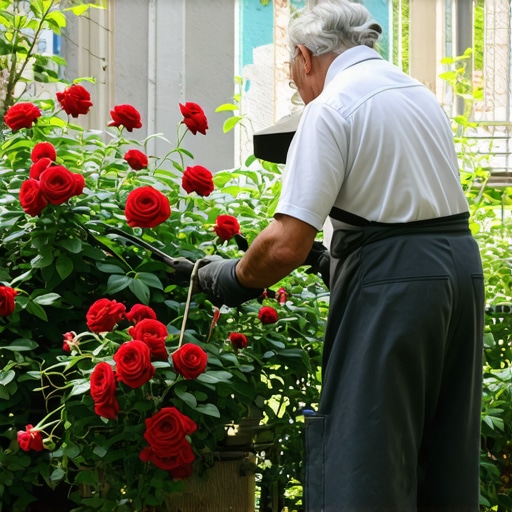
The Engineering of a Rose: Why 80% of Landscaping is Done Before the Cut
The 45-degree angle rule is a geometric mandate for rose pruning that facilitates moisture shedding from the wound site, preventing botrytis blight and canker. By angling the cut 1/4 inch above an outward-facing bud eye, you manipulate the plant’s hormonal dominance to favor outward growth and structural integrity. Most homeowners and ‘mow-and-blow’ crews treat pruning like a haircut, but in my 20 years in the dirt, I have learned it is closer to surgery. If you get it wrong, you are just inviting pathogens to set up shop in the vascular system of your Rosa family specimens.
I always drill into my new crew members: if you don’t fix the soil grading first, every plant you put in the ground is just expensive compost. I remember a job back in ’08 where a client had spent four figures on high-end David Austin roses. They were failing, yellowing, and showing zero vigor. The previous contractor had just dug holes in heavy clay and dropped them in. No drainage. No soil amendments. The roots were essentially sitting in a bucket of stagnant water, suffocating from a lack of oxygen. We had to excavate the entire bed, install a French drain system to manage the hydrostatic pressure of the slope, and restart from the soil up. Pruning is secondary to the survival of the root flare. If the soil chemistry is off, no amount of perfect 45-degree cuts will save you.
“A pruning cut should always be made at a 45-degree angle, about 1/4 inch above a bud that faces toward the outside of the plant. This encourages growth to move outward, which improves air circulation and light penetration.” – Texas A&M AgriLife Extension
The Physics of the 45-Degree Cut
When you make a flat cut on a woody stem, water sits on the surface. Simple surface tension holds it there. That standing water is a petri dish for fungal spores. By using the 45-degree rule, you use gravity to shed water away from the bud. This is basic civil engineering applied to a living organism. The cut should slant away from the bud so the water does not run down and collect in the bud’s delicate tissues. Use sharp bypass pruners only. Anvil pruners are for dead wood; they crush living xylem and phloem, leading to tissue necrosis. Sharpen your blades every 50 cuts. It matters.
| Tool Type | Application | Engineering Benefit |
|---|---|---|
| Bypass Pruners | Live Stems < 1/2 inch | Clean shear, minimal tissue crushing |
| Loppers | Heavy Canes > 1 inch | Mechanical leverage for thick hardwood |
| Pruning Saw | Old Growth/Renovation | Precision removal of dead crowns |
| Alcohol Swabs | Sterilization | Prevents cross-contamination of pathogens |
How do I know where to make the cut on a rose bush?
Locate a bud eye, which is a small swelling where a leaf joins the stem. Select an outward-facing bud to ensure the bush grows into a vase shape rather than tangling in the center. Position your blades 1/4 inch above this point and execute a swift, angled cut. Directing growth outward is essential for airflow. Stagnant air leads to powdery mildew. It is that simple. Don’t leave a long stub. Stubs rot. Don’t cut too close. You’ll kill the bud. Get it exactly at 1/4 inch.
Yard Cleanup and the Pathogen Cycle
Landscaping is a game of sanitation. When we do a yard cleanup, we aren’t just making it look pretty. We are removing the inoculum. If you leave fallen rose leaves on the ground over winter, you are essentially providing a heated hotel for black spot spores to hibernate. When the spring rains hit, those spores splash back up onto your new growth. It is a cycle of failure. We strip the beds, remove the top inch of old mulch, and replace it with clean, hardwood mulch. But never pile it against the stem. Mulch volcanoes are the hallmark of an amateur. They trap moisture against the bark, causing the root flare to rot. Keep the mulch three inches away from the main canes. Let the plant breathe.
The Role of Irrigation and Sod Install in Rose Health
Many clients think a sod install is just laying green carpet. If you don’t adjust your irrigation zones, your new sod will thrive while your roses drown. Turf grass needs frequent, shallow watering to establish. Mature roses need deep, infrequent drenching. If your roses are in the same zone as your lawn, you are going to have a phytophthora problem. We install dedicated drip lines for rose beds, delivering water directly to the root zone at a rate of 0.5 to 1.0 gallons per hour. This keeps the foliage dry. Wet leaves are a death sentence for roses. If you see your irrigation hitting the leaves, fix it immediately. Don’t wait. Change the nozzles to a lower trajectory or switch to a sub-surface system.
“Pruning is the most important cultural practice for maintaining the health and vigor of roses, requiring an understanding of the plant’s growth habits and the timing of local climate cycles.” – Penn State Extension
How much modified gravel do I need for a patio base?
While often asked during rose garden installs involving hardscapes, the rule is 6 inches of 2A modified gravel for a standard pedestrian walkway or patio. Compact it in 2-inch lifts. If you skip compaction, your pavers will shift, and your drainage will fail, eventually flooding your rose beds. Use a plate compactor. Your arms should feel the vibration in your teeth. That is how you know the base is solid. Don’t trust a hand tamper for anything larger than a stepping stone.
Seasonal Strategy: Planning for 2026
Why are we talking about 2026 now? Because roses operate on a multi-year vascular cycle. The cuts you make this dormant season determine the structural wood for the following two years. If you scalp a rose bush now, you lose the carbohydrate reserves stored in the canes. This weakens the root system. We aim for a balance: removing dead, damaged, or diseased wood (the three Ds) and then thinning for light penetration. In 2026, you will want a plant that has a strong scaffold. Start building that scaffold today. Use a high-phosphorus fertilizer in early spring to encourage root development, but back off the nitrogen as you head into late summer to prevent soft, leggy growth that will just freeze and die in the winter.
- Step 1: Sterilize your tools with 70% isopropyl alcohol.
- Step 2: Identify the 3 Ds: Dead, Damaged, and Diseased canes.
- Step 3: Locate outward-facing bud eyes.
- Step 4: Execute the 45-degree cut, slanting away from the bud.
- Step 5: Clear all debris from the base of the plant to prevent fungal splash-back.
The soil never lies. If your roses aren’t performing, check your pH. Roses prefer a slightly acidic environment, between 6.0 and 6.5. If you are in a region with heavy limestone or alkaline tap water, your pH might be creeping up to 7.5 or 8.0. At that level, the plant can’t take up iron or manganese. You’ll see interveinal chlorosis—the leaves turn yellow while the veins stay green. It’s not a lack of fertilizer; it’s a lack of chemistry. Add elemental sulfur to bring the pH down. Do it now, before the 2026 growing season begins. It takes time for the soil microbiology to process sulfur. Patience is a tool, just like your pruners.