
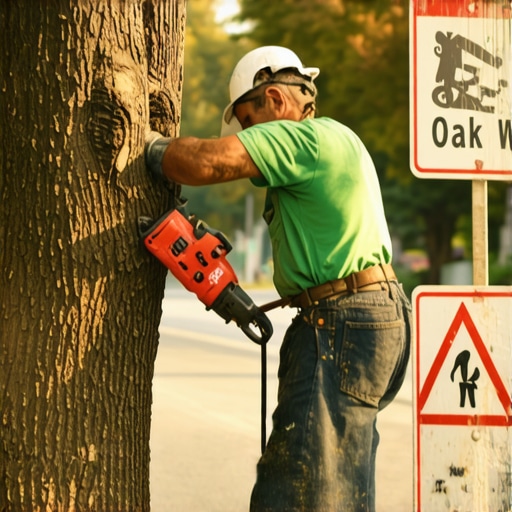
Stop 2026 Oak Wilt: When to Put Away Your Pruning Saws
The smell of a dying heritage oak is unmistakable: a sour, fermented stench that signals the end of a century-old giant. If you wait until the leaves turn brittle and the canopy thins to nothing, you are already too late. In my 20 years of running a high-end landscaping firm, I have seen more trees killed by well-intentioned pruning than by natural disasters. 2026 is shaping up to be a high-pressure year for fungal pathogens. You cannot treat an oak like a boxwood hedge; it is a complex vascular organism that requires surgical precision and, more importantly, perfect timing.
The Vascular Death Sentence: Why Your Oak Is Dying
Oak wilt is a systemic fungal disease caused by Ceratocystis fagacearum that aggressively invades the xylem vessels of a tree, effectively plugging its water-conducting tissues. This pathogen is primarily vectored by Nitidulid beetles, which are attracted to the sap of fresh pruning wounds during the high-risk period from early spring through mid-summer.
I recently got called out to perform a forensic autopsy on a $45,000 Live Oak that had been “trimmed” by a local mow-and-blow crew in late April. They didn’t know about beetle flight patterns or spore mats. They just saw a branch they could reach with a pole saw. Within eight weeks, the tree was showing classic flag leaf symptoms. By twelve weeks, it was dead. I had to tell the homeowner that not only was their centerpiece tree gone, but the fungus was likely moving through the root grafts to the rest of the neighborhood. It was a total structural and financial failure caused by a single 2-inch cut at the wrong time of year.
“Oak wilt is one of the most destructive tree diseases in the United States, killing thousands of oaks in 25 states. The fungus moves from tree to tree through root grafts or via sap-feeding nitidulid beetles.” – USDA Forest Service Research Division
How do you identify oak wilt symptoms?
Identify oak wilt by looking for rapid leaf discoloration starting at the leaf margin and moving toward the midrib. In Red Oaks, this usually happens in late spring. You will see fungal mats forming under the bark, which can actually crack the bark surface. These mats produce a fruity odor that attracts beetles from miles away.
The Critical Dormancy Window: When to Put Away the Saws
To survive 2026, your pruning schedule must align with the biological dormancy of the tree and the lifecycle of the Nitidulid beetle. In most temperate regions, the safe zone is typically between November 1st and February 1st. Outside of this window, you are essentially inviting a predator into your yard. If a limb breaks in a storm during the danger season, you have a 15-minute window to seal that wound with latex-based paint or wound dressing. Do not wait. The beetles are faster than you.
Can I prune oak trees in the summer?
Pruning oak trees in the summer is an extreme risk that should only be undertaken in emergencies. If you must cut, you must immediately apply a non-phytotoxic pruning sealer to the wound to prevent the scent of sap from attracting sap-feeding beetles. This is the only exception to the rule that wounds should usually be left to callus naturally.
| Season | Risk Level | Action Required |
|---|---|---|
| Nov – Jan | Low | Major structural pruning and thinning. |
| Feb – June | EXTREME | Total pruning moratorium; no cuts allowed. |
| July – Oct | Moderate | Emergency cuts only; must seal immediately. |
The Landscape Synergy: Irrigation and Yard Cleanup
Many homeowners think their landscaping efforts are independent of their trees, but they are wrong. When you perform a yard cleanup, heavy equipment compaction can stress the root zone, making the tree more susceptible to infection. Furthermore, an improperly calibrated irrigation system that sprays directly onto the trunk can create the moist environment the fungus thrives in. Deep, infrequent watering—delivering exactly 1 inch of water per week to the drip line—is the only way to maintain the hydrostatic pressure needed for the tree to fight off initial fungal spores. If you are doing a sod install near an oak, ensure you aren’t burying the root flare. Suffocating the flare is a slow-motion execution for the tree.
“Proper pruning is essential for tree health, but improper timing or technique can lead to irreversible decline. Always prioritize the tree’s vascular integrity over aesthetics.” – Texas A&M Forest Service
2026 Oak Protection Checklist
- Inventory all oaks and check for existing root graft connections to neighbors.
- Clean all pruning tools with a 10% bleach solution or 70% isopropyl alcohol between every tree.
- Coordinate yard cleanup to avoid mechanical damage to surface roots.
- Adjust irrigation heads to spray away from the trunk.
- Inspect all new sod install projects for proper grading at the tree base.
It will die. If you ignore these windows, the fungus will win. Don’t be the neighbor who starts the local epidemic because you wanted a better view in May. Put the saws away. Wait for the freeze. Professional arboriculture isn’t about the cut; it’s about the timing of the cut. Stop the hack-job mentality and start treating your oaks like the infrastructure they are. Your property value depends on it.