
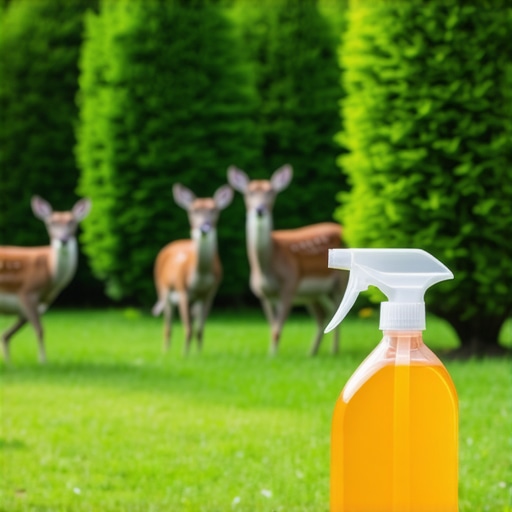
The Foundation of Perimeter Defense: Beyond the Spray
To effectively stop deer from eating your hedges naturally, you must apply a biological repellent spray containing putrescent egg solids and capsaicin to trigger both scent-based fear and taste-based aversion. This dual-action approach masks the high-nitrogen scent of new growth and disrupts the deer’s feeding pattern before they establish a browsing habit on your property.
I always drill into my new crew members: if you don’t fix the soil grading and plant health first, every plant you put in the ground is just expensive compost. I’ve seen guys spend thousands on Thuja occidentalis only to plant them three inches too deep in heavy clay. When a plant is stressed by poor drainage or root girdling, it releases chemical signals—stress pheromones—that practically invite pests and herbivores to finish the job. A healthy hedge is your first line of defense, but when the local deer population is high, even a healthy hedge needs a chemical shield. Don’t call me when your ‘Green Giants’ look like skeletons because you ignored the biology of the beast. We’re talking about Odocoileus virginianus, a ruminant that can consume up to 8 pounds of green matter a day. Your yard cleanup and landscaping efforts mean nothing if you’re just providing a 24-hour buffet.
Understanding the Deer’s Palate and Biology
Deer don’t eat hedges because they like the flavor; they eat them for the protein and moisture content, especially during the winter or mid-summer droughts. When you perform a sod install or refresh your irrigation, the sudden surge in nitrogen and water creates succulent, tender growth. This growth is low in lignin and high in sugars. It is candy to a deer. To stop them, we have to change the sensory profile of the plant. A natural spray isn’t just a barrier; it’s a psychological tool. Egg solids, once they begin to break down, mimic the scent of decaying protein—something deer associate with predators. Capsaicin, the heat element from peppers, provides a physical burn to the tongue. They learn fast. One bite and they move to the neighbor’s yard.
“A successful deer management program must integrate multiple tactics, as deer are highly adaptable and will overcome a single deterrent if the nutritional pressure is high enough.” – Penn State Department of Ecosystem Science and Management
The Master’s Natural Repellent Recipe
If you’re tired of wasting money on big-box store products that wash off after a light mist, you need a high-viscosity solution. I recommend a mixture of 20% putrescent egg solids, 5% garlic oil, and 1% capsaicin, mixed with a surfactant like liquid dish soap or a dedicated sticker-spreader. The surfactant is critical. Without it, the spray beads up on the waxy cuticle of the leaf and rolls off. You need it to bake onto the foliage. Apply this during a 48-hour dry window. If you apply it and your irrigation system kicks on two hours later, you’ve just washed $50 of materials into the topsoil. Turn the timers off. Check the weather. Accuracy is everything.
Why Most Hedges Fail During Installation
Most landscaping contractors are hacks who don’t understand root flares. They dig a hole, throw in the burlap ball, and kick the dirt back in. This creates a bathtub effect in heavy soil, leading to root rot. When the plant starts dying from the bottom up, it becomes even more attractive to deer because the plant’s natural defense tannins are depleted. If you’re doing a yard cleanup or a new install, ensure the root flare—the point where the trunk widens into the roots—is visible at the soil surface. Compaction is the enemy. I use a pneumatic air spade on high-end jobs to ensure the soil isn’t a brick. If the roots can’t breathe, the hedge can’t fight back.
Evaluating Deer Resistance by Species
| Hedge Species | Resistance Level | Soil Preference | Maintenance Level |
|---|---|---|---|
| Boxwood (Buxus) | Very High | Well-drained Loam | Moderate (Pruning) |
| Japanese Pieris | High | Acidic, Organic | Low |
| American Arborvitae | Very Low | Moist, Neutral | High (Deer Candy) |
| Norway Spruce | Medium | Adaptive/Clay | Low |
How often should I spray deer repellent on hedges?
You must reapply natural deer repellent every 30 days during the growing season and immediately after heavy rainfall exceeding one inch. In the winter, when deer are most desperate, a single application of a high-sticker repellent can last up to three months, provided temperatures are above 40 degrees Fahrenheit during application to allow for proper bonding to the needles or leaves.
What are the most deer-resistant hedge plants for my yard?
The most deer-resistant hedges are those with high alkaloid content or physical deterrents, such as Boxwood, Holly (with its prickly leaves), and certain cultivars of Juniper. Deer generally avoid plants with strong aromatic oils or leathery textures. However, remember that in a severe winter, a starving deer will eat almost anything except plastic. Your landscaping strategy should focus on ‘unpalatable’ rather than ‘immune.’
“The use of taste and odor repellents is most effective when applied before browsing patterns are established in the early spring.” – Texas A&M AgriLife Extension
The Engineering of the Application
Don’t use a wimpy hand-pump sprayer for a 100-foot hedge row. You need a piston-pump backpack sprayer that can maintain at least 45 PSI. This pressure ensures the spray atomizes and reaches the interior of the plant, not just the outer leaves. Deer often stick their heads into the hedge to reach the protected, tender interior growth. If you only spray the outside, you’re failing. Coat the underside of the leaves. That’s where the stomata are, and that’s where the scent will linger longest. It will smell. It will be gross. But your hedges will survive.
Checklist for Hedge Protection Success
- Verify soil pH is between 6.0 and 7.0 for optimal nutrient uptake.
- Check irrigation emitters to ensure they are not spraying directly onto the foliage, which washes away repellent.
- Apply repellent in the early morning so it can dry completely before the evening dew sets in.
- Monitor the ‘browse line’—if you see the bottom 4 feet of the hedge thinning, increase your spray frequency.
- Avoid high-nitrogen fertilizers in late fall, as this encourages soft growth that is highly attractive to deer in winter.
Landscaping is a battle against entropy and the local wildlife. You can’t just plant and pray. You have to manage the biology of the site. Use the spray, fix your soil, and keep your irrigation in check. If you don’t, you’re just a glorified gardener for the local deer population. Stay sharp. Watch the perimeter.
Comments are closed.