
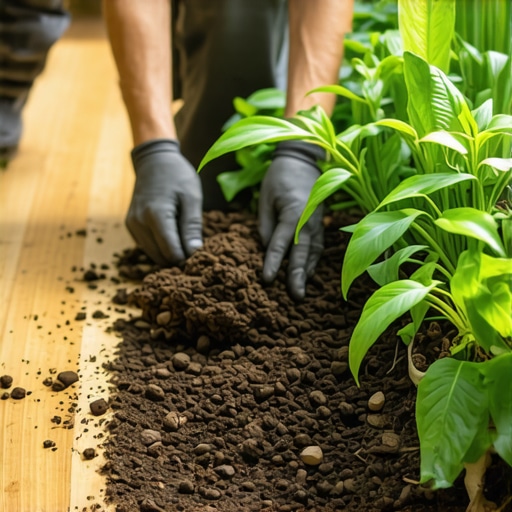
I recently got called out to tear up a $30,000 landscape installation that was less than three years old because the homeowner was watching her prize-winning Japanese Maples die back branch by branch. When I sunk my spade into the earth, I did not find the dark, crumbly loam of a healthy ecosystem. Instead, I hit a sheet of gray, sun-baked polypropylene buried under two inches of sour mulch. The smell was unmistakable: rotten eggs. This is the scent of anaerobic decomposition. Because of that plastic barrier, the soil had been starved of oxygen for thirty-six months. The roots were literally drowning in a bathtub of stagnant water that could not drain, while the top layer of mulch had turned into a hydrophobic mat that repelled any new moisture. We spent four days hauling out rolls of weed-choked plastic and thousands of pounds of dead soil. It was a forensic autopsy of a failed landscape. If you are planning a yard cleanup or a new sod install, you need to understand that landscape fabric is a slow-motion botanical execution.
The Fatal Flaw of Polypropylene in Garden Beds
Plastic landscape fabric creates a physical barrier that prevents gas exchange and moisture infiltration, eventually leading to anaerobic soil conditions. Over time, organic matter decomposes on top, allowing weed seeds to germinate and send roots through the weave, making future yard cleanup a nightmare for homeowners and professionals alike.
When you place a synthetic layer between the atmosphere and the earth, you disrupt the most critical biological process in your yard: the nitrogen cycle. Soil microbes require oxygen to break down organic material into plant-available nutrients. Without this gas exchange, the soil undergoes a chemical shift. Beneficial aerobic bacteria die off, and anaerobic pathogens take over. These pathogens produce hydrogen sulfide gas, which is toxic to root tips. I have seen root systems that should have been three feet deep pancaked against the bottom of a piece of plastic, gasping for air. This is not just a cosmetic issue; it is a structural failure of your landscape’s biological engine. Professional installers who understand soil physics know that a healthy root zone requires a pore space ratio of approximately 50% solids and 50% air and water. Plastic kills that ratio. It compacts the soil and prevents the natural tilling action of earthworms, who cannot penetrate the weave to bring organic matter down into the subsoil.
“Soil is a living, breathing organism. When you wrap it in plastic, you effectively suffocate the aerobic bacteria required for nutrient cycling.” – University of Minnesota Extension Service
How much modified gravel do I need for a patio base?
While the focus here is on planting beds, many homeowners confuse landscape fabric with the geotextiles used in hardscaping. For a standard paver patio, you typically need 4 to 6 inches of compacted modified gravel (such as 21A or CR-6) to ensure structural integrity and proper hydrostatic pressure management. In that specific engineering context, a heavy-duty non-woven geotextile is actually required to separate the subgrade from the base, but that is the only place plastic or synthetic fabrics belong in your yard. In a garden bed, that same material becomes a barrier to life.
The Weed Fabric Paradox: Why It Fails After Year One
The marketing on the roll at the big-box store says “stops weeds for 20 years.” That is a flat-out lie. Within twelve months, dust, pollen, and decomposing mulch create a fine layer of nutrient-rich sediment on top of the fabric. This is the perfect seedbed. When a dandelion seed blows in, it germinates on top of the fabric. As the plant grows, its roots seek out the moisture trapped beneath the plastic. Those roots are incredibly strong; they will find the microscopic openings in the weave and dive through. Now, you have a weed that is literally sewn into the fabric. When you try to pull it during your spring yard cleanup, the root stays put, and the fabric rips. You are left with a tattered, ugly mess that is impossible to maintain. Furthermore, if you have an irrigation system, the fabric often masks leaks. I have seen irrigation lines blow out under fabric and run for weeks unnoticed because the water was trapped beneath the plastic, slowly eroding the foundation of a nearby retaining wall.
| Material Type | Water Permeability | Soil Health Impact | Longevity | Maintenance Level |
|---|---|---|---|---|
| Plastic Fabric | Very Low | Negative (Anaerobic) | 2-3 Years (Functional) | High (Weeds grow into it) |
| Cardboard/Paper | High | Positive (Adds Carbon) | 6-12 Months | Low (Decomposes) |
| Wood Chip Mulch | Excellent | Positive (Microbial) | 1-2 Years | Moderate (Needs Top-off) |
| Arborist Chips | Superior | Highest (Fungal) | 2-3 Years | Low (Heavy suppression) |
The 7-Step Professional Restoration Protocol
If you already have plastic in the ground, you need to remediate it before the soil becomes completely sterile. Don’t just throw more mulch on top; that is like putting a band-aid on a gangrenous wound. You have to get the plastic out. It is labor-intensive, but it is the only way to save your plants and your irrigation efficiency.
- Excavate: Remove all existing mulch and debris to expose the fabric layer completely.
- Extract: Cut the fabric into manageable strips and pull it out. Be careful around root flares of existing trees.
- Aerate: Use a broadfork or a core aerator to break up the surface compaction caused by the plastic.
- Amend: Incorporate 2 inches of high-quality compost to reintroduce beneficial microbes and fungi.
- Hydrate: Run your irrigation system to ensure the deep soil layers are actually receiving water again.
- Sheet Mulch: Lay down a single layer of non-glossy cardboard (remove all tape) to provide a temporary weed barrier that still allows gas exchange.
- Top-Dress: Apply 3 to 4 inches of double-shredded hardwood mulch or arborist chips over the cardboard.
Does landscape fabric prevent weeds permanently?
No, landscape fabric is a temporary solution that eventually makes weed management more difficult. As organic matter accumulates on top of the barrier, weeds germinate in the mulch and send taproots through the fabric, making them nearly impossible to remove without tearing the entire system apart. True weed suppression comes from soil health and proper mulch depth, not synthetic liners.
“A retaining wall doesn’t fail because of the stone; it fails because of the water trapped behind it.” – Hardscape Engineering Axiom
The same logic applies to your plants. They don’t fail because of the mulch; they fail because of the environment created beneath it. When you skip the plastic and use organic methods like sheet mulching, you are building a soil sponge. This sponge holds water more efficiently, reducing the load on your irrigation system and providing a buffer during mid-summer droughts. In my twenty years of doing high-end sod install and landscape design, the healthiest yards are always the ones where the soil is allowed to interact with the atmosphere. Stop looking for the shortcut in a plastic roll. It doesn’t exist. Build your soil, and the plants will take care of themselves. It’s a simple rule: if it doesn’t rot, it doesn’t belong in your garden bed. Don’t skip the hard work of soil preparation. Your yard’s longevity depends on it.