
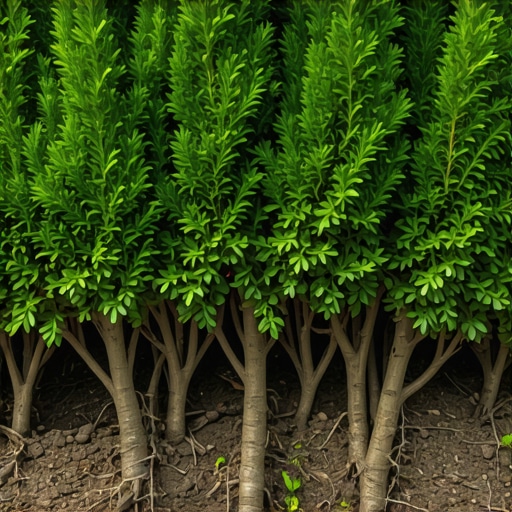
The Diagnostic Autopsy of a Dying Landscape
I always drill into my new crew members: if you don’t fix the soil grading and hydrological flow first, every plant you put in the ground is just expensive compost. Last July, I walked onto a job site where a homeowner had spent four thousand dollars on premium Japanese Maples and Hydrangeas only to watch them crisp up from the bottom up. They thought they had a disease. I knew better. I grabbed my soil probe, sank it six inches into the root ball, and pulled up dust. Despite their expensive irrigation system running daily, the water was hitting the outer leaves and shedding off like an umbrella, never reaching the actual drip line or the root zone. This is the structural failure of the ‘mow-and-blow’ mentality. If the biology isn’t supported by engineering, the landscape fails.
Why Your Foundation Shrubs Are Actually Dying
Foundation shrubs wilt because of hydrophobic soil, compacted backfill, and improper irrigation placement. When water hits the leaf canopy but misses the drip line, the central root ball desiccates while the surrounding soil might stay saturated. Correcting this requires moving irrigation emitters to the outer edge of the plant’s canopy to ensure deep root penetration and soil moisture consistency.
The fundamental issue with foundation plantings is the house itself. Foundation walls are typically backfilled with ‘B-grade’ material—rocks, clay, and construction debris—that has a much higher bulk density than native topsoil. This creates a bathtub effect or, conversely, a concrete-hard environment where roots can’t breathe. When you combine this with the rain shadow created by your roof eaves, you have a plant that is perpetually starved for hydration even in a rainstorm. You aren’t just gardening; you are managing a micro-climate with artificial life support.
“Proper irrigation management is the application of water in an amount and frequency that replenishes the soil moisture used by the plant.” – Texas A&M AgriLife Extension
How do I know if my shrubs need more water?
Do not trust your eyes; trust a soil moisture meter or a trowel. Dig three inches down at the drip line—the area directly under the outermost branches. If the soil is crumbly and dry, your plant is hitting its permanent wilting point. You need to check the turgor pressure in the leaves; if they stay limp after the sun goes down, the vascular system is failing.
The Science of the Drip Line
A plant’s drip line is the imaginary circle on the ground where water naturally sheds off its foliage. In nature, this is where the highest concentration of feeder roots resides. These roots are responsible for 90% of the plant’s water and nutrient uptake. Most homeowners—and frankly, most bad contractors—install irrigation heads that spray the stems or the center of the plant. This leads to root flare rot and fungal issues while the feeder roots at the perimeter starve. You are literally drowning the heart and starving the hands.
When we perform a yard cleanup or a fresh landscaping install, we analyze the hydraulic conductivity of the soil. Heavy clay soil requires a slower application rate to prevent runoff. If you apply two inches of water in ten minutes, it just rolls off the surface. You need a low-flow drip system that allows water to move through capillary action, saturating the soil micropores deeply. This forces the roots to grow downward, away from the surface heat, creating a resilient plant that can survive a week-long heatwave.
| Irrigation Method | Efficiency Rating | Best Use Case | Major Drawback |
|---|---|---|---|
| Surface Spray | 50-60% | Turf/Lawn Care | High Evaporation |
| Soaker Hoses | 70% | Vegetable Gardens | Uneven Pressure |
| Pressure-Compensated Drip | 90% | Foundation Shrubs | Initial Cost |
| Bubblers | 85% | Large Trees | Soil Erosion Potential |
The Step-by-Step Remediation Process
Fixing wilting shrubs isn’t about dumping a bucket of water on them; it is about re-engineering the soil profile. First, remove any mulch volcanoes—excessive mulch piled against the trunk. This traps moisture against the bark and invites borers. Clear the area until you see the root flare. Next, install a Netafim-style drip line around the perimeter of the canopy. This isn’t the cheap black tubing from a big-box store; you need professional-grade, pressure-compensated emitters. Don’t skip this.
“Drip irrigation systems should be designed to apply water slowly, directly to the root zone, minimizing evaporation and runoff.” – NRCS Irrigation Guide
If you are doing a sod install at the same time, ensure your irrigation zones are separated. Grass needs frequent, shallow watering to establish; shrubs need deep, infrequent soaking. If you run your shrub zone on the same schedule as your new sod, you will kill the shrubs with root asphyxiation. Water must move. It must drain. If it sits, the plant dies. It is that simple. Fix the grade. Ensure a 2% slope away from the house to prevent hydrostatic pressure from building up against your foundation while still directing water to the plant’s reach.
How much water do foundation shrubs need per week?
Most established shrubs require 1 to 1.5 inches of water per week, delivered in one or two deep soakings. This forces the auxin hormones in the roots to seek deeper moisture. Frequent, light watering creates shallow roots that fry the second the temperature hits ninety degrees. Consistency is the key to cellular integrity.
Checklist for Shrub Recovery
- Verify the root flare is visible and not buried by soil or mulch.
- Check the irrigation clock for a dedicated shrub zone.
- Ensure drip emitters are placed at the canopy edge, not the trunk.
- Test soil pH; alkaline soil often locks out iron, mimicking drought stress.
- Apply a 2-inch layer of arborist wood chips to regulate soil temperature.
Remember, your landscape is a living biological system. You cannot treat it like a static piece of furniture. If you see wilting, don’t just reach for the hose—reach for the shovel and see what is happening beneath the surface. True landscaping excellence is found in the dirt, not the glossy magazine photos. Keep your hands in the soil. Watch the water move. That is how you build a landscape that lasts for decades rather than seasons.