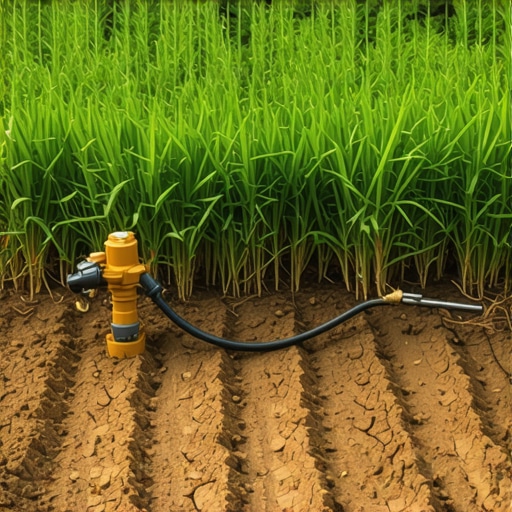
Why Your 2026 Irrigation Pump Loses Prime in Mid-Summer
The sound of a failing irrigation pump in mid-July is unmistakable. It is a high-pitched, metallic whine that signals a dry-run condition, followed by the smell of scorched mechanical seals and overheating PVC. When your system loses prime, the vacuum is broken, and your water column collapses. This isn’t just a minor technical glitch; it is a death sentence for a sod install that hasn’t yet established a three-inch root depth to survive a 95-degree afternoon.
The Physics of Vacuum Loss in High-Heat Cycles
Loss of prime in an irrigation pump occurs when air enters the suction line or the internal water temperature reaches a vapor point, breaking the vacuum. This is frequently caused by failed intake gaskets, hairline PVC fractures, or extreme thermal expansion in the pump housing during peak summer heat cycles.
I recently got called out to tear up a $30,000 patio that was sinking because the previous contractor failed to properly secure the irrigation mainline running underneath it. The pump had been losing prime for weeks. Every time the owner tried to ‘force’ a prime, the water hammer effect from the air pockets was hitting the pipe joints with over 150 PSI of force. Eventually, a coupling under the pavers shattered. The resulting leak didn’t just kill the lawn; it turned the modified gravel base into a slurry, causing the entire hardscape to settle by four inches. This is why irrigation integrity is not optional. It is civil engineering.
“Cavitation in centrifugal pumps occurs when the NPSH (Net Positive Suction Head) available is less than the NPSH required by the pump. This leads to the formation of vapor bubbles that implode, eroding the impeller surface.” – Hydraulic Institute Standards
How do I prime an irrigation pump manually?
To manually prime a pump, you must isolate the discharge side, remove the priming plug, and fill the entire pump housing and suction line with water until all air is displaced. If the water level drops immediately, your foot valve is leaking. Replace it. If it holds, but the pump loses prime again after ten minutes of operation, you have a suction-side air leak. These leaks are often microscopic. In the 2026 climate, we are seeing standard PVC cement failing at higher rates due to extreme soil expansion. I tell my crew: if you don’t see a visible bead of purple primer and heavy-duty solvent, that joint is a ticking time bomb.
The Relationship Between Yard Cleanup and Pump Health
Effective pump maintenance requires a rigorous yard cleanup protocol to ensure that organic debris does not obstruct the intake screen or foot valve. Clogged intakes increase the vacuum pressure, which can lead to cavitation and the eventual failure of the internal mechanical seal and impeller.
Debris is the enemy of hydraulic efficiency. When you neglect your fall or spring cleanup, leaf litter and decomposed organic matter migrate into your irrigation pond or well casing. This material is sucked against the intake screen. The pump has to work twice as hard to pull the same volume of water. This creates a massive drop in pressure. You might notice your rotors aren’t popping up all the way. That’s not a head problem; it’s a suction problem. Clean your screens. It is cheaper than a $1,200 motor replacement.
| Component | Failure Symptom | Primary Cause (2026 Data) | Required Action |
|---|---|---|---|
| Mechanical Seal | Dripping water at shaft | Dry running/Heat stress | Immediate Replacement |
| Foot Valve | Water drains back to source | Debris/Spring failure | Excavate and Replace |
| Impeller | Low discharge pressure | Cavitation/Abrasive sand | Rebuild Pump Wet-End |
| Check Valve | Pump won’t hold prime | Mineral buildup | Acid flush or Replace |
What causes a centrifugal pump to lose pressure?
A centrifugal pump loses pressure when the impeller cannot create a sufficient centrifugal force, usually due to air entrainment, a clogged intake, or internal wear on the wear rings. In landscaping applications, we often see this when the water table drops in mid-summer. If your suction lift is more than 20 feet, a standard centrifugal pump will struggle. You might need to move to a submersible unit or a deep-well jet pump. Physics doesn’t care about your budget. If you exceed the suction lift limit, you will lose prime every single time the sun comes out.
“Irrigation systems must be designed to account for the peak evapotranspiration rates of the local climate, ensuring that the pump capacity exceeds the maximum daily water requirement by at least 20%.” – Texas A&M AgriLife Extension
The 2026 Mid-Summer Maintenance Checklist
Do not wait for the grass to turn brown. Use this checklist to verify your system integrity before the heatwave hits.
- Inspect the suction line joints for ‘sweating’ or salt crusting, which indicates a minor air leak.
- Verify the pump’s amperage draw; a high draw indicates the motor is working against an obstruction.
- Check the thermal overload protection on the control box.
- Clean the foot valve screen every 30 days if pulling from a surface water source.
- Check the pressure tank pre-charge to prevent pump short-cycling.
Short-cycling is another prime-killer. If your pressure tank has a ruptured bladder, the pump will turn on and off every few seconds. This constant surging creates heat. Heat expands the air trapped in the lines. Expanded air breaks the prime. It is a cycle of destruction. I see it every year. Homeowners try to save $200 on a tank and end up spending $2,000 on a pump and sod install. It is a classic case of being penny-wise and pound-foolish.
The Impact of Soil Grading on Irrigation Performance
Proper soil grading is essential for protecting irrigation infrastructure from hydrostatic pressure and ensuring that surface runoff does not contaminate the pump’s water source. Incorrect grading can lead to pipe shearing and the infiltration of silt into the suction line, destroying pump components.
When we perform a sod install, the first thing we check is the grade. If the ground is sloping toward your pump house, you’re going to have problems. Water will pool around the electrical components. Worse, the soil will stay saturated, which can cause the suction pipe to shift and crack. I once saw a brand-new irrigation system fail because the homeowner did their own yard cleanup and accidentally filled in a swale we had dug for drainage. The next heavy rain washed two inches of silt into their intake pond. The pump sucked in that silt, and within twenty minutes, the impeller was ground down to a nub. The pump didn’t just lose prime; it died. Excavation is expensive. Dirt is heavy. Do it right the first time. Dig deep. Compact your base. Use schedule 80 PVC for the suction side. It’s thicker and handles the vacuum pressure much better than the cheap schedule 40 stuff you find at the big-box stores. Stop buying engineering supplies where you buy your lightbulbs.
Reading through this post really highlights how crucial proper installation and regular maintenance are for irrigation systems, especially with the extreme weather patterns we’ve been experiencing lately. I once had a similar issue where our pump kept losing prime during the hottest months, and it turned out to be a small hairline crack in the PVC pipe near the intake. Even a tiny fracture can cause air leaks that sabotage the vacuum. I’ve also learned that using schedule 80 PVC, as mentioned here, makes a huge difference in withstanding soil expansion and thermal stress. I wonder, in your experience, does incorporating frequent pressure checks or installing quick-access priming valves help mitigate these prime-loss issues before they escalate? It seems like a proactive approach might save homeowners from costly repairs and sod failures down the line. Would love to hear what others have found effective for preventing prime loss in high-heat climates.