
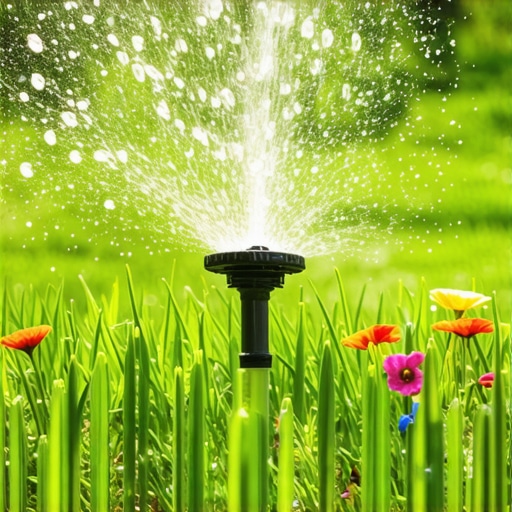
The Forensic Autopsy of a Failed Irrigation Riser
A sprinkler head that remains extended after the irrigation cycle is a mechanical failure usually caused by grit infiltration within the wiper seal or a ruptured internal spring. This failure prevents the riser from overcoming the friction against the housing, leading to lawn mower damage, wasted water, and localized flooding. I recently got called out to tear up a $30,000 patio that was sinking because the previous contractor failed to account for hydrostatic pressure and used sub-standard irrigation heads that stayed up after the cycle. The mower hit them, the water pooled, and the entire base-layer of the hardscape was undermined. This wasn’t a fluke. It was an engineering oversight. When a head won’t pop down, it is usually because the wiper seal has been compromised by sand or the spring has succumbed to corrosion from poor water quality. If you do not fix the soil grading and the head height, every piece of sod you put in the ground is just expensive compost. Irrigation is not just about getting things wet; it is about the precise management of fluid dynamics within a hostile soil environment.
How much modified gravel do I need for a patio base?
To support a standard residential paver patio, you need a minimum of six inches of compacted 2A modified gravel. This base must be laid in two-inch lifts, with each layer processed by a plate compactor until it reaches 95 percent Proctor density to ensure long-term stability. Skip this, and your irrigation lines buried beneath will eventually crush under the weight of settling stone.
The Physics of Retraction Failure
The average pop-up sprinkler relies on a balance between hydraulic pressure and mechanical force. When the valve opens, water pressure pushes the riser up. When the valve closes, a stainless steel spring is supposed to pull it back down.
“The wiper seal is the most critical component of a pop-up sprinkler; it must provide a leak-free seal around the riser to maintain pressure while allowing debris to be flushed away during retraction.” – Irrigation Association Standards
The problem in 2026 isn’t just the spring. It is the buildup of calcium carbonate and magnesium in the water, combined with fine-particulate yard debris. If your yard cleanup routine involves a leaf blower pushing dust toward the heads, you are essentially sandblasting the delicate wiper seals. Once that seal is scratched, the friction coefficient increases. The spring cannot win the fight. It stays up. The mower blade arrives. The head is decapitated. It is a predictable cycle of destruction.
The Impact of Sod Install and Thatch Layers
During a fresh sod install, the height of the sprinkler head is everything. If the head is set too low, it becomes a well for silt. If it is too high, it is a target for the mower.
“Uniformity of distribution in irrigation systems is primarily affected by the physical alignment and vertical clearance of the discharge orifice relative to the turf canopy.” – Texas A&M AgriLife Extension
As the turf matures, it develops a thatch layer. This organic matter builds up between the soil surface and the green vegetation. Over five years, your soil level actually rises. If you didn’t install your heads with swing joints for easy adjustment, your once-perfect irrigation system is now buried in two inches of organic debris. This debris gets sucked into the riser during the retraction phase, jamming the mechanism. It is not a malfunction of the product; it is a failure of the maintenance schedule.
| Component | Failure Mode | Remediation Requirement | Expected Lifespan |
|---|---|---|---|
| Wiper Seal | Grit Scouring | Manual Cleaning/Replacement | 3-5 Years |
| Return Spring | Corrosion/Fatigue | Full Head Replacement | 7-10 Years |
| Riser Stem | Scoring/Scratching | Full Head Replacement | 5-7 Years |
| Nozzle Orifice | Mineral Scale | Acid Soak or Replacement | 2-3 Years |
Why Your 2026 Sprinkler Head Won’t Pop Down
The most common reason for a 2026-era sprinkler head failing to retract is environmental grit accumulation on the riser stem. Modern heads use tighter tolerances to save water, making them more sensitive to fine silt and sand that enters the housing during the flush cycle. Cleaning is mandatory. It is not optional.
The Professional Maintenance Checklist
- Inspect wiper seals for cracks or hardening every spring.
- Clear yard cleanup debris from the perimeter of every head.
- Verify that sod install height has not surpassed the nozzle discharge.
- Check PSI at the head to ensure the spring isn’t being overpowered by residual pressure.
- Flush the system after any main line repair to remove PVC shavings.
Horticultural Zooming: The Microscopic Reality
Look at the riser stem under a 10x loop. You will see micro-scratches. These are the tracks of failure. When we talk about irrigation, we are talking about keeping the turgor pressure of the plant cells high. But the delivery system is a piece of civil engineering. In heavy clay soils, the drainage around the head is often non-existent. The water stays saturated around the housing, allowing anaerobic bacteria to create a slime that acts as an adhesive on the riser. In sandy soils, the problem is abrasive wear. Either way, the result is a stuck head. You must understand the soil pH and mineral content. High iron or high calcium will seize a sprinkler head faster than a mower blade will. It is a chemical battleground. Don’t be the homeowner who buys the cheap big-box store heads. They use light-gauge springs that can’t pull through a wet paper bag, let alone a dense layer of Kentucky Bluegrass thatch. Spend the money on commercial-grade components with co-molded wiper seals. It is the difference between a system that lasts twenty years and one that fails in twenty months. Fix the grading. Manage the grit. Protect the seals. That is how you keep the heads down.