
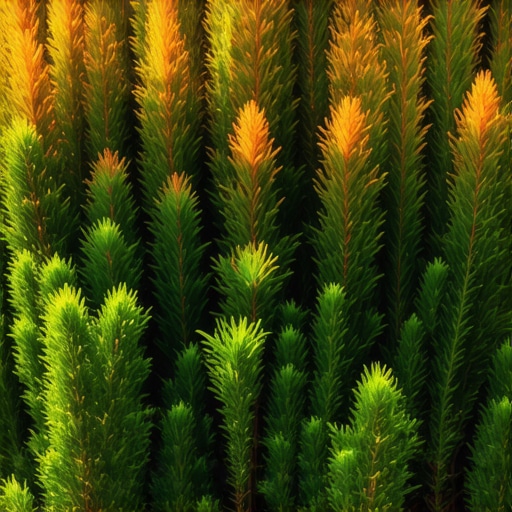
Why Your Boxwoods Are Turning Orange
Boxwoods turn orange primarily due to winter bronzing, pathogenic blight, or chronic soil drainage failures. This physiological response indicates that the plant is no longer moving water or nutrients effectively through its xylem, often caused by root rot, frozen soil, or fungal pathogens like Calonectria pseudonaviculata.
I always drill into my new crew members: if you don’t fix the soil grading first, every plant you put in the ground is just expensive compost. I have seen it a thousand times. A homeowner spends five thousand dollars on mature Buxus sempervirens and sticks them into a hole with no drainage. Within six months, the leaves are the color of a rusted shovel. They call me to ‘fix it,’ but by then, the root system is a mushy, black mess of anaerobic decay. You can’t prune your way out of a drainage problem. You have to understand the physics of the soil. If the water has nowhere to go, the roots can’t breathe. It is that simple.
The Forensic Diagnosis of Leaf Discoloration
When we walk a property for a yard cleanup or a landscaping audit, we look at the specific pattern of the orange hue. If the entire shrub is an even, bronze-orange, it is usually environmental. If the orange is splotchy with black streaks on the stems, you are looking at a biological war zone. Boxwood Blight is the enemy here. This fungus moves through water. If your irrigation system is hitting the foliage directly every morning, you are essentially providing a high-speed rail system for fungal spores. We stop the overhead watering immediately. We shift to drip lines that deliver water at the soil level at a rate of 0.5 to 1.0 gallon per hour per plant.
“Boxwood blight (Calonectria pseudonaviculata) is a devastating fungal disease that causes rapid defoliation and can persist in the soil for years through microsclerotia.” – Virginia Cooperative Extension
The Engineering of Drainage and Soil pH
Boxwoods are not complicated, but they are particular. They require a soil pH between 6.5 and 7.2. If your soil is sitting at a 5.5, the plant can’t uptake magnesium or calcium. The leaves will start to yellow and then orange-out from the tips. We use a digital probe to test the pH in five different spots around the root zone. If it’s low, we’re top-dressing with pelletized lime at a rate of 50 pounds per 1,000 square feet. This isn’t guesswork; it’s chemistry.
How much modified gravel do I need for a patio base near boxwoods?
While the focus is on the plants, the hardscaping around them dictates their health. If you are building a patio near your boxwoods, you need at least 6 inches of compacted 21A or 3/4-inch modified gravel to ensure the structure doesn’t heave and push water toward the planting beds. Hydrostatic pressure will force water into the root zones if your base isn’t graded at a 2 percent slope away from the vegetation. If you ignore this, your sod install will fail, and your boxwoods will drown.
| Symptom | Probable Cause | Primary Solution |
|---|---|---|
| Uniform Bronze/Orange Tint | Winter Burn | Anti-desiccant spray (Wilt-Pruf) |
| Orange Leaves with Black Stem Lesions | Boxwood Blight | Remove plant and top 2 inches of soil |
| Orange Centers with Light Brown Leaves | Volutella Canker | Thinning for airflow / Copper fungicide |
| Sudden Orange Wilt in Heavy Rain | Phytophthora Root Rot | Re-grade soil and install French drain |
Why is my boxwood turning orange in winter?
Winter bronzing is a survival mechanism. When the ground freezes, the roots cannot pull up water. The winter sun and wind continue to pull moisture out of the leaves. The leaf literally dries out while still attached. To stop this, we apply a heavy 2-inch layer of triple-ground hardwood mulch in late fall. This acts as an insulator for the root zone. Never use ‘mulch volcanoes.’ If the mulch touches the trunk, the bark stays moist, it rots, and the plant dies. Keep the mulch 3 inches away from the root flare. I tell my guys: ‘If I see mulch on the trunk, you’re re-doing the whole bed.’
“Proper plant spacing and thinning of the interior canopy are essential for reducing leaf wetness duration, which is the primary driver of fungal infection.” – American Phytopathological Society
The Remediation Checklist
If you want to save your shrubs, follow this protocol. No shortcuts.
- Conduct a 5-point soil test to verify pH levels are above 6.5.
- Inspect the root flare; if it is buried, excavate it immediately to allow for gas exchange.
- Prune out 10 percent of the interior branches to increase airflow and sunlight penetration.
- Sanitize pruning shears with 70 percent isopropyl alcohol between every single bush.
- Apply a slow-release, low-nitrogen fertilizer (like a 10-6-4) only after the soil warms to 55 degrees.
- Redirect irrigation heads away from the foliage.
- Perform a deep yard cleanup to remove all fallen leaves, which harbor fungal spores.
Landscaping is about managing the transition between the built environment and the biological one. You can’t just throw a plant in a hole and hope for the best. You have to engineer the environment for success. If you have orange boxwoods, stop looking for a ‘magic spray’ and start looking at your soil and your water. Fix the grade. Balance the pH. Manage the moisture. It will survive. Skip the basics? It will rot. Don’t skip the basics.