
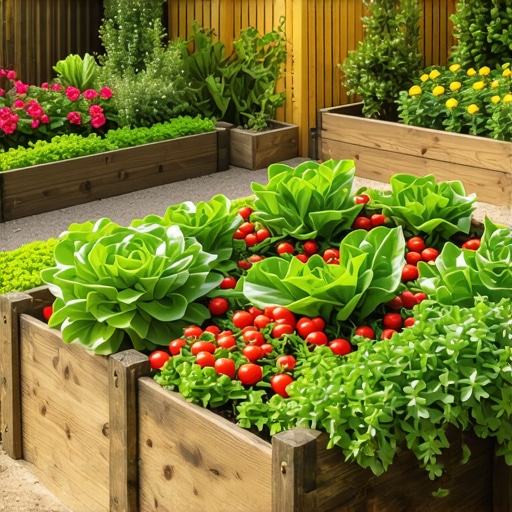
The Engineering of Productive Micro-Spaces
Successful edible landscaping in small 2026 backyards requires a departure from ornamental fluff and a shift toward high-performance civil engineering and soil biology. I always drill into my new crew members: if you don’t fix the soil grading first, every plant you put in the ground is just expensive compost. Most homeowners see a flat patch of dirt; I see a complex system of drainage, bulk density, and soil pH that dictates whether your $200 fruit tree thrives or rots. Before we even talk about sod install or plant selection, we must address the yard cleanup phase, which involves removing legacy compaction and chemical residues from previous ‘mow-and-blow’ hacks. Do not skip the prep. Soil is the engine. If the engine is seized, the car stays in the driveway.
“Soil structure is the arrangement of soil particles into aggregates. For edible crops, high pore space is non-negotiable to allow for gas exchange and root penetration.” – Penn State Agricultural Extension
1. Vertical Espalier Fruit Systems for Perimeter Management
An espalier fruit wall uses structural wire systems to train fruit-bearing trees against flat surfaces, maximizing yields in backyards with less than 500 square feet of usable space. This isn’t just about aesthetics; it is about calibrated sunlight exposure and airflow. By training a tree (typically on a M.9 or M.27 dwarfing rootstock) into a two-dimensional plane, you eliminate the dense interior canopy where fungal pathogens like powdery mildew congregate. You need 12-gauge galvanized wire and heavy-duty turnbuckles. Tighten them until they hum. We use 4-inch standoffs to allow air to circulate behind the foliage, preventing heat traps against brick or siding. This setup allows for irrigation lines to be precisely mapped along the trunk line, delivering 2.0 GPH (gallons per hour) directly to the root flare without wasting a drop on the leaves. It works. It is efficient.
2. Intensive Perennial Herb Borders with Integrated Irrigation
Replacing non-functional turf with intensive perennial herb borders provides a year-round edible harvest while significantly reducing the nitrogen load required by traditional landscaping. Most small yards are drowning in high-nitrogen runoff from over-fertilized lawns. Instead, we excavate the top 6 inches of depleted clay and backfill with a custom mix of 40% coarse sand, 40% composted organic matter, and 20% native fines. We then install 17mm inline drip tubing with emitters spaced every 12 inches. This system operates at a precise 30 PSI to ensure deep-root saturation. We focus on rosemary, thyme, and sage—plants that thrive in the 6.0 to 7.0 pH range. These aren’t just garnishes; they are functional groundcovers that suppress weeds and stabilize the soil. Don’t use mulch volcanoes. Keep the woody stems clear. Let them breathe.
3. High-Density Dwarf Orchard Ecosystems
A dwarf orchard ecosystem involves planting three to four fruit trees in a single 10-foot diameter hole to create a self-shading, high-yield canopy in a confined small backyard. This technique, often called ‘high-density planting,’ relies on aggressive summer pruning to maintain a maximum height of six feet. By managing the apical dominance of the trees, you force energy into fruit production rather than wood. We often see homeowners make the mistake of planting trees too deep. The root flare must be visible above the finished grade. If you bury the graft union, the scion will root, and your ‘dwarf’ tree will suddenly skyrocket to 30 feet, destroying your fence and your neighbor’s sunlight. We integrate a sod install of clover or low-mow fescue between these clusters to act as a nitrogen-fixing living mulch. It serves a purpose. It isn’t just green paint.
| Material System | Initial PSI Requirement | Annual Maintenance Hours | Expected Yield (lbs/year) |
|---|---|---|---|
| Vertical Espalier | 30-40 (Drip) | 15 (Pruning-heavy) | 45-60 lbs |
| Herb Border | 25 (Micro-spray) | 5 (Harvest-only) | 10-15 lbs |
| Dwarf Orchard | 35 (Deep Drip) | 20 (Thinning/Pruning) | 80-120 lbs |
How much modified gravel do I need for a patio base?
To calculate base material for a hardscape edible area, multiply the square footage by the desired depth (usually 4-6 inches for pedestrian loads) and divide by 27 to get cubic yards. For a 10×10 space at 6 inches deep, you need roughly 2 tons of CR6 or 21A modified gravel. Compaction is key. Use a plate tamper. Make it ring.
What is the best irrigation for edible gardens?
The most efficient irrigation system for small edibles is low-volume drip irrigation using pressure-compensating emitters. This prevents hydrostatic pressure buildup in clay soils and ensures that water reaches the rhizosphere where it is needed most. Avoid overhead spray. It breeds fungus. It wastes water.
“Water movement in soil is governed by matric potential; irrigation must be applied at a rate that does not exceed the soil’s infiltration capacity to prevent anaerobic conditions.” – Texas A&M Agronomy Manual
- Soil Test: Check pH and NPK levels before buying a single plant.
- Grade Check: Ensure a 2% slope away from all structures.
- Irrigation Map: Pressure-test all lines before backfilling trenches.
- Cleanup: Remove all invasive roots and construction debris.
- Mulching: Use 2-3 inches of arborist wood chips, never dyed mulch.
Precision matters. In 2026, we don’t have the luxury of wasting space or water. You must treat your small backyard like a machine. If one gear—whether it’s the irrigation timing or the soil microbiology—is off, the whole system grinds to a halt. We specialize in building these machines. It starts with the dirt. It ends with a harvest. Don’t cut corners. Use the right tools. Build it to last a decade, not a season.