
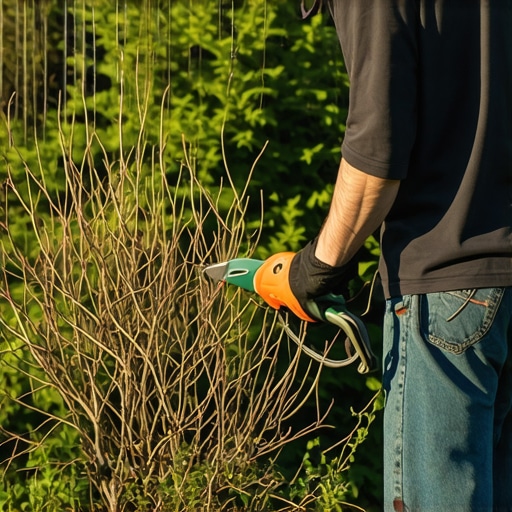
The Biology of a Professional March Cleanup
Early 2026 spring cleanup requires a surgical approach to landscaping that prioritizes plant health and structural integrity before the sap begins its full vernal surge. This phase focuses on deciduous pruning, perennial clearing, and dormant wood management to prevent pathogen entry and optimize nutrient distribution.
I always drill into my new crew members: if you do not fix the soil grading and structural pruning first, every plant you put in the ground is just expensive compost. I have spent two decades watching ‘mow-and-blow’ contractors treat a 300-pound specimen Japanese Maple like a common hedge, shearing off the apical buds with gas-powered trimmers because they are too lazy to use a bypass pruner. That is not maintenance; it is botanical malpractice. In March, the ground is often at field capacity—saturated with winter snowmelt—meaning any heavy machinery you roll across that lawn will cause immediate soil compaction, crushing the macropores required for oxygen to reach the root zone. You have to be precise. You have to be smart. You have to understand the cellular mechanics of the branch collar before you even think about making a cut.
1. Structural Pruning of Deciduous Shrubs and Trees
Structural pruning in March involves the selective removal of dead, damaged, or diseased wood (the 3 Ds) from deciduous plants to improve airflow and light penetration. This process targets crossing branches and water sprouts before the vascular cambium becomes highly active, ensuring rapid callus formation over the pruning sites.
When you are staring down a Summer-sweet (Clethra) or a Panicle Hydrangea, you aren’t just ‘shortening it.’ You are directing the plant’s hormonal energy. By removing the older, woodier canes—usually about one-third of the plant—you force the root system to push nitrogen and carbohydrates into new, vigorous growth. Use high-quality bypass pruners. Never use anvil pruners on live wood; the crushing action destroys the xylem and phloem, leaving a jagged edge that invites fungal spores to take up residence. You make your cut at a 45-degree angle, approximately 1/4 inch above a lateral bud. If you cut too close, the bud dies. If you cut too far, you leave a ‘coat hanger’ stub that will rot back into the main stem. It is binary. There is no middle ground.
“A pruning cut is a wound. The plant does not heal it; it compartmentalizes it by forming a chemical and physical barrier known as the CODIT (Compartmentalization of Decay in Trees) model.” – ISA Arboricultural Standards
How do I know where to cut a branch?
Locate the branch bark ridge and the branch collar—the swollen area where the limb meets the trunk. Always cut just outside this collar to preserve the parent plant’s defense chemicals, ensuring the wound closes properly without introducing wood-decay fungi or internal rot.
2. Clearing Ornamental Grasses and Herbaceous Perennials
Clearing ornamental grasses in early March involves cutting back senescent foliage to within 3 to 5 inches of the crown to allow sunlight to reach the emerging shoots. This yard cleanup task prevents the crown from holding excess moisture, which can lead to rhizome rot or fungal blights in the 2026 growing season.
Most homeowners wait too long. If you see green blades poking through the brown tan of your Miscanthus or Pennisetum, you’ve waited too long. You’ll end up snipping the tips of the new growth, leaving unsightly brown ‘flat tops’ for the rest of the year. Take a bungee cord, wrap it around the top of the grass clump to keep it contained, and use a sharp serrated blade or power shears to take it down. This is also the time to inspect your irrigation lines. Mice and voles love nesting in those dry grass clumps over winter, and they spent the last four months chewing on your poly-tubing. If you don’t check the emitters now, you’ll have a dry dead zone by June when the sod install you paid for last year starts to crisp up. It’s about the system, not just the plant.
| Plant Category | Pruning Height | Required Tool | Primary Goal |
|---|---|---|---|
| Ornamental Grasses | 3-6 Inches | Serrated Knife/Hedge Shears | Crown Aeration |
| Woody Perennials | 6-12 Inches | Bypass Pruners | New Cane Stimulation |
| Evergreen Perennials | Do Not Cut Back | N/A | Leaf Cleaning Only |
| Summer Bloomers | Variable | Loppers/Pruners | Flower Site Selection |
3. Dormant Fruit Tree and Rose Management
Dormant pruning for fruit trees and roses in March focuses on thinning cuts that open the canopy to maximize UV exposure and air circulation. This reduces the risk of scab, mildew, and fire blight while ensuring the 2026 fruit crop has sufficient structural support to prevent limb breakage.
Roses are hungry, aggressive plants. In March, I’m looking for the ‘outward-facing bud.’ By pruning to a bud that points away from the center of the plant, I ensure the new growth moves outward, keeping the center open. An open center means wind can blow through it. Wind dries the leaves. Dry leaves don’t get Black Spot. It’s basic physics. For fruit trees, you’re looking for ‘scaffold branches.’ If two branches are growing at an acute angle—anything less than 45 degrees—one of them has to go. That tight crotch will eventually trap bark, rot, and split under the weight of a heavy harvest or an ice storm. You prune for the storm that’s coming in three years, not the flower you want in three months.
“Proper dormant pruning can increase fruit size and quality by redirecting the tree’s limited energy reserves from vegetative growth into reproductive development.” – Penn State Agricultural Extension
How much should I prune off my fruit trees in March?
Remove no more than 20-25% of the total canopy in a single season to avoid stressing the root system. Focus on vertical suckers and competing leaders to maintain a strong central structure and encourage lateral fruiting wood development.
March Yard Cleanup Checklist
- Inspect Irrigation: Pressurize the system and check for cracked valves or chewed lines before the soil warms.
- Soil Testing: Pull 6-inch core samples to check pH levels; 6.5 is the sweet spot for most turf and ornamentals.
- Pre-emergent Application: If soil temperatures hit 55 degrees consistently, get your crabgrass barrier down.
- Sod Inspection: Look for heaving or desiccation in any sod install areas from last autumn.
- Debris Removal: Clear leaf litter from the base of shrubs to prevent ‘mulch volcanoes’ that rot the bark.
The Technical Reality of Spring Hardscaping
While everyone is focused on the green stuff, March is when you see the failures in your landscaping engineering. I was out on a site last week where a client’s retaining wall was bowing. They thought they needed more plants to ‘hold the soil.’ Wrong. The previous contractor didn’t use 57-stone for backfill and skipped the weep holes. Hydrostatic pressure from the spring thaw was pushing the wall over. If you don’t manage the water, the water will manage you. This is why drainage is the first thing we look at during a yard cleanup. We clear the French drains and ensure the downspouts are carrying water at least 10 feet away from the foundation. No amount of pruning will save a plant that’s sitting in a bathtub of stagnant water because your grading is off. Keep your boots on the ground and your eyes on the transit. Landscaping is 90% physics and 10% aesthetics. If you forget that, you’re just a guy with a lawnmower. Don’t be that guy.