
Why Fire Bricks are Non-Negotiable for Safety
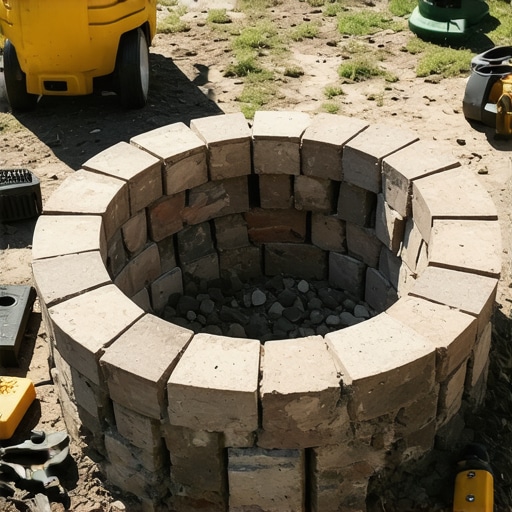
To build a safe 2026-standard fire pit, you must use refractory fire bricks and heat-rated mortar to line the interior rim. This prevents the outer decorative stone from cracking due to thermal expansion and protects your hardscape investment from structural failure caused by intense heat cycles. Most DIYers fail because they use standard red clay bricks or landscape blocks as the primary heat barrier. I recently got called out to tear up a $30,000 patio that was sinking because the previous contractor built a fire pit directly on the pavers without a refractory liner. The heat eventually turned the underlying bedding sand into a glass-like substance and caused the structural polymer in the joints to melt, leading to a total collapse of the surrounding grade. It was an expensive autopsy. Don’t be that guy. If you don’t understand the difference between refractory alumina content and standard silica, you shouldn’t be handling a trowel yet.
The Engineering Behind Thermal Management
Building a fire pit is an exercise in managing thermodynamics and hydrostatic pressure. When you light a fire, the internal temperature can easily exceed 800 degrees Fahrenheit. Standard concrete blocks contain moisture trapped in their pores. Under high heat, this moisture turns to steam, expands rapidly, and causes the block to spall or explode. Fire bricks, or refractory bricks, are kiln-fired at temperatures exceeding 2,000 degrees, making them chemically stable under intense thermal cycles. You must also consider the oxygen intake. A fire pit without proper ventilation is just a smoke machine. I always leave two small gaps in the bottom course of the outer rim to allow for a passive draw of air, which keeps the combustion efficient and reduces the soot load on your stone.
“A retaining wall doesn’t fail because of the stone; it fails because of the water trapped behind it. Similarly, a fire pit fails because of the heat trapped within it.” – Hardscape Engineering Axiom
Site Preparation and the Foundation
To determine the material needs for your project, calculate the cubic volume of the base. For a standard 48-inch diameter pit, you will need approximately 0.5 to 0.75 tons of 21A modified gravel. Excavate to a depth of 12 inches below grade to ensure you are below the organic soil layer. Soft topsoil will compress under the weight of the masonry, leading to a tilted pit within two seasons. Compaction is the secret. You need to hit that gravel with a power tamper until the base literally bounces the machine back at you. If you skip the plate compactor and try to ‘stomp’ it down with your boots, you’re building on a lie.
| Material Type | Heat Resistance (F) | Porosity Level | Recommended Use |
|---|---|---|---|
| Fire Brick (Refractory) | 2,000°+ | Low | Internal Heat Lining |
| Red Clay Brick | 450° | High | Decorative Outer Rim Only |
| Concrete Paver | 250° | Moderate | Patio Flooring (Not for Fire) |
| Natural Limestone | 300° | High | Coping (Will crack if direct heat) |
How much modified gravel do I need for a patio base?
For a standard fire pit and surrounding patio area, you need 6 inches of compacted 21A or 3/4-inch minus gravel. To calculate, multiply your square footage by 0.5 (for 6 inches), then divide by 27 to get cubic yards. Multiply by 1.5 to convert to tons. Never use pea gravel; it doesn’t lock together.
Can I build a fire pit directly on my lawn?
Absolutely not. Building a fire pit directly on sod will kill the root systems of the surrounding grass due to heat conduction through the soil. You must excavate, install a compacted gravel base, and ensure a minimum 3-foot clearance of non-combustible material like river rock or pavers around the pit rim.
The Step-by-Step Installation Process
Once your base is compacted to 95% Standard Proctor Density, you can begin the masonry. Use a high-heat refractory mortar specifically designed for outdoor fireplaces. Do not use standard Type N or Type S mortar; it will crumble. The fire bricks should be laid in a ‘shiners’ or ‘rowlock’ position to create a thick thermal barrier. Keep your joints tight—1/8 inch is ideal. Wide mortar joints are weak points. While the bricks cure, address your yard cleanup. Remove any overhanging branches within 10 feet. If you have an irrigation system, ensure the lateral lines are at least 5 feet away from the pit’s center. I’ve seen PEX pipes melt 3 feet underground because a homeowner ran a bonfire for six hours straight.
- Step 1: Stake the center and mark a 24-inch radius circle.
- Step 2: Excavate 12 inches deep and 6 inches wider than the marked circle.
- Step 3: Lay 6 inches of 21A modified stone in 2-inch lifts, compacting each lift.
- Step 4: Set the first course of fire bricks using a level. This is the most critical step.
- Step 5: Apply refractory mortar and build the inner rim to the desired height.
- Step 6: Install the decorative outer stone, leaving a 1-inch air gap between the fire brick and the veneer.
- Step 7: Cap the pit with heavy natural stone or pre-cast concrete coping.
“The thermal conductivity of soil is significantly increased by moisture content, which can lead to subterranean heat transfer affecting nearby plant root zones.” – Texas A&M Agronomy Manual
Integrating Sod and Irrigation Safety
After the masonry is complete, you must repair the surrounding area. This usually involves a sod install to fix the damage caused by foot traffic and equipment. When laying new sod around a fire pit, use a drought-tolerant species like Bermuda or Zoysia that can handle the increased soil temperature. Do not place irrigation heads where they will spray directly into the pit. Thermal shock—cold water hitting a hot fire brick—will shatter your masonry instantly. Set your irrigation zones to ‘overspray’ away from the pit area. If you’re doing a total landscaping overhaul, consider a 5-foot ring of 1-3 inch river rock around the pit before the grass starts. It provides a secondary fire break and prevents the grass from being scalped by the heat. Don’t skip the 811 call before you dig. Even a shallow fire pit can intersect with a gas line or fiber optic cable. It’s not worth the risk. Build it right, build it once, and keep the fire where it belongs. In the pit, not in your yard’s foundation.