
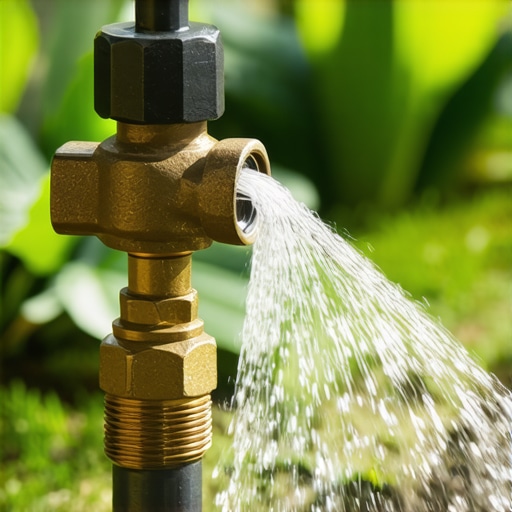
Fix 2026 Low Sprinkler Pressure with a Simple Valve Flush
I always drill into my new crew members: if you don’t fix the soil grading first, every plant you put in the ground is just expensive compost. This technical wisdom extends directly to your irrigation system. Irrigation is not just about getting things wet; it is about hydraulic precision and civil engineering. When a homeowner complains that their rotors are barely popping up or their misting nozzles are dribbling like a leaky faucet, they usually assume the worst. They think the main line is crushed or the municipal supply has dropped. Most of the time, they are wrong. It is usually a failure in the valve assembly caused by a lack of maintenance. A single grain of sand can disrupt the pressure balance of a high-end system. I have seen thousand-dollar sod installs die in a week because a contractor did not bother to flush the lines after a repair. We are going to perform a forensic autopsy on your low-pressure issues and fix them at the source.
Understanding the Mechanics of Irrigation Pressure Loss
Low sprinkler pressure in 2026 is frequently caused by internal valve debris or a perforated diaphragm rather than a municipal supply failure. By performing a simple valve flush, you clear localized obstructions that choke GPM (Gallons Per Minute) and restore the PSI needed for head pop-up. When debris enters the lateral lines, it congregates at the narrowest point: the valve orifice. This creates a bottleneck that starves the zone of the kinetic energy required to lift the riser against the spring tension of the head. It is a simple matter of physics. If the flow is restricted, the pressure downstream will never reach the required threshold for efficient distribution. You are essentially trying to run a marathon while breathing through a cocktail straw. It won’t work. The turf will suffer. The soil microbiology will stagnate. You must restore the flow.
“A retaining wall doesn’t fail because of the stone; it fails because of the water trapped behind it.” – Hardscape Engineering Axiom
While that axiom focuses on hardscape, the hydraulic principle remains: water control is everything. In irrigation, we deal with hydrostatic pressure and dynamic pressure. When the valve is closed, you have static pressure. When it opens, friction loss takes over. If there is grit in the diaphragm seat, the valve may not open fully, or worse, it won’t close, leading to a parasitic loss of pressure across the entire manifold. This ruins your yard cleanup efforts and turns your lawn into a swamp. I have seen crews spend hours on a sod install only to have it fail because they didn’t check the PSI at the furthest head. Don’t be that guy. Check your valves first.
How do I know if my sprinkler valve is clogged?
A clogged sprinkler valve manifests as a sudden drop in head height and a distorted spray pattern across an entire zone. If one head is low, it is a localized filter issue; if the entire zone is weak, the problem is at the valve diaphragm or the solenoid port. You will often hear a humming or vibrating sound from the valve box. This is the sound of turbulent water fighting through a restricted opening. It is the sound of your pump working too hard. It is the sound of impending failure.
| Debris Type | Physical Impact | Resulting System Symptom |
|---|---|---|
| Fine Silt / Sand | Scratches the valve seat | Valve weeping or failure to close |
| PVC Shavings | Blocks the solenoid port | Zone fails to trigger or low pressure |
| Mineral Scale | Hinders diaphragm flexibility | Inconsistent pop-up height |
| Algae / Biofilm | Increases hydraulic friction | Gradual decline in GPM |
The Step-by-Step Valve Flush Protocol
To fix 2026 low sprinkler pressure, you must first isolate the zone and disassemble the valve housing to remove physical obstructions from the internal bypass ports. Start by turning off the main water supply to the irrigation manifold. Relieve the pressure by manually opening the bleed screw. Use a screwdriver to remove the bonnet screws. Do not lose them in the mud. Carefully lift the bonnet and remove the spring and the rubber diaphragm. Inspect the diaphragm for tears. Even a microscopic pinhole will prevent the valve from creating the pressure differential needed to operate. If the rubber is brittle, replace it. If it is covered in grit, wash it in a bucket of clean water. Do not use soap. Use your fingers to feel the plastic seat inside the valve body. Any nick or scratch here means the valve is toast. If it’s clean, you’re in luck.
What is the correct PSI for residential irrigation?
Most residential irrigation systems require between 30 and 50 PSI at the head for optimal performance, though high-efficiency rotors may need up to 60 PSI. Operating below 30 PSI leads to large water droplets and poor coverage, while exceeding 70 PSI causes misting and evaporation. You should use a pressure gauge on a pitot tube to measure the dynamic pressure while the heads are running. If you see a 20 PSI drop from the valve to the last head, your pipe sizing is wrong. But if the pressure is low right out of the valve, you have a mechanical obstruction. Flush it out.
- Turn off the main water supply.
- Remove the solenoid and bonnet assembly.
- Inspect the diaphragm for turgidity and tears.
- Clear the bypass port with a thin wire.
- Briefly crack the water main to blow out debris.
- Reassemble and test for leaks.
“Uniformity of application is the cornerstone of turfgrass health; without pressure, distribution uniformity collapses.” – University of California Agriculture and Natural Resources
When you have low pressure, your Distribution Uniformity (DU) goes to zero. You get “doughnut patterns” where the grass near the head is soaked but the grass five feet away is bone dry. This leads to localized dry spots. Most homeowners then turn up the run time. This is a mistake. You are now over-watering 20 percent of the yard to save the other 80 percent. You are leaching nitrogen out of the root zone and inviting Pythium blight. You are wasting money. Fix the pressure, don’t increase the time. It is a simple equation. Water plus oxygen equals life. Water without oxygen equals rot. Proper pressure ensures the water hits the soil with enough force to infiltrate rather than just pooling on the thatch layer.
Impact on Sod Install and Long-term Landscaping
A fresh sod install requires consistent, high-pressure irrigation to ensure the root-to-soil contact remains moist during the first fourteen days of establishment. If your pressure is low, the edges of the sod rolls will curl and die, creating permanent gaps in your lawn. This is where weeds take hold. A simple valve flush can be the difference between a successful 2026 landscape project and a complete teardown. I have seen $10,000 worth of Kentucky Bluegrass go dormant in July because the homeowner didn’t know how to clean a solenoid. It is a tragedy of ignorance. The soil chemistry depends on consistent moisture to facilitate nutrient uptake. Without water, the cation exchange capacity of your soil becomes irrelevant. The plants cannot eat. They starve in the sun. Don’t let your landscape starve because of a handful of sand in a valve.