
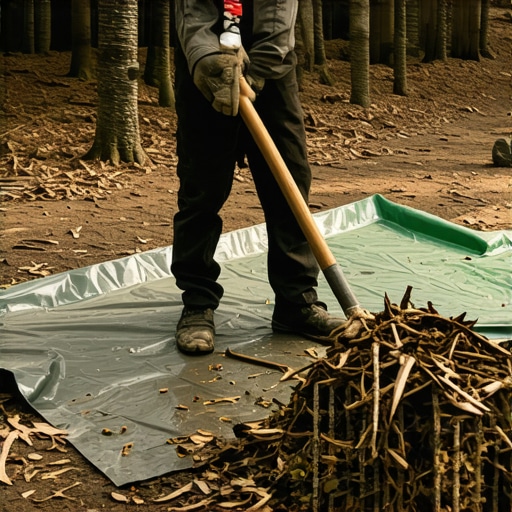
The Bio-Mechanical Reality of Wet Leaf Removal
Wet leaves are not just a cosmetic nuisance; they are a 500-pound anaerobic blanket that can suffocate a healthy turf system in less than a week. In the 2026 season, the heavy rainfall has turned standard leaf litter into a dense, matted layer of organic matter that a standard rake or leaf blower simply cannot handle without causing significant mechanical damage to the soil structure. I always drill into my new crew members: if you don’t fix the soil grading and clear the organic mats first, every plant or sod roll you put in the ground is just expensive compost. You cannot ignore the physics of weight and moisture when cleaning a yard. A single cubic yard of dry oak leaves weighs roughly 200 pounds; saturate those same leaves with November rain, and that weight triples, exerting a downward pressure that collapses the macro-pores in your soil, effectively ending oxygen exchange for the root systems below.
“A retaining wall doesn’t fail because of the stone; it fails because of the water trapped behind it.” – Hardscape Engineering Axiom
Why the Pitchfork and Tarp Method Prevails
The pitchfork and tarp method is the gold standard for removing saturated organic debris because it utilizes vertical lift rather than horizontal friction, protecting the crown of the grass and preventing the shearing of delicate root flares. Unlike a rake, which acts like a claw pulling at the soil surface, a forged steel pitchfork penetrates the mat and lifts the mass as a cohesive unit. This is critical for 2026 yard cleanup because the high moisture levels have likely already begun the process of anaerobic decomposition, making the leaves slippery and heavy. By lifting the weight directly onto a heavy-duty polyethylene tarp, you minimize the number of passes over the turf, which reduces soil compaction—the silent killer of high-end landscaping. Every step you take on a wet lawn with a heavy load is compressing the soil, which will require core aeration later to fix. We use the tarp to distribute the weight across a larger surface area, sliding the debris toward the disposal site without the point-load stress of a wheelbarrow.
How much modified gravel do I need for a patio base?
While discussing drainage and yard cleanup, customers often ask about hardscape foundations; typically, you need a minimum of 6 inches of compacted modified gravel (2A or QB) for a standard pedestrian patio, accounting for a 20% compaction factor to ensure long-term structural integrity and frost heave resistance. This drainage foundation is just as vital as the surface cleanup we are doing now. If your yard cleanup isn’t managed, that organic sludge can migrate into your patio joints and irrigation boxes.
The Engineering of Proper Material Movement
Efficiency in landscaping is a matter of minimizing redundant movements and maximizing mechanical advantage. When dealing with the 2026 wet leaf cycle, we focus on the coefficient of friction. A dry tarp on wet grass moves with surprisingly little resistance, whereas a loaded wheelbarrow will create ruts that require expensive sod install work to repair in the spring. We use 10-mil thick tarps with reinforced grommets. We don’t just pile the leaves; we stack them in a specific grid pattern to maintain the tarp’s center of gravity. This prevents the load from shifting and dumping halfway across the yard. This isn’t just about labor; it is about protecting the irrigation heads and the existing landscape lighting.
“Poor drainage and excessive organic accumulation at the soil surface are the primary precursors to fungal pathogens like Microdochium nivale in cool-season grasses.” – Agronomy Field Manual Vol. 4
How to prevent lawn fungus after leaf removal?
To prevent fungus after removing wet leaves, you must apply a liquid soil conditioner or a light application of calcitic lime to stabilize the pH, as decomposing leaves leach tannic acid which can lower the surface pH and encourage moss and fungal growth. The pitchfork method ensures we don’t leave a layer of slime behind. If you leave even a quarter-inch of wet leaf mulch, you are inviting snow mold to take up residence the moment the first frost hits. We follow the cleanup with a deep-root inspection of any nearby arboriculture assets to ensure the root flares are not buried in the muck.
Comparative Efficiency Table: Wet Leaf Removal
| Method | Labor Hours (per 1k sq ft) | Soil Compaction Risk | Tool Cost | Effectiveness (Wet) |
|---|---|---|---|---|
| Leaf Blower | 4.5 Hours | Low | $400+ | Poor (leaves are too heavy) |
| Standard Raking | 3.0 Hours | High | $30 | Moderate (causes root shear) |
| Pitchfork & Tarp | 1.5 Hours | Very Low | $60 | Superior (Vertical lift) |
Post-Cleanup Checklist for Turf Health
- Inspect for anaerobic odors (smells like rotten eggs) which indicate soil compaction.
- Check all irrigation heads for debris clogs or mechanical damage from the wet mats.
- Verify that the sod install from the previous season hasn’t experienced ‘lifting’ from the moisture.
- Apply a high-potassium winterizer to strengthen the cell walls of the grass blades.
- Ensure the soil grading still directs water away from the house foundation and hardscape.
The Technical Execution: Step by Step
First, we identify the drainage path of the yard. We never start at the bottom of a slope; we work from the highest point down. This prevents us from dragging heavy tarps over areas we’ve already cleaned. We insert the pitchfork at a 45-degree angle, catching the bottom of the leaf mat, and flip it onto the tarp. Do not overload the tarp. A tarp loaded with 400 pounds of wet leaves will tear the grass if dragged too far. Keep loads manageable. Once the area is clear, we check the irrigation system. Wet leaves often hide broken sprinkler heads or clogged drainage grates. If we find standing water, it’s a sign that the soil is either saturated or compacted beyond its infiltration rate. This is when we recommend a tactical sod install or supplemental drainage pipes to handle the 2026 weather patterns. We don’t just clear the yard; we audit the entire ecosystem. Don’t skip the details. It will rot if you leave the debris in the corners. Every square inch of turf needs to breathe before the ground freezes. [image_placeholder_1]”,