
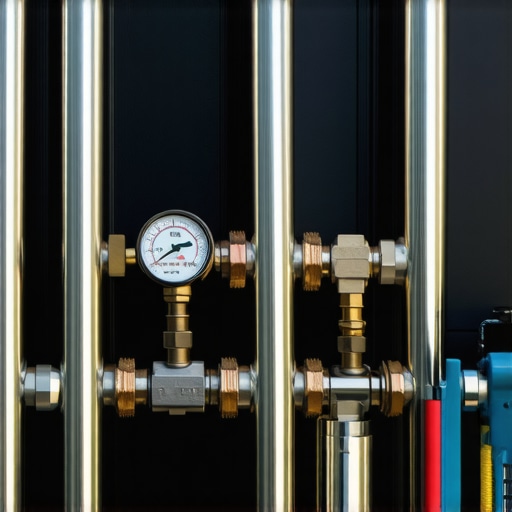
Stop 2026 Irrigation Hammer: Fixing Loud Shaking Pipes
I always drill into my new crew members: if you do not fix the irrigation hydraulics before you lay a single square of turf, you are just building a timed bomb. Every apprentice learns this lesson the hard way. Last season, a kid on my crew thought he could skip the pressure test on a 4-acre residential sod install. Three weeks later, the client called at 2:00 AM because their main line had literally exploded under the driveway. The culprit? Water hammer. That violent banging you hear when your irrigation valves shut off is not just a nuisance; it is a mechanical assault on your plumbing. If your pipes are shaking, they are fatiguing. It is only a matter of time before a coupling shears or a solenoid splits. Landscaping and irrigation are not separate trades; they are a unified system of fluid dynamics and soil stability. Ignore the hammer, and you will be performing a yard cleanup that involves a backhoe and a massive repair bill.
What is Water Hammer in Irrigation Systems?
Water hammer is a hydraulic shockwave occurring when water flow stops or changes direction abruptly, typically caused by fast-closing solenoid valves. This kinetic energy creates a high-pressure spike reaching 3 to 4 times the static PSI, resulting in loud banging, pipe vibration, and eventual PVC joint failure in irrigation lines.
“A water hammer surge can reach magnitudes of several hundred pounds per square inch, far exceeding the pressure rating of standard Class 200 or SDR-21 PVC pipe.” – Irrigation Association Technical Manual
To understand the autopsy of a failed pipe, you have to look at the physics. Water is heavy. One cubic foot of water weighs about 62.4 pounds. When that mass is moving through a 1-inch pipe at 5 feet per second (fps) and a valve snaps shut in 50 milliseconds, that momentum has to go somewhere. The energy converts into a pressure wave that travels back through the pipe at the speed of sound. This is the Joukowski surge. It hits elbows, tees, and the backflow preventer with the force of a sledgehammer. In many 2026 systems, we see an increase in hammer issues because of higher municipal pressures and the use of cheap, thin-walled pipes. If you are using SDR-21 (Class 200) pipe, you only have a 200 PSI rating. A 60 PSI base pressure can easily spike to 240 PSI during a hammer event. The pipe will crack. It is not a matter of if, but when.
How do I stop my irrigation pipes from banging?
To stop irrigation pipes from banging, you must either reduce water velocity, install a water hammer arrestor, or replace fast-closing valves with slow-closing solenoid valves. Ensuring the system operates under 5 feet per second and maintaining a static pressure below 80 PSI are the primary mechanical defenses against hydraulic shock.
The first step in our forensic autopsy of a loud system is checking the velocity. Most hacks don’t realize that pipe size is more important than pump power. If you try to push 15 GPM through a 3/4 inch pipe, your velocity is nearly 10 fps. That is double the safe limit. You are asking for a blowout. We use a simple rule: never exceed 5 fps. If your system is already in the ground, we look at pressure regulation. A Pressure Regulating Valve (PRV) at the main tie-in is mandatory if your street pressure is over 80 PSI. High pressure does not make your sprinklers better; it just mists the water and destroys your hardware. During a yard cleanup or a sod install, we always verify these levels. New sod needs frequent cycles, which means more valve activations and more opportunities for hammer to do damage.
| Solution Method | Component Used | Effectiveness | Installation Complexity |
|---|---|---|---|
| Velocity Control | Upsized PVC Pipe | Highest | Extreme (Requires Re-dig) |
| Pressure Regulation | PRV Valve | High | Moderate |
| Shock Absorption | Mechanical Arrestor | Medium-High | Easy-Moderate |
| Flow Timing | Slow-Close Solenoid | High | Moderate |
Can water hammer burst PVC pipes?
Yes, water hammer can absolutely burst PVC pipes by exceeding the material’s tensile strength during a pressure surge. Repeated shockwaves cause fatigue failure at the weakest points, typically at solvent-weld joints or where the pipe is nicked by rocks in poorly screened backfill soil.
When we do a forensic tear-out of a failed system, we often find that the pipe did not just ‘break’—it shattered. This is characteristic of brittle failure from a surge. In regions with heavy clay soil, the earth does not compress to absorb the vibration. The pipe is held rigid, and the energy has nowhere to dissipate. In sandy loam, you might get a bit more leeway, but the sand can also scour the pipe if it is vibrating constantly. We also see ‘ghost’ leaks. These are small cracks that only open during the hammer spike. You won’t see them during a static pressure test, but they will slowly erode the soil under your new sod install, leading to sinkholes. Always check for soft spots near your valve boxes. That is where the hammer hits hardest.
- Check Static Pressure: Use a gauge on a hose bib. If it’s over 80 PSI, install a PRV.
- Inspect Valve Speed: Listen to the valves. If they click shut instantly, consider a diaphragm upgrade.
- Verify Pipe Bracing: Loose pipes in the basement or crawlspace will rattle. Use J-hooks and rubber isolators.
- Install Arrestors: Place mechanical water hammer arrestors near the fastest-closing valves.
- Call 811: Before digging to fix a main line, always have your utilities marked.
“The most effective way to eliminate water hammer is to ensure that the velocity of the water remains below 5 feet per second and that valves close slowly enough to allow the kinetic energy to dissipate.” – Agricultural Extension Service Bulletin
The Ground-Up Fix for Shaking Irrigation Pipes
If you are tired of the house shaking every time the lawn gets watered, you need a systematic approach. First, we address the ‘air’ issue. Sometimes what people call water hammer is actually trapped air. During a spring startup or after a yard cleanup where the system was drained, air pockets get trapped in high points of the lateral lines. When the valve opens, that air is compressed and then ‘burped’ out of the heads, causing a violent shudder. We install air release valves at the high points of large zones to prevent this. It is a simple fix that most contractors skip because it costs an extra twenty bucks. Don’t be that guy. Fix the air, then move to the mechanical shock.
Mechanical water hammer arrestors are the gold standard for retrofits. These devices contain a piston and a pre-charged air chamber. When the pressure spike hits, the piston moves against the air cushion, absorbing the energy. It is like a shock absorber on a truck. We install these as close to the solenoid valves as possible. If you have a manifold in a basement or garage, this is where the noise is loudest. For outdoor systems, we use vertical risers. However, be warned: old-school ‘air legs’ (a simple vertical pipe filled with air) eventually waterlog and fail. You need a mechanical arrestor with a sealed chamber. This is the difference between a pro fix and a DIY hack job that fails in six months.
Finally, consider your sod install timing. If you are putting down fresh turf, you are likely running the system 4 to 6 times a day for short bursts. This high frequency of valve action will accelerate any existing hammer issues. Before the sod goes down, perform a ‘stress test.’ Manually cycle each zone and watch the main line. If you see the backflow preventer jump, you have a problem. Fix it now while the dirt is exposed. Once that sod is rooted, every repair becomes twice as expensive and three times as messy. It is about protecting the investment. Landscaping is not just about the green on top; it is about the engineering underneath. Don’t let a $50 valve destroy a $5,000 lawn. Fix the hammer before it fixes your bank account.