
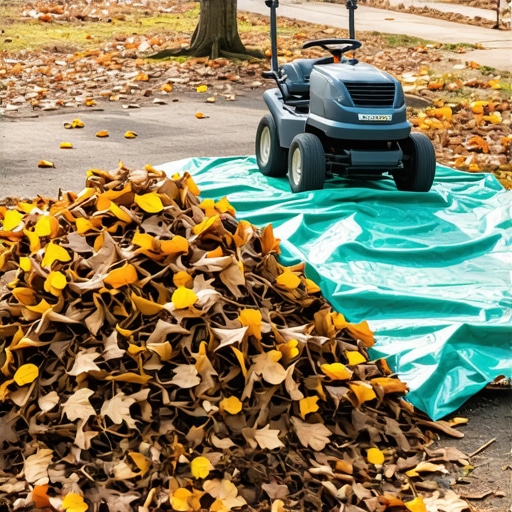
Clear 2026 Leaf Piles Fast: The Tarp and Mower Technique
Efficient leaf removal in 2026 is not about a rake and a prayer; it is a mechanical process involving high-lift mower blades and friction-resistant poly-tarps to manage organic biomass before it creates an anaerobic environment. If you treat your yard cleanup like a weekend hobby, you will likely end up with a fungal outbreak by spring. I always drill into my new crew members: if you don’t fix the soil grading first and manage the debris load, every plant you put in the ground is just expensive compost. You cannot ignore the physics of a yard. A thick mat of wet maple leaves creates a light-impenetrable barrier that triggers chlorosis and root rot in under fourteen days. We are not just cleaning; we are performing preventative maintenance on a biological system.
The Engineering of Yard Cleanup: Why Efficiency Matters
Effective yard cleanup requires strategic biomass relocation using mulching mowers and heavy-duty tarps to prevent soil compaction and the accumulation of pathogenic moisture. Most homeowners waste 60% of their energy on repeated movements. In my twenty years of running a crew, I have seen that the difference between a four-hour job and an eight-hour disaster is the path of travel. Every step you take with a rake is a step you should have taken with a machine or a drag-system. It is about the cubic yardage of debris per hour. Don’t waste time on small piles. Build the system.
“A layer of leaves exceeding 0.5 inches in thickness can significantly reduce the oxygen exchange between the soil and the atmosphere, leading to anaerobic conditions that favor Pythium and other turf pathogens.” – Turfgrass Pathology Manual
The Tarp and Mower Workflow
To execute the Tarp and Mower Technique, you must first utilize a mulching mower to reduce leaf volume by a 10:1 ratio before blowing or raking the concentrated remains onto a 10×12 poly-tarp for rapid transit to a compost site. The mower does the heavy lifting. By shredding the leaves, you increase the surface area for microbial breakdown while simultaneously making the material easier to drag. Heavy oak leaves are like lead when wet. Mulch them first. It saves your back and your turf.
| Method | Efficiency (Sq Ft/Hr) | Labor Intensity | Impact on Soil Health |
|---|---|---|---|
| Manual Raking | 1,500 | Critical | Low (Mechanical Stress) |
| Leaf Blowing Only | 4,000 | High | Neutral |
| Tarp & Mower System | 8,500 | Moderate | High (Nutrient Cycling) |
How often should I clear leaves to prevent lawn rot?
You must clear leaf debris every 7 to 10 days during peak season to ensure sunlight penetration and proper gas exchange for the underlying root systems. If you wait until the end of the season, the weight of the debris will have already initiated the thinning of your turf. The crown of the grass plant needs to breathe. Smother it, and it dies. It is that simple. I have seen 5,000 square feet of prime Kentucky Bluegrass destroyed in a single wet November because the owner thought leaves were ‘natural’ fertilizer. They are, but only if they are pulverized and integrated into the soil, not matted on top of it.
Pre-Sod Installation and Soil Preparation
Proper sod installation requires a level grade and pulverized topsoil free of organic debris to ensure instantaneous root-to-soil contact. If you are planning a 2026 sod install, your leaf cleanup is the first step. You cannot lay sod over leaf litter. It will create a pocket of methane as it rots, killing the new roots before they can establish. We use a harley rake to ensure the substrate is perfect. If you are doing this by hand, you need a heavy-duty garden rake to excavate every last bit of thatch. Don’t skip the prep. If the base isn’t 95% compacted and perfectly graded, your lawn will look like a topographical map of the moon in six months.
“Sod failure is rarely a result of the grass itself; it is a failure of the soil-to-root interface caused by improper debris removal and poor surface grading.” – International Society of Arboriculture (ISA) Standards
- Verify Soil pH: Aim for a 6.5 to 7.0 range before laying any sod.
- Clear Substrate: Remove all stones larger than 1 inch.
- Irrigation Check: Ensure the sprinkler heads are set to 0.5 inches above the final soil grade.
- Edge Cutting: Use a power edger for clean transitions between turf and hardscape.
What is the best tarp size for leaf removal?
The optimal tarp size for a professional-grade cleanup is a 10×12 foot reinforced polyethylene tarp which allows for maximum debris volume without exceeding the manual dragging capacity of a single operator. Any larger, and you risk tearing the grommets or straining your rotator cuff. Any smaller, and you are taking too many trips. Use a 12-mil thickness minimum. Anything thinner is just a glorified trash bag that will shred on the first stick it hits. We go through dozens of these a season. Buy quality once or buy junk ten times.
Managing Irrigation and Drainage During Cleanup
During a yard cleanup, you must inspect all irrigation zones to prevent frozen lines or clogged emitters caused by migrating organic debris. Before the first hard freeze, blow out your lines with a high-cfm compressor. Leaf piles love to hide broken sprinkler heads. If you run over a pop-up head with your mower because it was buried under three inches of maple leaves, that is an expensive mistake. Mark your heads with flags before you start. It takes ten minutes. Replacing a Rain Bird head in frozen ground takes two hours.
We also need to talk about hydrostatic pressure and French drains. Leaf debris is the number one enemy of drainage systems. If your catch basins are full of leaf mulch, your yard will flood. Period. I have been called to jobs where a basement flooded simply because the window well was packed with wet leaves. Clear the debris away from the foundation. Ensure the grade falls away from the house at a minimum of 2% slope. This isn’t just landscaping; it is protecting your largest asset. Don’t be a hack. Do the work right the first time.