
The Cost of Cosmetic Landscaping: A Forensic Autopsy of a Dying Canopy
I always drill into my new crew members: if you don’t fix the soil grading and root environment first, every plant you put in the ground is just expensive compost. Last season, I walked a property where the homeowner had spent six figures on a yard cleanup and custom landscaping, yet their 50-year-old oaks were dropping leaves in mid-July. The culprit wasn’t a pathogen or a drought. It was the crew they hired before me. These guys were ‘mow-and-blow’ hacks who thought mulch was just a decorative carpet. By piling six inches of dyed hardwood against the bark, they had effectively started a slow-motion strangulation of the root flare. The trees weren’t thirsty; they were suffocating. Landscaping is applied biology, not interior design. When you ignore the gas exchange requirements of a tree’s root system, you aren’t improving the curb appeal—you’re signing a death warrant.
The Mulch Volcano: Why Root Flare Burial is Fatal
Mulch volcanoes kill trees by trapping moisture against the trunk bark, leading to secondary fungal infections, adventitious root growth, and eventual girdling. This practice prevents the root flare—the area where roots transition into the trunk—from breathing, causing anaerobic conditions that rot the protective tissue. It is a slow, structural failure.
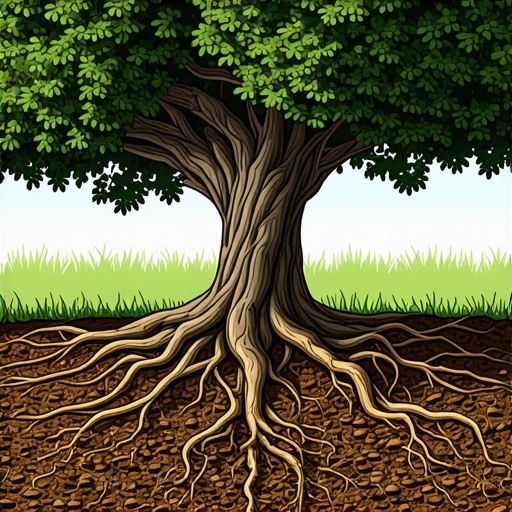
The root flare is biologically different from the roots themselves. Bark is designed to be exposed to air. When you pile mulch against it, you create a dark, moist environment that invites Phytophthora and other rot-inducing pathogens. I’ve peeled back mulch on ‘volcanoes’ and found the bark literally sloughing off in my hands. Once the cambium layer—the tree’s vascular system—is compromised, the tree can no longer transport nutrients. It’s a closed loop. If the tree survives the rot, it often tries to save itself by sending out adventitious roots into the mulch pile. These roots eventually wrap around the trunk as they grow, tightening like a noose as the tree’s diameter increases. This is girdling. It cuts off the flow of sap and kills the tree.
“The most common cause of death for newly planted trees is not lack of water, but rather planting too deep and the subsequent application of excess mulch over the root flare.” – ISA Arborist Manual
Using Low-Quality, Dyed ‘Junk’ Mulch and Carbon Lock-Up
Low-quality dyed mulch often contains recycled pallet wood or construction debris that introduces arsenic or creosote into your soil. Furthermore, fresh, high-carbon mulch can cause nitrogen drawdown, where soil microbes consume all available nitrogen to break down the wood, leaving none for your plants.
I see this constantly during sod install and yard cleanup jobs. Homeowners buy the cheap, jet-black mulch from big-box stores. That black dye isn’t just aesthetic; it’s often used to hide the fact that the material is shredded construction waste. This ‘trash mulch’ doesn’t break down into healthy organic matter. Instead, it creates a hydrophobic crust that repels water. Even worse is the ‘Nitrogen Robbing’ effect. Soil microbes need a specific carbon-to-nitrogen ratio to function. When you dump a massive amount of high-carbon wood chips on the soil, the microbes pull nitrogen out of the dirt to fuel the decomposition process. Your trees end up with yellowing leaves (chlorosis) because the mulch is literally stealing their food. If you’re going to mulch, you need seasoned, organic material, not industrial waste.
How much mulch do I need for a tree?
For a standard tree, you need a 2 to 3-inch layer of organic mulch spread in a wide circle, ensuring a 3-inch gap between the mulch and the trunk. This provides the benefits of moisture retention without the risk of trunk rot.
Ignoring the Soil Chemistry and Moisture Barrier Effect
Over-mulching creates a hydrophobic barrier and alters soil pH, which prevents irrigation and rainwater from reaching the root zone. When mulch exceeds three inches, it often mats together into a felt-like layer that prevents gas exchange and kills the mycorrhizal fungi essential for tree health.
We recently did a soil probe on a site where the lawn looked great due to high-end irrigation, but the trees were flagging. The mulch had been applied so thick, for so many years, that it had formed a solid, waterproof cap. The soil underneath was bone dry, despite the sprinklers running daily. This is the ‘thatch effect’ of bad landscaping. You’re effectively plastic-wrapping your soil. Without gas exchange, the soil biology shifts from aerobic to anaerobic. The beneficial fungi that help roots absorb phosphorus die off, and the soil becomes a dead zone. You have to monitor the decomposition rate. If last year’s mulch hasn’t broken down, don’t add more. Scrape it back, aerate the soil, and start over.
| Mulch Type | Decomposition Rate | Nutrient Value | Best Use Case |
|---|---|---|---|
| Aged Pine Bark | Moderate | High (Acidic) | Acid-loving trees (Oaks, Maples) |
| Dyed Hardwood | Slow | Negligible | Decorative only (Avoid for trees) |
| Wood Chips (Arborist) | Fast | Very High | Soil building and long-term health |
| Cypress Mulch | Very Slow | Low | Moisture-heavy areas (Non-native) |
Is it better to leave leaves under trees?
Yes, leaving a thin layer of leaf litter under a tree is the most natural form of mulching, as it recycles specific nutrients the tree previously extracted from the soil back into the root zone.
The Professional Checklist for Tree Survival
- Identify the root flare: You must see the ‘flare’ where the trunk widens at the soil line.
- Remove old mulch: Never pile new mulch on top of old, matted material.
- Edge the bed: Use a spade to create a clean edge for the lawn, keeping sod from encroaching.
- Apply 2-3 inches only: Use a rake to ensure even distribution.
- The Doughnut Method: Leave a clear ‘hole’ in the center of the mulch ring for the trunk.
Landscaping isn’t a one-and-done event. It’s an ongoing management of a biological system. If you treat your trees like furniture, they will fail. If you treat them like the living engineering marvels they are, they’ll outlive you. Stop the volcano mulching. Fix your soil. Let the roots breathe. It’s not rocket science; it’s dirt science.
“A landscape is only as healthy as the soil it stands in; once the interface between air and earth is blocked, the system begins to fail.” – Texas A&M Agrilife Extension