
The Forensic Autopsy of a Dying Lawn
You see a sea of straw-colored patches where there should be a uniform stand of turf. It feels crunching under your work boots. When you pull back a corner of the sod, it lifts like a carpet, revealing zero root penetration into the native soil. This is not just a lack of water. This is a systemic failure of biology and mechanics. I have walked hundreds of properties where homeowners spent $10,000 on a fresh sod install only to watch it mummify within six months. They blame the grower or the heat, but the truth is usually buried four inches deep in the soil profile.
A homeowner called me in a panic after they completely torched their front lawn by applying a high-nitrogen ‘weed and feed’ product during a record-breaking heatwave. The salt index in the fertilizer pulled every drop of moisture out of the grass blades through osmotic pressure. By the time I arrived, the soil pH was a staggering 8.2 and the microbial life was non-existent. We didn’t just need to re-sod; we had to perform a full-scale soil remediation to flush the salts and reintroduce mycorrhizal fungi. It was an expensive lesson in chemical warfare against your own yard.
Reason 1: Chemical Toxicity and Soil pH Imbalance
Your sod is turning brown because of high salt concentrations or improper soil pH which prevents nutrient uptake through a process called nutrient lockout. Even with perfect watering, grass cannot survive if the soil chemistry is hostile to root elongation and the nitrogen-to-carbon ratio is skewed.
How does nitrogen toxicity affect root development?
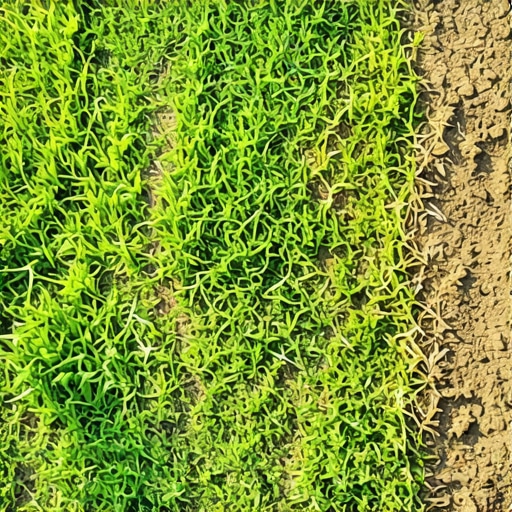
When you overload a new sod install with synthetic nitrogen, you force rapid top growth at the expense of the root system. The plant spends all its energy on the blade, leaving the roots thin and shallow. This makes the lawn incapable of surviving the first dry spell of 2026. [image_placeholder_1]
“Soil pH is the single most important chemical property of the soil, as it affects the availability of nearly all essential plant nutrients.” – Penn State Center for Turfgrass Science
The Fertilizer Salt Index Comparison
| Fertilizer Type | Salt Index (Per Unit of N) | Risk Level for New Sod |
|---|---|---|
| Ammonium Nitrate | 2.99 | High – Can cause leaf burn |
| Urea | 1.61 | Moderate – Requires immediate irrigation |
| Activated Sewage Sludge (Organic) | 0.35 | Low – Safe for new roots |
| Potassium Sulfate | 0.85 | Moderate – Essential for stress tolerance |
Reason 2: Hydro-Dynamics and the Irrigation Depth Deficit
Sod fails when irrigation only wets the top inch of the thatch layer, leaving the underlying soil bone-dry and forcing roots to stay near the surface. This creates a dependency on frequent, shallow watering that leads to fungal pathogens like Rhizoctonia solani rather than deep, drought-resistant roots. I tell my landscaping crews every day: if you are not measuring your water output, you are just guessing. A yard cleanup isn’t complete until the irrigation system is calibrated for deep saturation. Turf grass needs exactly 1 inch of water per week, delivered in two deep sessions. This forces the roots to chase the moisture down into the subsoil.
“Deep and infrequent irrigation is the standard for developing a resilient turfgrass canopy that can withstand environmental extremes.” – Texas A&M AgriLife Extension
How much water does my 2026 sod actually need?
You must perform a ‘tuna can test.’ Place three flat-bottomed cans across your zone. Run your sprinklers until they reach 0.5 inches. That is your baseline run-time. Anything less is just evaporating before it hits the roots. Stop watering every day. It is killing your lawn by suffocation.
Reason 3: Mechanical Failure and Air Pockets During Sod Install
Brown spots often correlate to air pockets between the sod and the soil, which act as a thermal barrier that prevents root colonization. Without direct soil-to-root contact, the sod remains an isolated layer of organic matter that eventually dries out and dies regardless of how much you water. Most contractors skip the most vital step: the lawn roller. A 200-pound water-filled roller is non-negotiable. It presses the roots into the grade, eliminating the gaps where hot air gets trapped. If your sod install feels ‘spongy’ when you walk on it, you have air pockets. Those pockets will be brown by mid-summer.
The Professional Sod Installation Checklist
- Soil De-compaction: Use a power rake or tiller to break up the top 4 inches of native soil.
- Grading: Ensure a 2% slope away from the house to prevent standing water and hydrostatic pressure issues.
- Pre-Planting Nutrition: Apply a phosphorus-heavy ‘starter’ fertilizer to stimulate root branching.
- The Rolling Phase: Roll the sod immediately after laying to ensure total soil contact.
- The Knife Work: Butt edges tightly together with no overlaps or gaps.
How do I fix a brown patch in new sod?
First, perform a ‘tug test.’ If the sod lifts, it hasn’t rooted. Check the moisture level of the soil underneath. If it is dry, your irrigation coverage is blocked. If it is soaking wet and smells like sulfur, you have a drainage failure and the roots are rotting from anaerobic conditions. You cannot fix a drainage problem with more fertilizer. You fix it with a shovel and 57-stone. It is that simple. Don’t let a ‘mow-and-blow’ guy tell you otherwise. Real lawn health starts with engineering, not chemicals.