
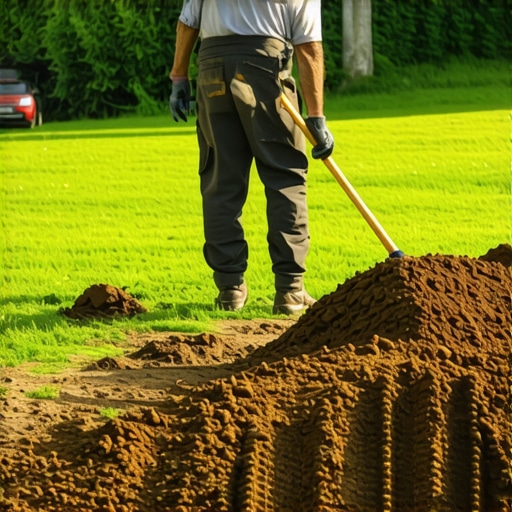
The Hard Truth About New Sod Failure
Sod rot is the direct result of anaerobic soil conditions where water fills the pore spaces between soil particles, displacing oxygen. Without gas exchange at the root level, the turf enters a state of hypoxia, making it vulnerable to fungal pathogens like Fusarium and Pythium. It will rot. Don’t skip the prep. I always drill into my new crew members: if you don’t fix the soil grading first, every plant you put in the ground is just expensive compost. I have seen guys lay $10,000 worth of premium Bermuda over a flat, hard-packed clay pan only to watch it turn into a black, slimy mess within four days. They blamed the sod farm. I blamed their laziness. If the water has nowhere to go, the grass has no way to live. This is the reality of biological engineering in your backyard.
The Physics of Proper Yard Grading for New Sod
A successful grade requires a minimum 1% to 2% slope away from the home’s foundation to ensure surface runoff. Using a transit level or laser level is non-negotiable for establishing the subgrade before adding topsoil or laying rolls of sod. When we talk about grading, we are talking about directing the flow of thousands of gallons of water during a heavy rain event. If your yard is flat, you are building a pond, not a lawn.
“A slope of at least 1 percent is required to move water across a grassed surface.” – USDA Natural Resources Conservation Service
We use the transit to mark the high and low points. We look for the ‘swale’—the shallow channel that guides water toward the municipal storm drain or a designated drainage area. If you don’t have a clear exit point for water, you are just moving the rot from one corner of the yard to another.
How do I calculate the slope for my yard drainage?
To calculate slope, divide the vertical rise by the horizontal run and multiply by 100. For a standard residential lawn, a 2-foot drop over a 100-foot distance creates a 2% slope, which is ideal for most sod installations. Anything less than 1% and you are flirting with disaster. Anything over 25% and you are looking at erosion blankets and specialized hydroseeding because the sod will simply slide off the hill during a heavy soak.
Material Selection and Soil Bulk Density
Soil quality is about more than just nutrients; it is about bulk density and porosity. If your soil is compacted to a high PSI, the roots cannot penetrate, and the water cannot infiltrate.
| Material Type | Particle Size | Drainage Rate | Best Use Case |
|---|---|---|---|
| Screened Topsoil | 0.25 inch | Moderate | Finish grading for sod |
| River Sand | 0.5mm to 2.0mm | High | Correcting minor low spots |
| Clay Fill | Microscopic | Very Low | Deep structural base only |
You cannot just throw topsoil over compacted clay and call it a day. That creates a ‘perched water table’ where the water sits in the loose top layer and rots the roots because it cannot penetrate the hard clay below. You have to till the new soil into the old soil. We call this ‘bridging the horizons.’ It is backbreaking work, but it is the only way to ensure the sod survives the first summer.
The Critical Role of Irrigation Design
Irrigation systems must be installed after rough grading but before finish grading to prevent head misalignment. Poor grading often results in irrigation ponding, where water collects in low spots regardless of the nozzle’s precipitation rate.
“Surface drainage is the most important factor in the longevity of any turfgrass installation.” – Penn State Center for Turfgrass Science
If your irrigation heads are set too low in a poorly graded area, they will become ‘sump pits.’ Every time the system shuts off, the water in the lines drains out of the lowest head. This creates a permanent swamp. We adjust the heads to the finish grade, ensuring they are exactly flush with the soil surface before the sod is laid. This prevents the mower from scalping the head and keeps the water from pooling around the base of the riser.
What is the best dirt for leveling a yard before sod?
The best dirt for leveling is a 70/30 blend of screened topsoil and coarse sand. The sand provides structural integrity and prevents the soil from compacting over time, while the topsoil provides the organic matter necessary for microbial activity. Do not buy ‘fill dirt’ from a random construction site. It is often loaded with weed seeds, rocks, and debris that will haunt your lawn for years. Quality costs more upfront but saves you thousands in herbicide and remediation later.
The Pre-Sod Installation Checklist
- Call 811: Never move a grain of dirt until you have utility markings for gas, electric, and water.
- Herbicide Application: Kill existing weeds with a non-selective herbicide at least 7 days before grading.
- Rough Grade: Use a skid steer or Harley rake to establish the primary slope.
- Soil Test: Check the pH levels. Most turfgrasses want a pH between 6.0 and 7.0.
- Finish Grade: Hand rake the top 2 inches to remove any rock larger than a golf ball.
- Moisture Check: The soil should be damp, not muddy, before the first roll of sod hits the ground.
Maintenance: The First 14 Days
Once the sod is down on a perfectly graded surface, the clock starts. While the internet tells you to water every day, turf grass actually needs deep, infrequent watering—exactly 1 inch per week—to force roots to chase the water down. However, for the first two weeks, you must keep the rhizomes moist. Because we graded the yard correctly, you can water heavily without worrying about root rot. The excess water will migrate down the slope and away from the root zone. If you see mushrooms, you are overwatering. If you see gaps between the rolls, you are underwatering. It is a balance of biology and physics. Don’t mess it up.