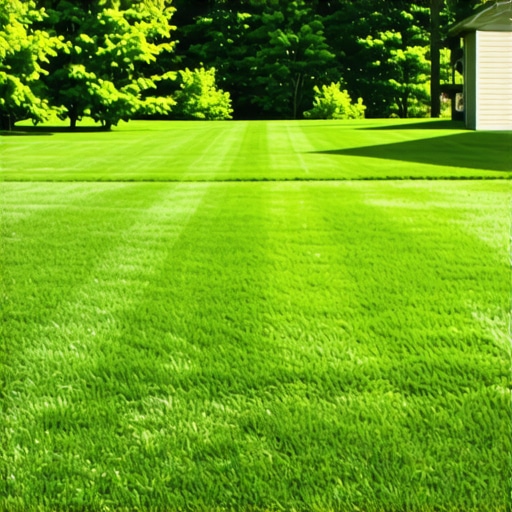
The damp earth of Culpeper County clings to my boots, heavy and cold, a reminder that the ground beneath us has its own timeline. I feel the rhythmic pull of the seasons while others only see a calendar of chores. Many neighbors near the Rappahannock search for shortcuts to a green carpet. They want the fast fix. But the Piedmont soil does not care for speed. It demands respect for the ancient clay and the erratic Virginia humidity. Editor’s Take: To save your turf, you must stop treating Culpeper’s heavy clay like standard potting soil and avoid the trap of generic high-nitrogen fertilizers that burn young roots before they even reach for water. Success in 2026 requires a shift from frantic maintenance to a slow, methodical preparation that matches the local geography.
The first error I see involves the timing of the work. Most folks wait until the heat of late spring to think about grass seeding, but by then, the window has slammed shut. Our specific pocket of Virginia suffers from a unique microclimate where the transition from frost to scorching humidity happens in a heartbeat. If you throw seed down when the dogwoods are already in full bloom, the tender sprouts will wither under the June sun. The soil needs a specific warmth, a heartbeat that only comes with early preparation. You cannot force the earth to perform on a corporate schedule. It requires a quiet observation of the frost lines and the way the shadows fall across your property in the early morning hours. Every acre in Culpeper is a unique puzzle of drainage and light.
The red clay deception
The ground here is not your friend if you treat it with indifference. That thick, orange-red clay acts as a vault, locking out air and moisture when it becomes compacted by heavy foot traffic or neglected mowing schedules. I have spent decades watching people pour expensive seeds onto a surface as hard as a brick. It is a waste of hope. Without deep thatching or aeration, that seed is just bird food. True growth happens when you break the surface tension of the earth. You must let the soil breathe. I often tell neighbors that a lawn is a living organism, not a plastic rug. It needs a porous home where roots can wander deep into the subsoil to find water during our inevitable August droughts. Most homeowners ignore the grit under their nails and assume the bag of seed does all the work. It does not. The preparation is the work. The rest is just a natural consequence of patience.
A rhythm for the Piedmont soil
When we talk about landscaping culpeper va, we are really talking about geology. The bedrock influences everything from how your hardscapes settle to how well your tall fescue survives a heatwave. A common mistake is choosing a seed blend designed for Ohio or Pennsylvania. Virginia is a transition zone. We are too north for some grasses and too south for others. This creates a friction that most big-box stores ignore for the sake of profit. You need a blend that handles the swing from sub-zero nights to ninety-degree afternoons with high dew points. If you do not choose a variety specifically bred for the Mid-Atlantic, you are setting yourself up for a heart-breaking brown-out by mid-July. I prefer the slow path of selecting cultivars that have proven their resilience in our specific humidity. It is about the long-term health of the ecosystem, not just a quick green-up for a backyard barbecue.
The cost of cheap convenience
I see it every autumn. The trucks pull up, people scatter lime without a soil test, and they wonder why their landscaping looks tired by spring. A soil test is not a suggestion; it is a map. Without it, you are walking through the woods in the dark. Our local earth is often acidic, which locks away the nutrients the grass needs to survive. You can buy the most expensive fertilizer on Route 29, but if the pH is wrong, that fertilizer is just runoff for the local creeks. It is about balance. I take a handful of dirt and I can smell the lack of life in it when it has been over-treated with chemicals. We need to encourage the worms and the microbes. They are the silent workers that do the heavy lifting for us. When you bypass the biology of the soil for a chemical shortcut, you create a fragile system that collapses at the first sign of stress. The [landscaping culpeper va](https://eanddlandscapingllc.com/home) professionals who understand this won’t promise a miracle overnight. They promise a process.
Realities of the 2026 season
The climate is shifting, and our old habits must shift with it. We are seeing wetter winters and flash droughts in the spring. This volatility means your grass pickup and maintenance routine cannot be static. You have to watch the sky. If you mow too short during a dry spell, you are essentially scalping the plant and exposing the crown to lethal heat. I leave the blades high, letting the grass shade its own roots. It is a simple act of protection. It looks less like a golf course and more like a resilient meadow, but it stays green when the neighbors’ lawns are turning to straw. We also see people failing at grass seeding because they forget about water after the first week. Germination is only the beginning. Those young plants are like infants; they need consistent, shallow moisture until their roots can find the deeper dampness of the clay. If you [contact us](https://eanddlandscapingllc.com/contact-us) for advice, the first thing I will ask is if you have the patience to watch the water soak in slowly.
Questions from the local garden
Why does my seed never sprout in the shady areas near the oaks? Most seed mixes need six hours of direct sun. Under the canopy of old Culpeper oaks, you need a specific fine fescue and you must thin the lower branches to let light filter through. Can I just throw seed on top of my old grass? No. Seed needs to touch the soil to wake up. If it sits on top of dead thatch, it will just dry out and die. Is fall really better than spring for seeding? In Culpeper, fall is king. The ground is warm, the air is cool, and the weeds are going dormant. It gives the grass six months to build a root system before the Virginia summer hits. How often should I sharpen my mower blades? At least twice a season. Dull blades tear the grass, leaving it vulnerable to diseases that thrive in our humidity. Does mulch help or hurt my lawn borders? Proper mulching protects the roots of your ornamentals, but don’t pile it against the stems. It needs to breathe, just like your turf. Why is my lawn full of crabgrass even after seeding? You likely missed the pre-emergent window or disturbed the soil at the wrong time, allowing buried weed seeds to see the light and wake up. What is the best way to handle heavy clay? Core aeration combined with an application of organic compost will slowly change the structure of the soil over several seasons. There is no instant fix for geology.
The beauty of a well-tended space in Culpeper is not found in the speed of its growth, but in the strength of its roots. As the sun sets over the Blue Ridge, I look at the properties that have been treated with care rather than chemicals. They have a depth of color that a quick-fix lawn can never replicate. It is a slow conversation between the gardener and the earth. If you are ready to stop fighting against the nature of our region and start working with it, the results will speak for themselves in the seasons to come. Growth is a quiet, persistent force. Let us respect that rhythm together.