
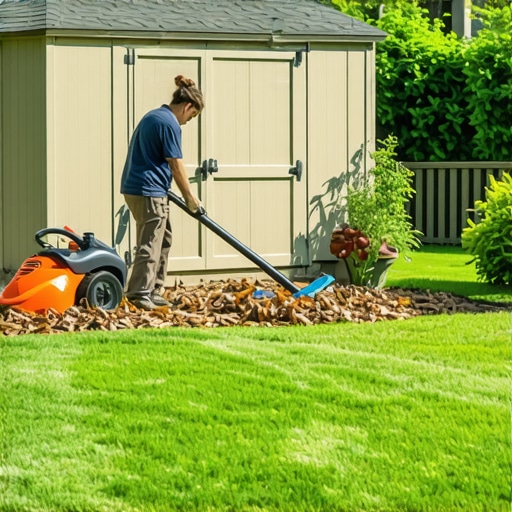
I always drill into my new crew members: if you don’t fix the soil grading first, every plant you put in the ground is just expensive compost. You can buy a five-hundred-dollar specimen Japanese Maple, but if you drop it in a clay hole that holds water like a bathtub, you have just bought a very expensive piece of firewood. I have seen too many homeowners spend thousands on sod install projects only to watch the turf rot from the roots up within three months because they ignored the mechanical reality of their yard. The weekend warrior thinks cleanup is about bagging leaves. It isn’t. It is about managing biological and mechanical systems so they do not break down. Landscape planning is 80 percent physics and 20 percent aesthetics. If you do not understand the irrigation requirements or the soil pH, you are just throwing money into a woodchipper. Do not be the person who buys cheap big-box store mulch that is half-full of weed seeds and construction debris. Do it right the first time.
1. Master the Structural Grade and Drainage Layout
Yard cleanup begins with ensuring that the soil surface maintains a two-percent minimum slope away from the home foundation to prevent hydrostatic pressure buildup and localized soil saturation. This mechanical move saves hours of labor by preventing the fungal outbreaks and moss growth that thrive in standing water. When water sits, oxygen is pushed out of the soil pores. This creates an anaerobic environment. Your grass roots will suffocate. I have seen sod install jobs fail in forty-eight hours because the installer did not check the pitch.
“A retaining wall doesn’t fail because of the stone; it fails because of the water trapped behind it.” – Hardscape Engineering Axiom
Before you touch a rake, look at where the water goes. You might need a French drain or a swale. Fix the grade. Stop the rot. It is that simple.
How much modified gravel do I need for a patio base?
To calculate gravel needs, multiply the square footage by the depth in feet (usually 0.5 feet for 6 inches), then divide by 27 to get cubic yards, adding 10 percent for compaction. Most residential patios require a minimum 6-inch base of crushed 2A modified stone to ensure structural integrity and proper drainage. Do not use pea gravel. It moves like marbles. You need angular stone that locks together under a plate compactor.
| Material | Purpose | Compaction Rate |
|---|---|---|
| 2A Modified Stone | Structural Base | 95% Proctors |
| Screened Topsoil | Turf Bedding | 85% Initial |
| Triple Shredded Bark | Moisture Retention | N/A |
| Polymeric Sand | Joint Stabilization | Fixed |
2. Cut Deep Structural Edges to Stop Grass Creep
Landscaping maintenance is reduced significantly when you establish a four-inch vertical trench between your turf and your planting beds to create a physical barrier for rhizomatous grass roots. This is not a suggestion. It is a requirement for a low-maintenance yard. If you use those cheap plastic edging strips, you are wasting your time. They heave during freeze-thaw cycles. They look like garbage in two years. Use a sharp spade or a power edger. Make the cut vertical. This prevents yard cleanup from becoming a weekly battle against encroaching Bermuda or Kentucky Bluegrass. It also provides a reservoir for mulch, keeping it off your lawn. A clean edge is the mark of a pro. It defines the space. It stops the creep.
3. Execute a Precision Irrigation Efficiency Audit
Proper irrigation management involves calibrating your system to deliver exactly one inch of water per week through deep, infrequent applications that force root systems to seek moisture deep in the soil profile. Most people water for ten minutes every day. That is a mistake. It creates shallow roots. It encourages Pythium blight. Check your nozzles. Look for clogged heads or broken seals. Use a catch-can test to see how much water you are actually putting down. If you have high-pressure misting, install a pressure regulator. You want droplets, not fog. Wind carries fog away. Droplets hit the dirt. Roots need the water, not the air. Adjust your controller for the seasons. Plants need less water in October than in July.
When should I apply pre-emergent in the spring?
You must apply pre-emergent herbicides when the soil temperature reaches a consistent 55 degrees Fahrenheit for three consecutive days, which typically coincides with Forsythia blooms. This timing is critical because it targets crabgrass seeds before they germinate. If you wait until you see the weeds, you have already lost the battle. Use a soil thermometer. Do not guess. Data wins every time in landscaping.
4. Soil Chemistry and the Nitrogen Cycle
Efficient yard cleanup includes a soil test to determine the Cation Exchange Capacity (CEC) and pH levels, allowing for targeted nutrient application instead of blind fertilizing. Most homeowners over-apply nitrogen. This leads to succulent growth that attracts pests.
“Soil pH is the single most important chemical property of the soil, as it controls the availability of all essential plant nutrients.” – Penn State Agricultural Extension
If your pH is 5.5, your grass cannot even use the fertilizer you just bought. It is locked out. You are wasting money. Apply lime to raise pH or sulfur to lower it. Balance the chemistry. The lawn will take care of itself. Stop buying the four-step programs from big-box stores. They are designed for the average, and your yard is not average.
- Test soil pH every two years.
- Calibrate your spreader before every application.
- Avoid high-nitrogen fertilizers in late fall.
- Use slow-release organic matter to build soil structure.
- Clean your mower blades to prevent pathogen spread.
5. Practice Proper Arboricultural Mulching
Professional landscaping requires that mulch is kept away from the root flare of trees and shrubs to prevent bark rot and the development of adventitious roots. I see “mulch volcanoes” everywhere. They are a death sentence. When you pile mulch against the trunk, you trap moisture against the bark. This invites borers. It invites fungus. The bark will slough off. The tree will die. Use two to three inches of mulch max. Pull it back three inches from the wood. Mulch should look like a donut, not a volcano. Use high-quality organic material. It breaks down and feeds the soil. Avoid dyed wood chips. They are often made from old pallets and contain chemicals you do not want in your yard. Quality matters. Details matter.