
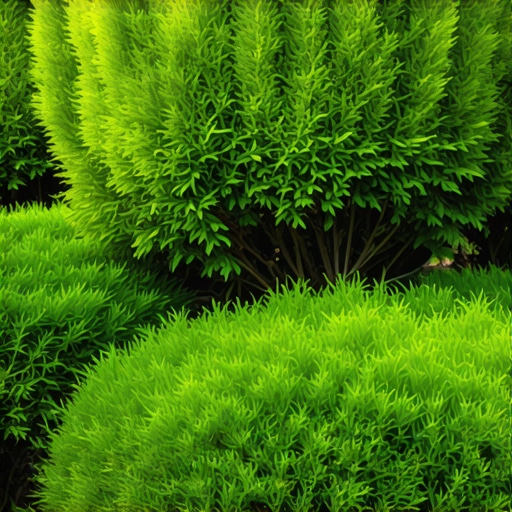
The Engineering of a Living Wall: Why 2026 Planning Starts Now
Choosing **2026 privacy plants** like **Thuja Green Giant**, **Nellie R. Stevens Holly**, or **Leyland Cypress** requires a deep understanding of **soil microbiology**, **site drainage**, and **irrigation infrastructure**. Success in high-density screening is not about the plant itself but the **soil preparation** and **biological management** performed months before the first root ball touches the dirt.
I always drill into my new crew members: if you don’t fix the soil grading first, every plant you put in the ground is just expensive compost. I’ve seen $50,000 estates turn into swamps because some guy with a truck thought he could just stick twenty 15-gallon Thujas in a trench and walk away. They didn’t check the perc rate. They didn’t test the soil pH. Six months later, the roots were anaerobic, the needles turned a sickly rust color, and I was the one getting the call to excavate the rot. Don’t be that homeowner. In this trade, we don’t ‘garden’; we manage a biological site. If you want a 12-foot screen by 2028, you have to treat your backyard like a civil engineering project starting today. This means looking at your yard cleanup not just as removing debris, but as preparing a sterile, graded canvas for a high-performance root system.
“The root flare should always be visible above the soil line to prevent bark rot and girdling roots.” – Purdue University Extension
The Physics of Privacy: Selecting Species for Growth and Durability
Selecting the right **evergreen species** for 2026 depends on your **USDA Hardiness Zone**, local **pest pressure**, and the specific **NPK (Nitrogen-Phosphorus-Potassium)** levels of your native soil. Fast growth is a double-edged sword; plants that grow three feet a year often have weaker wood and are prone to snow load failure or bagworm infestations. You need a species that balances cell elongation with structural integrity.
| Species Name | Growth Rate (Annual) | Ideal Soil pH | Required Spacing | Drought Tolerance |
|---|---|---|---|---|
| Thuja Green Giant | 3 to 5 Feet | 6.0 to 7.5 | 5 to 6 Feet | Moderate |
| Nellie R. Stevens Holly | 2 to 3 Feet | 5.0 to 6.5 | 6 to 8 Feet | High |
| Leyland Cypress | 3 to 4 Feet | 5.5 to 7.0 | 8 to 10 Feet | Low (Susceptible to Canker) |
| Skip Laurel | 1 to 2 Feet | 5.5 to 7.5 | 3 to 5 Feet | Moderate |
How many feet apart should I plant Thuja Green Giants?
For a standard single-row privacy screen, plant **Thuja Green Giants** exactly **5 to 6 feet apart** on center to allow for adequate airflow and prevent fungal blights. If you are performing a **staggered double-row install**, space the trees 8 feet apart in each row with the rows offset by 4 feet to maximize density without choking the root systems.
What is the fastest growing privacy fence plant?
The **Thuja Green Giant** remains the industry gold standard for speed, capable of adding **5 feet of vertical growth** per season under optimal conditions. However, in regions with heavy clay or high wind, the **Nellie R. Stevens Holly** provides a more durable, albeit slightly slower, alternative that resists deer pressure and extreme heat better than conifers.
The Irrigation Mandate: Engineering Hydration for High-Growth Screens
An effective **irrigation system** for a privacy screen must utilize **low-flow drip emitters** rather than overhead spray heads to deliver water directly to the **rhizosphere** while keeping foliage dry to prevent needle cast. We install 1/2 inch poly tubing with 2 GPH (gallons per hour) pressure-compensating emitters at the base of every trunk. This ensures that even if your yard has a significant slope, each tree receives the exact same volume of water, preventing the bottom of the hill from becoming a bog while the top remains a desert.
“Sustainable landscapes require matching the plant’s biological needs to the specific hydrology of the site.” – American Society of Landscape Architects (ASLA)
Soil Grading and the Pre-Install Yard Cleanup
Before any **landscaping** or **sod install** occurs, you must verify the **finish grade** of the site. Water must move away from the root balls of your new evergreens at a minimum 2% slope. If you are doing a full **yard cleanup**, this is the time to remove invasive species like English Ivy or Privet that will compete for nutrients. If your soil is compacted clay with a high bulk density, you must mechanically aerate or incorporate expanded shale to increase pore space. Roots cannot grow where oxygen cannot penetrate.
The Professional Installation Checklist
- Utility Marking: Always call 811 before trenching for irrigation or digging post holes.
- Root Flare Visibility: Ensure the top of the root ball is 1 to 2 inches above the surrounding grade.
- Compaction Check: Use a hand tamper to firm the soil around the root ball to remove air pockets, but do not crush the soil structure.
- Mulching Protocol: Apply 3 inches of double-ground hardwood mulch, keeping it 4 inches away from the trunk (no mulch volcanoes).
- First-Year Saturation: New installs require 10 to 15 gallons of water per week, depending on evapotranspiration rates.
Year One: The Settling Phase
In the first twelve months, the plant is focused on root establishment, not vertical height. This is the ‘sleep’ phase of the ‘sleep, creep, leap’ cycle. Do not over-fertilize with high-nitrogen salts during this period; you will burn the tender new root hairs. Use a slow-release organic fertilizer or a mycorrhizal inoculant to encourage fungal symbiosis. If you see browning from the inside out, check your soil moisture. It is usually a drainage issue, not a disease. Fix the water, and you fix the plant. Skip the shortcuts. Use real engineering. That is how you build a screen that lasts thirty years instead of three.