
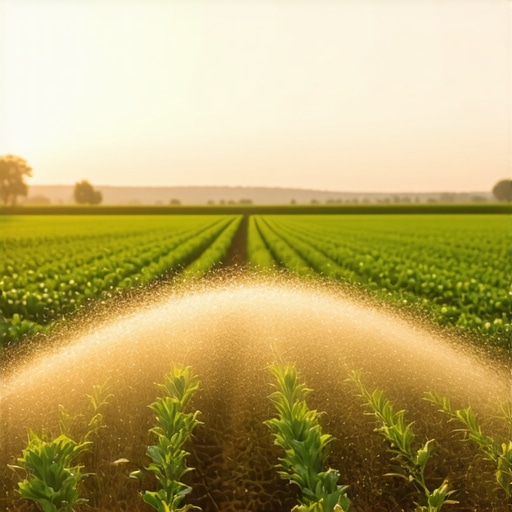
The Forensic Autopsy of a Dead $15,000 Lawn
I recently stood on a $15,000 investment that had turned into expensive, brown corn fodder within forty-eight hours because the homeowner ignored the physics of evapotranspiration. They thought they could outsmart the 2026 heat dome by watering at 2:00 PM, creating a thermal shock event that literally boiled the tender rhizomes of their new sod install. This was not a failure of the grass; it was a failure of irrigation logic and a misunderstanding of how soil moisture tension works in high-heat environments. Most people think they are watering the plant. They are not. They are managing the micro-climate of the root zone and the soil microbiology. When you dump cold water on sun-baked blades, the stomata slam shut, and the plant suffocates in its own heat. It is a brutal way for a lawn to die. It is avoidable. You have to understand the morning soaking rule.
Why 2026 Sod Fails Before the First Mow
The primary reason for sod heat stress in 2026 is localized dry spots caused by hydrophobic soil layers and improper irrigation timing that fails to replenish the field capacity of the soil before transpiration peaks. To ensure a successful sod install, you must synchronize water application with the plant’s metabolic clock, specifically between 4:00 AM and 8:00 AM, to maximize cellular turgor pressure without inducing fungal pathogens. If you miss this window, you are essentially gambling with the establishment phase of your landscaping. Do not gamble. The stakes are too high. Yard cleanup after a failed sod job is twice as expensive as the original install. You have to get the grading and compaction right, then you have to water like a pro.
“The survival of newly installed turfgrass is directly proportional to the moisture content of the upper 2 inches of the soil profile during the first 14 days of establishment.” – Texas A&M AgriLife Extension Turfgrass Manual
How much water does new sod need daily?
New sod requires approximately 0.25 to 0.5 inches of water per day, delivered in split applications, during the first ten days to prevent the crown of the plant from desiccation. This isn’t a suggestion. It is a biological mandate. In clay-heavy soils, you have to watch for runoff. In sandy loam, you have to watch for leaching. If your irrigation system isn’t calibrated to deliver specific gallons per minute (GPM), you are just guessing. I see it every day. Contractors throw down Bermuda or Zoysia, turn on the rotary heads for twenty minutes, and walk away. That is professional negligence. You need to measure the precipitation rate of your zones. Use a tuna can. If it’s not half-full after a cycle, your lawn is starving. It will brown out. It will fail.
| Soil Type | Morning Soak Duration | Afternoon Mist Cycle | Weekly Total Target |
|---|---|---|---|
| Heavy Clay | 45 Minutes | 10 Minutes | 2.5 Inches |
| Sandy Loam | 30 Minutes | 15 Minutes (x2) | 3.0 Inches |
| Compacted Silt | 20 Minutes (Pulse) | 5 Minutes | 2.0 Inches |
What is the best time to water new sod?
The absolute optimal window for irrigation is between 4:00 AM and 6:00 AM because wind drift is minimal, evaporative loss is at its lowest point, and the water has time to penetrate the thatch layer and reach the soil-root interface before the sun drives transpiration. If you water at night, you are inviting Pythium blight and Rhizoctonia. Fungi love damp, stagnant air and 70-degree nights. You might think you’re being efficient. You’re actually growing a pathogen nursery. Stop doing it. The 4:00 AM rule is non-negotiable for my crews. If the irrigation controller isn’t set, the job isn’t done.
The Anatomy of the Morning Soaking Rule
The morning soaking rule works because it utilizes capillary action within the soil pores while the plant is in its most receptive state for moisture uptake. By 10:00 AM, the sun is high enough that photosynthesis is in full swing, and the plant starts losing moisture through its leaves. If the root zone is already saturated, the plant can keep its stomata open and continue to grow. If the soil is dry, the plant goes into dormancy or necrosis to protect its apical meristem. Once the crown dries out, the plant is dead. There is no coming back from that. You can’t just “add more water” later. The cellular structure has collapsed. It is over. This is why yard cleanup for dead sod is such a nightmare. You’re hauling away heavy, wet, dead organic matter that cost you thousands.
- Check the edges: Sod dries from the outside in. Hand-water the seams daily.
- Monitor for “tacoing”: When blades curl like a taco, the plant is in wilting point. Water immediately.
- Avoid the “Mulch Volcano”: Keep mulch away from the edges of new sod to prevent heat trapping.
- Walk the lawn: If your footprint stays visible, the ground is too wet. If the ground is hard, it is too dry.
“Hydrostatic pressure within the plant cells must be maintained to prevent permanent wilting point, especially in C4 grasses during peak summer heat.” – Agronomy Journal of America
Soil Physics and Hydrostatic Tension
Understanding hydrostatic tension is what separates a master landscaper from a guy with a lawnmower. Soil is a series of interconnected micropores and macropores. When you install new sod, you are breaking the capillary bridge between the sod farm’s soil and your yard’s soil. Until the roots penetrate that 1-inch barrier, the sod is essentially living in a hydroponic environment. If that 1-inch layer dries out, the plant has zero access to the subsoil moisture. You have to keep that interface wet. This is why core aeration and soil amendments like humic acid are critical before the sod install. They improve wetting agent penetration. Without them, the water just sits on top and evaporates. You’re wasting money. You’re wasting water. It is a cycle of waste.
The 21-Day Establishment Protocol
The first twenty-one days are a biological marathon. Week one is about survival; you water twice or three times a day. Week two is about transition; you move to once-a-day deep soaking. Week three is about independence; you start skipping days to force the roots to grow deeper into the soil in search of water. This is called stress-hardening. If you continue to water heavily in week three, the roots will stay shallow and lazy. They will never survive the first 100-degree day of 2026. You are building a weak lawn. A weak lawn is a magnet for weeds and grubs. Deep roots are the only defense against heat stress. Do not skip this step. Do not keep it on a “set and forget” timer. You have to be an active participant in the biology of your yard. It requires pragmatism and observation. If you can’t commit to the morning soaking rule, don’t buy the sod. Stick to gravel. It doesn’t need to breathe. Your grass does.