
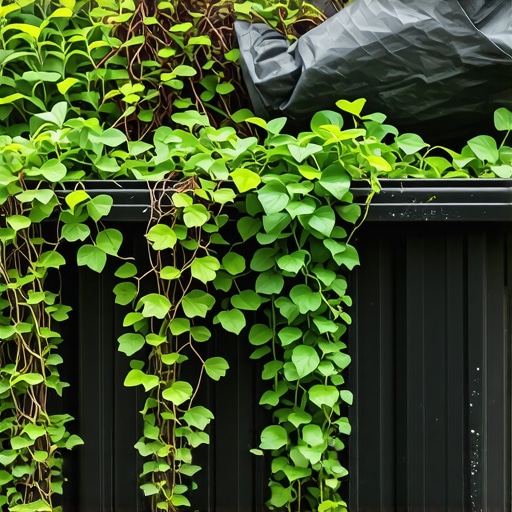
The Bio-Hazard in Your Backyard: Why Composting Invasive Vines Is Professional Suicide
Invasive vines like English Ivy, Oriental Bittersweet, and Wisteria must be isolated and destroyed through solarization or incineration because residential compost piles rarely exceed the 140°F thermal threshold required to denature rhizomes and adventitious root fragments. Placing these species in a standard yard cleanup pile effectively creates a nursery for re-infestation during your next landscaping project.
I recently got called out to a property where a homeowner had spent three years trying to be ‘eco-friendly’ by composting every vine they pulled. They had a massive pile of black gold that looked perfect. They spread that compost over two acres of fresh sod install. Within four months, the entire property was a war zone. Thousands of fragments of Oriental Bittersweet (Celastrus orbiculatus) had survived the ‘cold’ compost process. The roots were literally punching through the new sod. It cost the homeowner $14,000 in specialized herbicide treatments and physical excavation to fix a mistake that started with a compost bin. This wasn’t just bad luck; it was a fundamental misunderstanding of plant biology and cellular resilience. If you think your backyard bin is hot enough to kill a 2026-grade invasive, you are wrong. It is just expensive trash.
The Science of Survival: How Vines Cheat Death
Vines are the ultimate opportunists in the plant world. Unlike a typical perennial, invasive vines utilize vegetative reproduction. This means a one-inch piece of root left in a compost pile can regenerate into a full-scale colony. When you dump these into a compost pile, you are providing them with the exact nutrients they need to thrive: nitrogen, moisture, and shelter from the wind. Most backyard composters never reach the 140°F to 160°F range needed to kill weed seeds, let alone the woody rhizomes of a mature Wisteria. You are effectively ‘marinating’ the enemy.
“Invasive species like English ivy can persist in compost piles that do not consistently reach temperatures above 140°F, allowing root fragments to regenerate once spread back onto the landscape.” – Penn State Extension
Identifying the 2026 High-Risk Invasive List
To manage landscaping properly, you must identify the primary threats. Not all vines are created equal. Some produce 50,000 seeds per year, while others rely on underground runners that can travel 20 feet in a single season. If you find any of the following during your yard cleanup, do not let them touch the soil again.
| Species Name | Reproduction Method | Compost Risk Level | Recommended Disposal |
|---|---|---|---|
| Oriental Bittersweet | Seed & Root Fragments | Extreme | Bag & Trash / Burn |
| English Ivy | Adventitious Roots | High | Solarization |
| Japanese Honeysuckle | Stolons & Seeds | High | Herbicide + Bagging |
| Wisteria (Chinese/Japanese) | Woody Rhizomes | Extreme | Deep Burial or Incineration |
| Kudzu | Crowns & Seeds | Critical | Professional Removal |
How much modified gravel do I need for a patio base?
To calculate the modified gravel needed for a patio base, multiply the square footage by the depth in feet (usually 0.5 feet for a 6-inch base) and divide by 27 to get cubic yards, then multiply by 1.5 to account for compaction. If you are clearing invasive vines to build this patio, the excavation must go 12 inches deep to ensure all rhizomes are removed before the landscape fabric is laid. Failure to do this will result in vines lifting your pavers within two seasons. The hydrostatic pressure from a growing root can easily shift a 60-pound stone. Don’t be lazy. Dig deep.
The Restoration Protocol: Sod Install and Irrigation
Once you have successfully cleared the invasive threat, you cannot leave the ground bare. Mother Nature hates a vacuum. If you don’t put something there, the vines will return from the seed bank already in the dirt. This is where a professional sod install is critical. A thick layer of sod acts as a biological barrier, blocking sunlight from reaching any dormant seeds. However, the success of that sod depends entirely on your irrigation setup. New sod needs precisely 1 inch of water per week, delivered in deep, infrequent cycles to force the roots to chase the moisture downward. Shallow watering creates weak grass that invasives can easily out-compete.
“Effective weed management in professional landscaping requires complete containment of reproductive structures; simple burial or home-scale composting often acts as a dispersal mechanism rather than a disposal method.” – University of California Agriculture and Natural Resources (UC ANR)
Step-by-Step Disposal Guide for Invasive Vines
If you are doing a yard cleanup in 2026, follow this rigid protocol to ensure you aren’t just moving the problem around. Solarization is your best friend. Use 3-mil thick black contractor bags. Fill them with the vines, seal them airtight, and leave them on a hot asphalt surface for at least three weeks. The internal temperature will spike to 160°F, effectively liquifying the plant tissue. Only then is it safe for disposal. Never, under any circumstances, chip these vines into mulch. You will be spreading thousands of potential new plants across your entire property. It is a death sentence for your landscaping.
- Identify: Confirm the species using a botanical guide or extension office app.
- Sever: Cut the vine at the base and paint the stump with a 41% Glyphosate concentrate.
- Extract: Pull as much of the root system as possible without breaking it.
- Contain: Place all debris in heavy-duty plastic bags immediately.
- Heat: Solarize for 21 days in direct sunlight.
- Monitor: Check the site every 30 days for ‘volunteers’ emerging from the soil.
How long do invasive seeds stay active in soil?
Invasive vine seeds can remain viable in the soil for anywhere from 5 to 20 years depending on the species and soil moisture levels. This seed bank is why consistent yard cleanup and irrigation management are vital; you aren’t just fighting the plants you see, you are fighting the ghosts of seasons past. If you disturb the soil for a new sod install, you are bringing those old seeds to the surface. You must be prepared to treat the area with a pre-emergent herbicide or maintain a very dense turf canopy to prevent germination. It is a long-term war, not a one-time battle.
Comments are closed.