
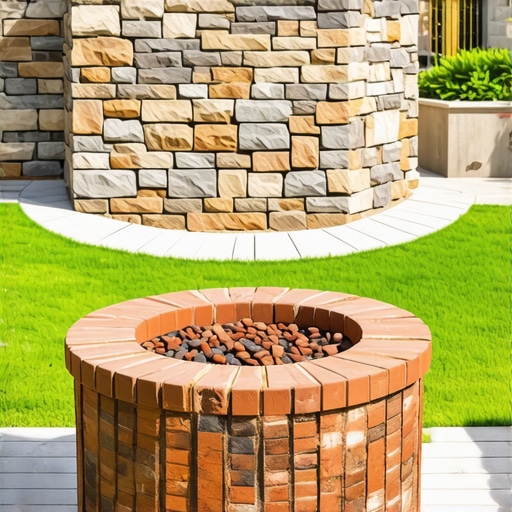
The Hardscape Autopsy: Why Most Fire Pits Fail Within Three Years
Building a durable fire pit requires more than just stacking heavy blocks in a circle; it is an exercise in civil engineering and thermal dynamics that many contractors completely ignore. I recently got called out to tear up a $30,000 patio that was sinking because the previous contractor failed to account for hydrostatic pressure and used a substandard base. The fire pit, which should have been the centerpiece, had shifted nearly three inches to the left, cracking the mortar joints and becoming a safety hazard. This failure happened because they treated the project like a DIY weekend task instead of a structural install. If you do not respect the soil, the soil will eventually reclaim your work. Don’t skip the fundamentals. It will fail.
“A retaining wall doesn’t fail because of the stone; it fails because of the water trapped behind it.” – Hardscape Engineering Axiom
Choosing Between Natural Stone and Kiln-Fired Brick for 2026 Fire Pits
Selecting natural stone or kiln-fired brick depends on your durability requirements; while stone offers superior thermal mass and longevity, fire-rated bricks are engineered for high-heat cycles, preventing the structural cracking common in standard masonry units when exposed to consistent 1,000-degree temperatures. Natural stone, such as granite or fieldstone, brings a massive PSI (pounds per square inch) rating and natural aesthetics, but it is prone to spalling if it contains high moisture levels when heated. On the other hand, kiln-fired bricks (specifically refractory bricks) are manufactured to withstand extreme thermal expansion. Most hacks will try to sell you standard face bricks from a big-box store. These are porous. They will hold water. When that water turns to steam inside the brick, the brick explodes. Use the right materials or don’t build it at all.
| Feature | Natural Stone (Igneous) | Fire-Rated Refractory Brick |
|---|---|---|
| Heat Resistance | High (Risk of Shaling) | Exceptional (Designed for Fire) |
| Base Requirement | 12-inch Modified Gravel | 8-inch Modified Gravel |
| Typical Lifespan | 50+ Years | 30+ Years |
| Cost per SQFT | $28 – $50 | $18 – $35 |
The Foundation: Excavation, Compaction, and the 95 Percent Rule
A durable fire pit requires a compacted sub-base of at least 6 to 8 inches of 3/4-inch modified gravel, meticulously leveled with screed pipes to ensure even weight distribution and prevent the hydrostatic pressure that causes stone walls to shift. I see too many ‘contractors’ just throwing down an inch of leveling sand and calling it a day. That is negligence. You need to excavate down to undisturbed subsoil, lay down a non-woven geotextile fabric to prevent the gravel from migrating into the clay, and then add your modified gravel in two-inch lifts. Each lift must be run over with a vibratory plate compactor until you hit a 95% Proctor density. The tamper should literally bounce off the compacted base. If it feels soft, keep tamping.
“A fire pit is a thermal engine; if the materials cannot expand, the structure will explode.” – National Masonry Association Guide
How deep should a fire pit base be for maximum durability?
For a permanent, heavy masonry fire pit, the excavation depth should be at least 12 inches, allowing for 8 inches of compacted 21A or 3/4-inch minus gravel and 4 inches of the first course of stone to be buried below grade for lateral stability. This depth ensures that the structure resists frost heave, which is the primary cause of wall failure in northern climates. If your base is too shallow, the freeze-thaw cycle will pop your stones out of alignment by February.
Managing Thermal Expansion: The Role of Fire Rings and Refractory Mortar
The internal temperature of a wood-burning fire can easily exceed 1,200 degrees Fahrenheit, necessitating a heavy-gauge steel fire ring or firebrick liner to act as a thermal break between the flame and your exterior decorative stone. Without this thermal barrier, the heat will transfer directly into the exterior stones, causing them to expand at different rates than the mortar or the stone’s core. This leads to delamination. When building with brick, you must use refractory mortar, which contains fireclay and high-temperature cements. Standard Type S or Type N mortar will turn to dust under high heat. It is not a matter of if, but when. Don’t be cheap on the mortar.
Can I use standard red bricks for a permanent fire pit?
No, you should never use standard red clay bricks for the internal lining of a fire pit because they are not rated for high-thermal stress and can explode or crack due to trapped moisture; instead, use refractory firebricks (ASTM C27) specifically designed for kilns and fireplaces. Standard bricks are fine for the exterior veneer where they aren’t in direct contact with the flame, but the core must be fire-rated material.
Integrated Landscaping: Sod Install and Irrigation Rerouting
When you install a heavy stone feature, the landscaping around the perimeter is often destroyed by heavy machinery and foot traffic, requiring a professional sod install and careful irrigation rerouting to prevent water from undermining the new base. You cannot leave irrigation heads spraying directly against the base of a fire pit. This saturates the modified gravel base, leading to subsidence. Before we even bring the first stone on-site, we flag the irrigation lines and cap off any zones that overlap with the construction footprint. Once the pit is built, we perform a yard cleanup to remove excavated clay and then lay fresh Kentucky Bluegrass or Tall Fescue sod, ensuring the grade slopes away from the fire pit at a 2% minimum. If the water pools at the base, you’ve built a pond, not a fire pit.
- Mark Utilities: Always call 811 before excavating for a fire pit base.
- Drainage Check: Ensure the surrounding landscaping allows for positive drainage away from the stone.
- Leveling: Use a transit level or laser level for the base; bubbles don’t lie.
- Adhesives: Use high-heat masonry adhesive for the capstones to prevent shifting.
- Cleanup: Perform a thorough yard cleanup to prevent soil compaction in non-construction areas.
Maintaining Your Investment: Seasonal Cleanup and Structural Audits
A professional-grade fire pit isn’t a ‘set it and forget it’ feature; it requires annual structural audits to check for hairline cracks in the refractory mortar and ensuring the polymeric sand in the surrounding patio remains intact. Yard cleanup in the fall should include removing ash from the pit, as wet ash becomes highly alkaline and can chemically etch certain types of natural stone. If you see the stones starting to tilt, you have a drainage issue. Fix it immediately before the hydrostatic pressure collapses the wall. Hardscaping is a battle against gravity and chemistry. You must be the one who wins.