
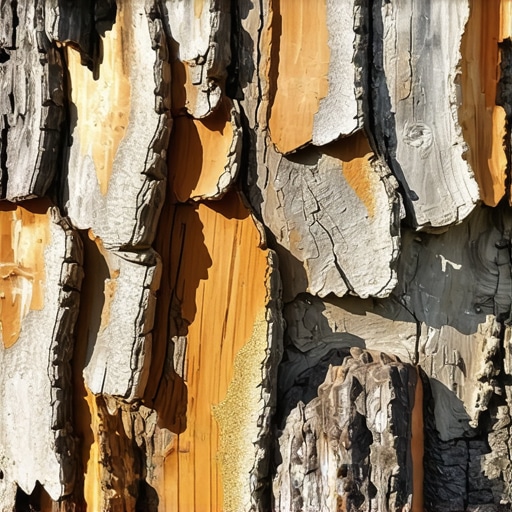
When you walk onto a property and see a 40-foot Oak with bark peeling off in sheets like wet cardboard, the first thing most homeowners do is panic. They think it’s a fungus or a lightning strike. Usually, they are wrong. As a veteran horticulturist with 20 years in the dirt, I can tell you that by the time you see the bark actually falling away, the tree has been screaming for help for three seasons. In the landscaping industry, we see ‘Tree Scale’—specifically armored and soft scale insects—becoming a localized epidemic for the 2026 season due to shifting moisture patterns. If you don’t catch these parasites early, the vascular system of your tree will fail, and you’ll be left with nothing but expensive firewood.
The Hardwood Autopsy: Why Tree Bark Doesn’t Just Fall Off
Identifying 2026 tree scale requires understanding that bark death is rarely the primary cause of decline but rather the final symptom of vascular disruption caused by scale insects or pathogenic cankers. When the cambium layer—the living tissue under the bark—dies, it can no longer produce the xylem and phloem necessary for nutrient transport, leading to desiccation and bark sloughing.
I always drill into my new crew members: if you don’t fix the soil grading first, every plant you put in the ground is just expensive compost. Last year, I saw a $15,000 Japanese Maple project die because the installer buried the root flare 6 inches deep in heavy clay. This smothered the roots, invited opportunistic scale insects, and the bark started rotting from the bottom up. It’s a preventable tragedy. You have to respect the biology of the tree. The bark is the skin; if it’s peeling, the internal organs are failing.
“Scale insects are particularly insidious because they remain stationary for most of their lives, sucking plant juices through a piercing-sucking mouthpart, which weakens the tree’s structural integrity over time.” – Penn State Agricultural Extension Manual
How can you tell if tree bark is dying or just shedding?
Determining if tree bark death is occurring involves checking the inner cambium layer for green, moist tissue versus brown, brittle wood. While some species like Sycamores or River Birches naturally shed bark, localized necrotic spots or oozing lesions indicate a life-threatening infection or scale infestation.
Indicator 1: The Necrotic Canker and Sap Ooze
The first sign of 2026 tree scale and bark failure is the appearance of wetwood or bacterial flux. This isn’t just a bit of sap; it’s a sign of high hydrostatic pressure inside the tree caused by gas-producing bacteria or the feeding of Lecanium scale. When these insects pierce the bark, they create wounds. If those wounds don’t heal because the tree is stressed by poor irrigation, fungi move in. Look for ‘weeping’ spots that look like dark oil stains. It will rot. Don’t skip the inspection of the trunk’s shady side. That’s where the cankers usually start.
Indicator 2: Deep Cracking and Vertical Fissures
Bark should be a continuous protective layer. If you see vertical cracks that expose the heartwood, the tree is losing its turgor pressure. In my experience, this often happens after a ‘mow-and-blow’ crew hits the base with a string trimmer, or when sod install contractors pack Bermuda grass right up against the trunk. The moisture retention against the bark causes it to soften, and then it splits under the weight of the canopy. Scale insects love these cracks. They hide in the fissures and multiply, further sucking the moisture out of the tree’s vascular tissue. It’s a death loop.
Indicator 3: Scaling, Flaking, and Sawdust Frass
Real tree scale looks like small, waxy bumps. They don’t look like bugs; they look like bark imperfections. In 2026, we are seeing a massive uptick in Calico scale and Euonymus scale. These pests excrete a sticky substance called honeydew, which then grows sooty mold. If your tree’s bark looks black and ‘dirty,’ you have an infestation. If you see ‘sawdust’ (frass) at the base, it’s even worse—it means borers have followed the scale. Use a pocket knife to scratch a small area. If it’s brown underneath, that section of the cambium is dead. Check the table below to see where your tree stands.
| Symptom | Normal Shedding | Active Scale/Disease | Urgency Level |
|---|---|---|---|
| Bark Color | Consistent with species | Black, sooty, or bleached white | High |
| Texture | Peels in large, clean flakes | Crumbly, brittle, or ‘mushy’ | Critical |
| Residue | None | Sticky honeydew or white wax | Moderate |
| Leaf Health | Green and vigorous | Yellowing, stunted, or premature drop | High |
What is the best way to treat scale on trees?
Treating tree scale insects requires a multi-phase approach using dormant oils in early spring and systemic insecticides like imidacloprid during the crawler stage. Improving soil microbiology through core aeration and yard cleanup of infected debris is essential for long-term arboriculture health.
The Mitigation Strategy: Beyond the Fungicide
Stop buying cheap spray bottles at big-box stores. They won’t reach the canopy. To save a tree where the bark is starting to die, you need to fix the abiotic stressors. This means looking at your irrigation schedule. Most people water too much and too shallow. You need 1 inch of water per week, delivered deep to the drip line, to force roots downward. If the roots are shallow, the tree is weak. A weak tree is an open buffet for scale.
“Proper pruning and the removal of deadwood are the primary defenses against the spread of wood-boring insects and vascular pathogens in urban landscapes.” – ICPI Hardscape & Softscape Standards
- Audit the Root Flare: Ensure the ‘flare’ where the trunk meets the roots is visible.
- Remove Mulch Volcanoes: Never stack mulch against the bark; it traps moisture and rots the wood.
- Soil Testing: Check your pH levels. If the soil is too alkaline, the tree can’t absorb iron, weakening its immune system.
- Pruning: Cut out dead or scale-infested branches during the dormant season.
- Clean Tools: Sanitize your shears with 70% alcohol between every cut to prevent spreading canker.
The Recovery Plan: Soil Remediation and Irrigation Calibration
If the bark damage covers less than 25% of the trunk’s circumference, the tree can usually be saved. But it takes work. You need to perform a yard cleanup that focuses on the rhizosphere. Remove any sod within 3 feet of the trunk and replace it with aged arborist wood chips. This mimics the forest floor and introduces mycorrhizal fungi that help the tree fight off scale. Watch the new growth. If the new leaves are full-sized and dark green, your vascular system is recovering. If the bark continues to flake off and the wood underneath is dry, call a removal crew before the next storm turns that tree into a liability. Don’t wait. A dying tree is a heavy gamble.