
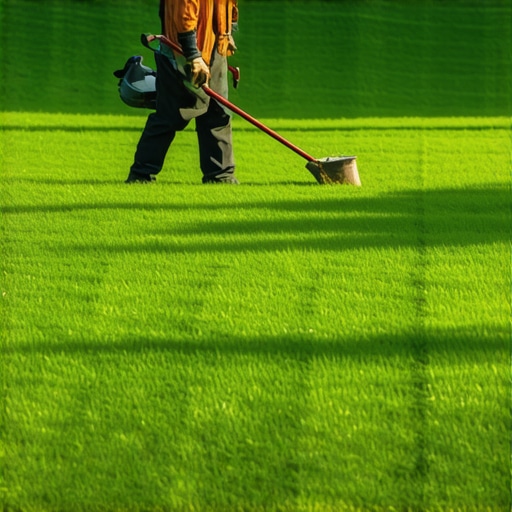
Best 2026 Fertilizers for High-Traffic Tall Fescue Lawns
A homeowner called me in a panic last September after they completely torched their front lawn by applying a high-nitrogen quick-release fertilizer in the middle of a 95-degree heatwave. The turf was not just yellow; it was chemically cauterized. They thought they were helping the grass recover from summer stress, but instead, they caused massive salt accumulation in the root zone. This is a common tragedy. As a landscaper with two decades of dirt under my nails, I see this every year. People treat their soil like a trash can rather than a biological engine. If you want a resilient, high-traffic Tall Fescue lawn in 2026, you must stop guessing and start measuring. We are talking about Cation Exchange Capacity (CEC), tilth, and osmotic pressure. Your yard is a living system, and right now, it is probably starving or suffocating.
The Core Fertilizer Strategy for 2026 High-Traffic Turf
The best fertilizers for high-traffic Tall Fescue lawns in 2026 utilize polymer-coated urea and organic bio-stimulants to ensure a steady nitrogen release of 0.5 to 1 pound per 1,000 square feet per month. This approach prevents salt burn while strengthening cell walls to withstand physical compaction from foot traffic.
Understanding the N-P-K Ratio for Resilience
Tall Fescue (Festuca arundinacea) is a bunch-type grass. Unlike Kentucky Bluegrass, it does not have rhizomes to fill in bare spots. This means every individual plant must be a tank. For high-traffic areas, we look for a 3-0-1 or 4-0-2 ratio. Nitrogen (N) drives the green top growth, but Potassium (K) is the real hero for traffic. Potassium regulates the opening and closing of stomata and thickens the cell walls. A thicker cell wall means the grass blade bounces back when a dog or a kid steps on it instead of snapping. In 2026, the industry is moving toward Methylene Urea (MU) and Isobutylidene Diurea (IBDU). These are not your cheap big-box fertilizers. They rely on microbial activity and hydrolysis to break down, meaning the grass gets fed only when conditions are right for growth.
“A lawn’s ability to recover from wear is directly tied to its carbohydrate reserves, which are managed through balanced potassium levels and controlled nitrogen applications.” – Turfgrass Agronomy Manual, Vol. 14
The Forensic Autopsy: Why Your Lawn Failed Last Year
Most failed lawns I inspect suffer from one of three things: soil compaction, shallow roots due to over-irrigation, or pH imbalance. When a lawn is heavily used, the soil particles are pressed together, eliminating the macro-pores that hold oxygen. Without oxygen, the roots cannot undergo cellular respiration. They die. Then you apply fertilizer, but the plant can’t take it up. You see a yellow lawn, apply more nitrogen, and suddenly you have a fungal outbreak of Brown Patch (Rhizoctonia solani) because the excess nitrogen creates succulent, weak growth that fungi love. We have to break this cycle. Yard cleanup starts with removing the thatch layer that blocks nutrients from reaching the soil. If your soil pH is below 6.0, your Tall Fescue is essentially locked out of 30 percent of the nutrients you are applying. You are throwing money away.
| Fertilizer Type | Release Mechanism | Best Use Case | Traffic Resistance |
|---|---|---|---|
| Polymer-Coated Urea | Temperature/Moisture | Active Spring/Fall Growth | High |
| Milorganite/Organics | Microbial Breakdown | Soil Health/Microbiology | Medium |
| Ammonium Sulfate | Instant Dissolution | Quick Green-up (Risky) | Low |
| Potassium Magnesium Sulfate | Mineral Dissolution | Heat/Drought Stress | Maximum |
How much nitrogen does high-traffic Tall Fescue actually need?
For a high-traffic lawn, you should aim for 3.5 to 4 pounds of actual nitrogen per 1,000 square feet per year, split into four applications. The bulk of this (75 percent) should be applied in the fall. Fall is when Tall Fescue stores energy in its crown for the following year. Applying too much in the spring creates a massive surge of top growth at the expense of the root system. You want deep roots, not a fast-growing lawn that you have to mow every three days. Deep roots are the only thing that will save you during a July drought. When we do a sod install, we always incorporate a starter fertilizer with high phosphorus to encourage that initial root strike, but for established lawns, phosphorus is often unnecessary and can lead to runoff issues.
The Technical Checklist for Lawn Remediation
- Conduct a Soil Test: Stop guessing. You need to know your Phosphorus, Potassium, and pH levels.
- Core Aeration: Pull 3-inch plugs to relieve compaction before fertilizing.
- Calibrate the Spreader: Ensure you are actually dropping 1 pound of N per 1,000 sq ft.
- Irrigation Audit: Water deeply and infrequently (1 inch per week) to force roots down.
- Mow High: Keep Tall Fescue at 3.5 to 4 inches. Taller grass means deeper roots.
“Proper drainage is the foundation of any hardscape or turf project; without it, hydrostatic pressure and soil saturation will undermine the structural integrity of the root zone.” – ICPI Hardscape Engineering Axiom
When should I apply pre-emergent to Tall Fescue?
Timing is everything. You must apply your first round of pre-emergent when soil temperatures hit 55 degrees Fahrenheit for three consecutive days. This usually happens when the Forsythia bushes start blooming. If you wait until you see dandelions, you are too late. However, be careful: if you plan on doing a sod install or over-seeding in the spring, you cannot use traditional pre-emergents like Prodiamine or Dithiopyr, as they will prevent your new grass seeds from germinating. In those cases, you must use Mesotrione, which is the only chemical that allows for grass seed growth while blocking weed competitors.
The Role of Irrigation and Soil Biology
You cannot fertilize your way out of a bad irrigation setup. I see guys spend thousands on high-end 2026 fertilizers only to have their landscaping die because their sprinklers are hitting the sidewalk instead of the turf. Irrigation should be a delivery system for nutrients. Modern 2026 systems use soil moisture sensors to prevent over-watering. If the soil is constantly saturated, the mycorrhizae (beneficial fungi) in the soil will die off. These fungi form a symbiotic relationship with Fescue roots, effectively increasing the root surface area by 100x. When you use high-salt fertilizers, you kill these microbes. That is why I recommend a bridge program: 70 percent synthetic controlled-release and 30 percent organic carbon-based products to keep the soil biology humming. Don’t skip the yard cleanup in the fall; removing fallen leaves is critical because rotting leaves can change the soil pH and create anaerobic pockets that kill the grass you just spent all year feeding. It is a game of inches. It is a game of chemistry. Get it right, or get used to a brown lawn.
Comments are closed.