
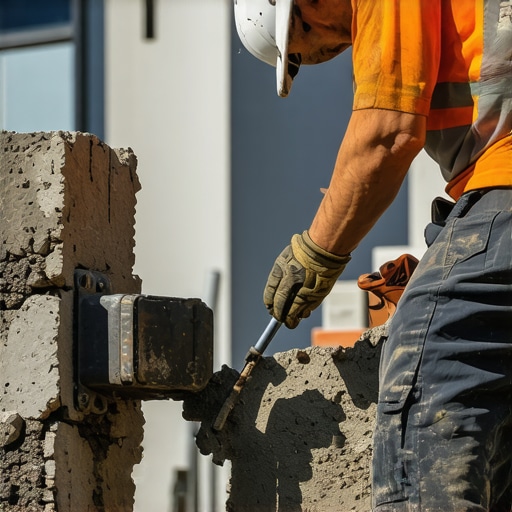
The Forensic Autopsy of a Failing Wall
I recently got called out to tear up a $30,000 patio that was sinking because the previous contractor thought he could cheat the laws of physics. The 6-foot segmental retaining wall was leaning three inches out of plumb, and the pavers were separating like a tectonic fault line. When we excavated, we found the culprit: zero drainage. No gravel chimney, no perforated pipe, just native clay packed tight against the block. That clay acted like a sponge, holding thousands of pounds of water weight. This is the reality of hydrostatic pressure. It doesn’t care how much you spent on the stone; if the water can’t get out, the wall will come down. I see this constantly with ‘mow-and-blow’ outfits that try to pivot into hardscaping without understanding soil mechanics. They focus on the ‘vibrant’ look of the surface while the engineering underneath is rotting.
Why Retaining Walls Lean and Fail
A leaning retaining wall is almost always the result of hydrostatic pressure and poor backfill drainage, where trapped water exerts massive force against the structure’s rear face. This structural failure typically occurs when the original drainage system was either omitted, clogged, or improperly sized for the site’s hydraulic load. When soil becomes saturated, its weight can double, pushing against the wall with thousands of pounds of force per square foot. Most residential walls are built to resist the lateral earth pressure of dry soil, not the hydraulic hammer of a spring storm. If your wall lacks a proper 12-inch gravel chimney or a 4-inch SDR-35 perforated pipe at the footer, the water has nowhere to go but out, taking the wall with it.
“A retaining wall doesn’t fail because of the stone; it fails because of the water trapped behind it.” – Hardscape Engineering Axiom
In many cases, the failure starts with the sod install. If the turf is graded toward the wall instead of away, you are essentially funneling every gallon of roof runoff directly into the backfill zone. This is why landscaping and civil engineering must work together. You can’t just throw down some grass and call it a day; you have to manage the irrigation and surface flow to protect the structural integrity of your hardscaping. If you see ‘weeping’ coming through the cracks of your wall, or if the soil behind it stays ‘mushy’ long after a rain, you are on the clock. It will fail. Don’t wait.
The 2026 Drill Drain Solution
The 2026 Drill Drain is a retroactive drainage solution designed to alleviate moisture buildup without requiring the full excavation of the retaining wall. By installing perforated PVC pipes or specialized drain inserts through the wall face, you create a dedicated path for hydrostatic relief. This method is the ‘surgical strike’ of hardscape repair. Instead of a $20k tear-out, we use high-torque SDS Max rotary hammers to core through the block and into the saturated backfill. This isn’t a DIY job for a cordless drill. We are talking about 2-inch diameter holes angled at a precise 2-degree downward slope to ensure gravity does the heavy lifting.
How much modified gravel do I need for a patio base?
For a standard patio or wall base, you need a minimum of 6 inches of compacted 2A modified gravel, which usually equates to about 1 ton of stone per 50 square feet at that depth. Do not use pea gravel; it doesn’t compact. You need angular stone that locks together under a plate compactor’s 4,000 lbs of centrifugal force. If your base isn’t solid, your drill drain won’t matter because the wall will settle vertically before it ever leans horizontally.
How do I stop water from pooling behind my wall?
To stop water pooling, you must integrate yard cleanup with a strategic irrigation audit. This involves installing a French drain at the top of the slope to intercept surface water before it reaches the retaining wall’s ‘influence zone.’ By diverting this water to a dedicated discharge point, you reduce the load on your internal wall drains by up to 70%. Many homeowners make the mistake of over-watering their sod install near the wall, which keeps the backfill in a constant state of saturation.
Technical Material Comparison for Wall Drainage
| Material Type | Drainage Capacity | Longevity | Best Use Case |
|---|---|---|---|
| 3/4″ Clean Stone | High (30% Voids) | 50+ Years | Wall Backfill / Chimney Drains |
| Perforated Corrugated Pipe | Medium | 15-20 Years | Secondary Yard Drainage |
| SDR-35 Rigid Pipe | Very High | Indefinite | Primary Retaining Wall Footers |
| Non-Woven Geotextile | N/A (Filter) | 30+ Years | Preventing Siltation of Gravel |
The choice of material is critical. I’ve seen guys use ‘sock’ pipe in heavy clay soil. It’s a joke. Within two seasons, the clay fines clog the fabric, and you’re right back to square one with a leaning wall. In 2026, we utilize micro-perforated rigid inserts that resist crushing and feature a smooth interior bore to prevent algae and silt buildup. We also look at the irrigation cycles. If your sprinklers are hitting the wall face, you’re inviting efflorescence and structural degradation. Stop it.
“Proper backfill compaction at 95% Standard Proctor density is non-negotiable for structural stability.” – ASCE Guidelines
Step-by-Step Drill Drain Installation Checklist
- Site Assessment: Use a laser level to determine the exact degree of lean. If it’s more than 5 degrees, the wall is a candidate for total replacement, not just a drain.
- Utility Marking: Call 811. You do not want to core into a gas line or a main irrigation trunk.
- Bore Hole Placement: Drill holes every 4 feet horizontally, approximately 2-4 inches above the finish grade at the base of the wall.
- Core Extraction: Use a 2.5-inch diamond core bit. Slow and steady. Avoid rebar if dealing with reinforced concrete.
- Filter Media Insertion: Slide in a 2-inch perforated PVC sleeve wrapped in non-woven geotextile. This prevents the ‘dirt’ from washing out with the water.
- Backfill Probing: Use a flexible auger to clear out a pocket of soil behind the hole, then fill that pocket with 3/8-inch pea stone to create a mini-sump.
- Grating: Cap the exterior with a high-flow UV-resistant drain cover.
The Long-Term Maintenance Reality
Once the 2026 Drill Drain is installed, you’ll see immediate results. After the first heavy rain, water will pour out of those drains like a faucet. That’s success. That’s weight leaving your wall. But don’t think you’re done. You need to perform a yard cleanup every fall to ensure leaves aren’t blocking these outlets. Check your irrigation heads to ensure they haven’t shifted. If your sod install has settled, re-grade it to maintain that positive pitch away from the wall. Landscaping is a living system, and it requires constant vigilance. If you treat your yard like a ‘set it and forget it’ appliance, it will eventually break, and it will be expensive. Keep your drains clear, keep your soil dry, and your wall will outlast your mortgage. Don’t skip the details. Soil doesn’t forgive laziness.