
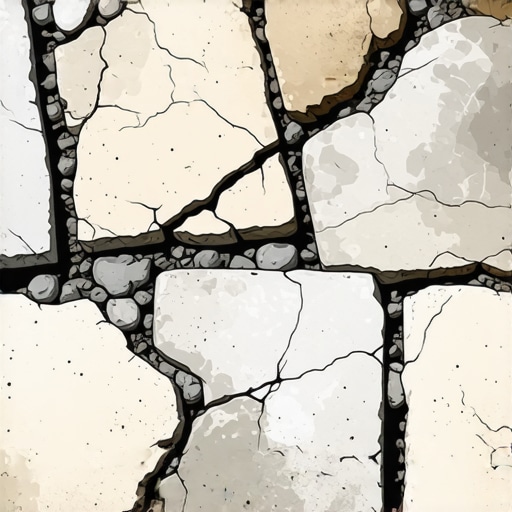
The Hardscape Autopsy: A $30,000 Lesson in Gravity and Water
I recently got called out to tear up a $30,000 patio that was sinking because the previous contractor used stone dust as a joint filler and a base leveling layer. The homeowner was devastated. From the surface, the flagstone looked premium—thick Pennsylvania bluestone—but the joints were a mess of muddy slurry and opportunistic weeds. When we pulled the first stone, the problem was obvious. The stone dust had reached its saturation point, turned into a liquid ‘bearing’ rather than a solid foundation, and the hydrostatic pressure from a poorly timed irrigation cycle had literally floated the stones out of position. It was a textbook failure of using 1990s methods on 2026 projects. If you don’t respect the physics of water movement, your hardscape is just an expensive pile of rocks. It will fail. Every time.
Why Traditional Stone Dust is Failing Modern Hardscapes
Stone dust fails in modern flagstone applications because it lacks the permeability required to shed water, leading to stone shifting, frost heave, and significant weed growth. Unlike polymeric sand or permeable aggregates, stone dust traps moisture in the joints, which undermines the structural integrity of the patio base during freeze-thaw cycles. This material, often called ‘screenings,’ is essentially the waste product from rock crushing. It’s too fine. When it gets wet, it holds water like a sponge. In the winter, that water expands. In the summer, it dries into a brittle crust that cracks under the slightest foot traffic. We see this constantly during yard cleanup calls; the homeowner thinks they just need more dust, but they actually need a total excavation.
“A retaining wall doesn’t fail because of the stone; it fails because of the water trapped behind it.” – Hardscape Engineering Axiom
How much modified gravel do I need for a patio base?
For a standard residential flagstone patio, you need a minimum of 4 to 6 inches of compacted modified 2A gravel or crushed stone. This isn’t a suggestion; it’s a requirement for load distribution. If you are dealing with heavy clay soil, you might need to go to 8 inches. You calculate this by multiplying the square footage by the depth in feet, then dividing by 21.6 to get the tonnage. Do not skip the compaction. You need a vibratory plate compactor. A hand tamper is a toy. If the tamper doesn’t literally bounce off the ground by the final pass, it isn’t ready. A soft base leads to a failed landscaping project before the first stone is even set.
Why is my flagstone moving after one winter?
Movement is almost always a drainage issue disguised as a material issue. When you use stone dust or ‘fines’ as a joint filler, the material becomes impermeable. Water sits on top of the joint or, worse, seeps underneath and can’t escape. When that water freezes, it exerts upwards of 30,000 PSI of pressure. That’s enough to lift a two-ton boulder. The stones move because the base is saturated. This is why we’ve pivoted toward G2 polymeric technology and permeable chips. You have to give the water a path out, or it will make its own path through your masonry. Use a 1-inch screed layer of washed concrete sand over your gravel base, never stone dust.
The Engineering Comparison: Joint Filler Performance
Selecting the right filler is the difference between a 30-year patio and a 3-year headache. We look at three primary metrics: permeability, erosion resistance, and flexibility. Stone dust fails all three. Polymeric sand, specifically high-performance versions rated for wide joints (up to 4 inches), uses long-chain polymers to create a flexible, water-resistant bond. This bond allows the patio to ‘breathe’ and move slightly without cracking. For sod install projects adjacent to patios, this is critical. If the patio runoff isn’t managed, it will drown the new grass roots, leading to a dead zone along the edge of your hardscape.
| Material Type | Permeability Rate | Longevity | Best Use Case |
|---|---|---|---|
| Stone Dust | Low (Impermeable) | 2-4 Years | Nowhere (Legacy Method) |
| Polymeric Sand | Moderate | 10-15 Years | Tight Joint Pavers |
| Permeable Stone Chips | High | 20+ Years | Wide Joint Flagstone |
| Polymeric Dust | Moderate | 8-10 Years | Natural Cleft Flagstone |
The Forensic Step-by-Step: Fixing a Failing Joint
If you have existing stone dust that is washing out, you can’t just pour new sand over it. You have to perform a total joint evacuation. We use a high-pressure air compressor or a pressure washer with a turbo nozzle to strip the joints down to at least 1.5 inches deep. Be careful not to undermine the bedding layer. Once clean, the joints must be bone dry. If there is a hint of moisture, the polymers in modern fillers will activate prematurely, creating a ‘polymeric haze’ on your stone that is a nightmare to remove. Landscaping isn’t just about aesthetics; it’s about the chemistry of the materials you use.
- Evacuate old material to a minimum depth of 1.5 inches.
- Ensure stone edges are free of organic biofilm and moss.
- Install polymeric filler in 0.5-inch lifts, tamping between each.
- Use a leaf blower to remove all surface dust before hydration.
- Mist the joints three times, 10 minutes apart, to set the binders.
“Properly graded sub-bases must achieve 98% Proctor density to prevent differential settlement in segmental pavement systems.” – ICPI Tech Spec Number 2
The Environmental Impact of Joint Failure
When stone dust fails, it doesn’t just sit there. It leaches lime and fine particulates into your soil. This alters the pH of the surrounding earth, often making it too alkaline for local turf species. I’ve seen sod install jobs fail three times in a row because the contractor didn’t realize the failing patio next to it was ‘poisoning’ the soil chemistry every time it rained. You have to look at the yard as a single biological engine. The patio is the roof, and the joints are the gutters. If your gutters are clogged with failing stone dust, the rest of the system suffers. Clean joints mean a healthy lawn. It’s all connected. Don’t let a ‘mow-and-blow’ crew tell you otherwise. They don’t see the nitrogen cycle; they just see green. Real professionals see the engineering.